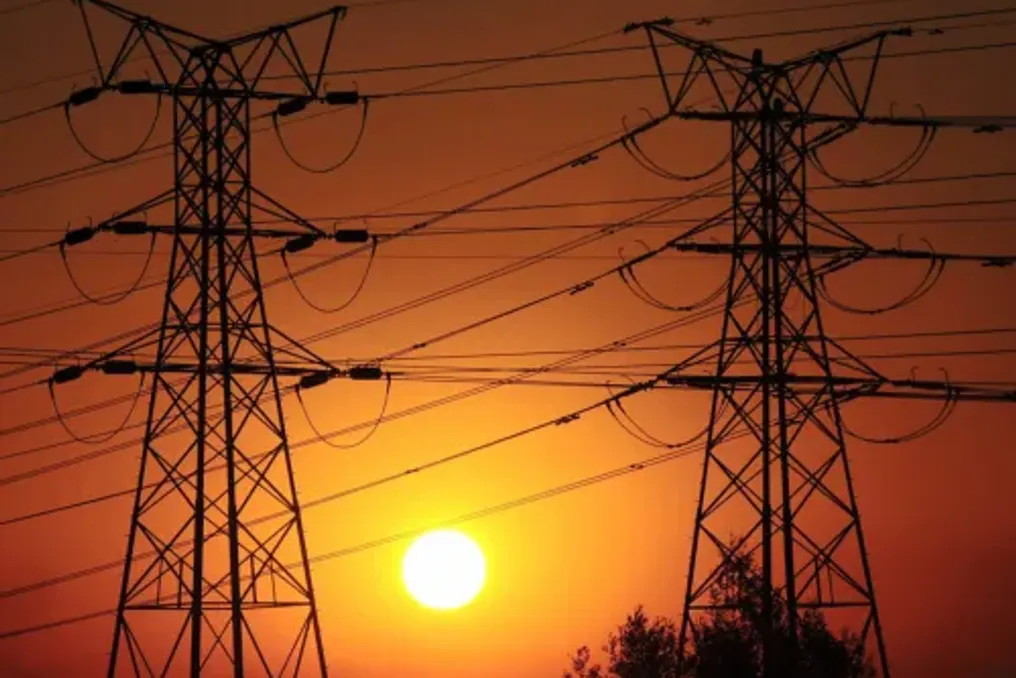
South Africa's national energy regulator (Nersa) has published Eskom's proposal to increase electricity costs by 8.83%. The public has until October 2nd to submit comments regarding this increase, which will take effect on April 1st of next year.
Residents of South Africa have four weeks to voice their opinion on the proposed Eskom increase in electricity tariffs for the coming year. Nersa published this increase on Wednesday, setting the deadline for submissions as October 2nd, after which the regulator will make a final decision in November.
If approved, the increase will apply to customers receiving electricity directly from Eskom starting April 1, 2027. Meanwhile, municipal customers will face an 8.84% increase starting July 1st.
The deadline for written submissions is 4:00 PM on October 2nd, and public hearings are scheduled for October 8th. Nersa is expected to make its final decision on November 26th.
The average price per unit of electricity will rise from 240.28 cents to 261.50 cents, representing an increase of 21.22 cents. The approved percentage of 8.83% was agreed upon in February after Nersa acknowledged an error in calculating Eskom's generating asset costs, granting the company an additional 23.013 billion rand to compensate just for that year. This raised the approved annual revenue from 396.425 billion rand to 419.438 billion rand.
Energy expert Dr. Kelvin Kamm, chairman of Pretoria-based nuclear company Stratek Global, stated that the country cannot afford any increase. He noted that price reductions are necessary because the company cannot constantly balance its books while sales decrease, for example, by 10%, simply by raising prices for other consumers.
Nersa clarified that the process does not allow for revising the amount Eskom is permitted to earn, but only checking whether the utility is correctly and fairly collecting the proposed tariff schedule.
Eskom's application, submitted on July 31st of this year, showed that a household using the subsidized Homelight 20A tariff and consuming 350 units per month would pay 895 rand from April 2027, compared to 823 rand previously. The Homelight tariff is a subsidized rate used by Eskom for low-income households served directly, and the figure refers to the connection size, not actual consumption.
The Homelight 20A tariff represents a single-phase prepaid connection with a capacity of 20 amperes, which Eskom typically installs in informal settlements, whereas Homelight 60A covers a 60-amp prepaid connection or an 80-amp smart meter/postpaid connection. Neither of these tariffs includes fixed service and capacity charges applied to Eskom's Homepower and Homeflex tariffs.
The same household consuming 150 units per month would pay 384 rand instead of 353 rand, and 350 units under the Homelight 60A tariff would cost 1,138 rand instead of 1,046 rand. The state-provided free basic electricity allowance of 50 units for eligible households cost 128 rand per month under the Homelight 20A tariff.
Independent analyst Dr. Dale McKinley noted that the increase came amid Eskom's report of record profits. He called it 'quite absurd,' pointing out that in recent months, Eskom has reported record profits or at least shown good results as the coal industry thrives. Nevertheless, the company needs to increase revenue, forcing consumers to save even more. He added that growth of several hundred percent over the last 15–20 years is insufficient.
McKinley also highlighted the negative impact of the timelines, noting that it demonstrates a striking mentality where, amidst a complex socio-economic situation for South Africans, where everyone is under pressure in all areas, especially energy prices, the national regulator again yields to 'profit raiders' and those who generate profit for Eskom who wish to continue using the public as a source of income.
This statement also concludes Eskom's three-year transition of residential expenses from a per-unit price to fixed charges paid by customers regardless of electricity consumption. Fixed service charges for Homepower and Homeflex tariffs are increasing to the full rand amount proposed by Eskom in 2025, marking the third of three annual steps approved by Nersa in February of that year. Meanwhile, service rates are increasing by 0.3917 times, and energy tariffs are decreasing by 0.0366 times for compensation.
How Eskom's revenue was calculated
Next year, Eskom plans to collect 355 million rand from residential service charges, compared to 261 million rand, and 3.66 billion rand from energy tariffs, which is less than 3.779 billion rand. Eskom indicated in its application that service charges must increase 'to be more reflective of costs.' The company's own calculations show that the effective increase under the Homepower tariff will be 8.24%, which is below the average. The company informed Nersa that Homepower and Homeflex customers will see an increase at or below the stated average, as the reduction in energy tariffs compensates for higher fixed charges.
Nersa approved Eskom's revenue for three years up to March 2028 on January 30th of last year, allowing increases of 12.74% in 2025, 5.36% in 2026, and 6.19% in 2027. Eskom challenged this decision, arguing that the regulator underestimated its regulated asset base and depreciation. Nersa conceded the error and reached an agreement with the utility in July of last year for 54 billion rand without public consultation.
The Pretoria High Court refused to enforce this agreement by court order in December following intervention by AfriForum and Minerals Council SA, referring the matter for re-determination with preliminary public consultation. Nersa conducted this process and arrived at a sum of 54.734 billion rand on February 7th, which effectively corresponds to the privately agreed amount. AfriForum returned to court in June to review and overturn the February decision, as well as to compel Nersa to publish its justifications. Nersa published these justifications on July 12th.
Kamm stated that the increase harms far beyond household bills. He emphasized that Eskom must be protected as a major national asset and further damage cannot be allowed. He also noted that too many people interfere in the energy business and do not understand how the macro-system works.
[1] 2024-05-29