Volkswagen is preparing for the largest restructuring in the history of the global automotive industry. According to AFP, management and trade unions have reached an agreement to reduce the total number of jobs by 100,000 by the end of the decade, exceeding the initial plan of 50,000. This will lead to a reduction of the company's global workforce by approximately 15%.
Furthermore, the company is considering alternative options for four of its German production sites—in Hanover, Emden, Zwickau, and Neckarsulm, as the future of these plants is not guaranteed.
The restructuring plan has caused tension between the company and the unions. The automaker agreed to reduce the powers of the supervisory board by changing the threshold for approving major decisions at the plants from two-thirds, which potentially weakens the ability of unions to block closures. Nevertheless, union representatives and Lower Saxony stated that no plant closures were approved as part of the compromise.
How might this affect South Africa?
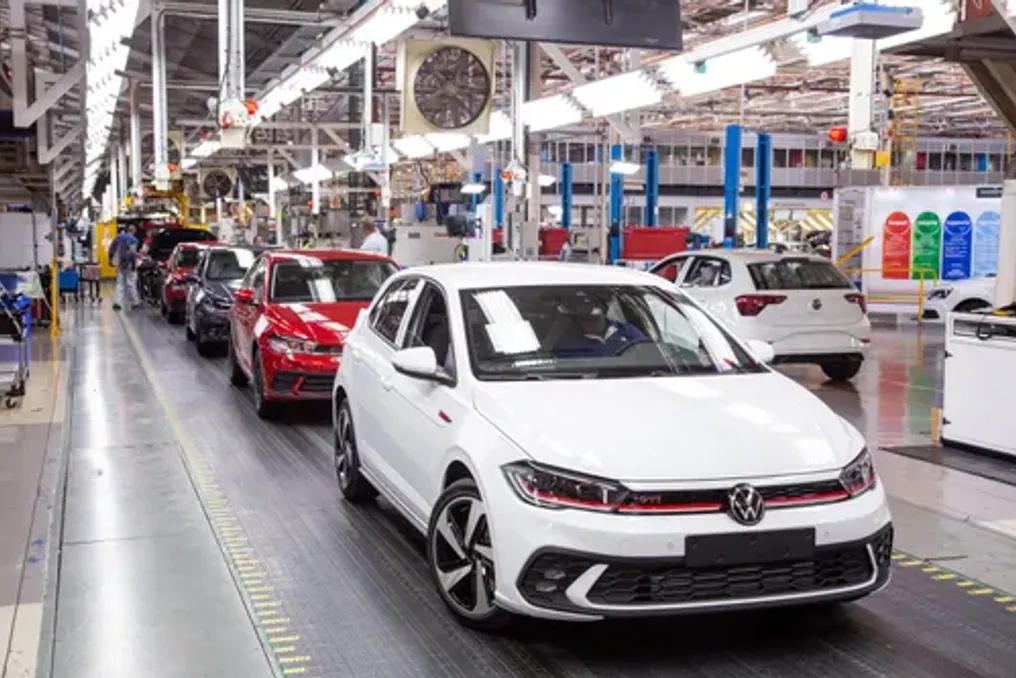
Currently, there are no signs of how the restructuring plan might affect the plant in Kyalami in South Africa. However, it is unlikely that job cuts will occur in the near future, as the plant recently set a production record thanks to the profitable export program for the Volkswagen Polo. In July, VWSA produced 17,009 vehicles, surpassing the previous record of 16,670 units set in July 2025.
The Kyalami plant employs over 3,500 people and is currently the main production center for the Volkswagen Group for Polo hatchbacks, as well as the sole supplier for the European and Asia-Pacific markets.
Nevertheless, the future of VWSA as a major exporter remains uncertain, given that the petrol-powered Polo may be discontinued within the next decade ahead of Europe's ban on internal combustion engine vehicles in 2035. The plant has not yet signed a new large-volume export contract to replace it, and its management previously stated that the company would not build electric vehicles at this site in the foreseeable future.
Last week, new Tengo models were presented at the celebration of the 75th anniversary of the company in Kyalami. Attendees included Volkswagen global CEO Thomas Schäfer, President Cyril Ramaphosa, retired VWSA Chairman Martin Biene, and Volkswagen Group CEO Oliver Blume.
The plant invested in a new Polo-based crossover called Tengo, based on the Brazilian Tera model, which will begin production within the next 100 days. There are also rumors of a possible production of a half-ton Tukan van at this plant, but Volkswagen representatives at the recent Motoring Festival stated that the decision on production would depend on certain changes in government policy necessary to improve the economic viability of investments in South Africa.
However, it is unlikely that both new products will achieve the same export potential as the Polo. Consequently, maintaining current production capacity in the long term will likely depend on retaining the Polo export contract in some form.
The Corporation Expresses Concern
Last month, Parliament expressed concern about the future of the Kyalami plant following reports that Volkswagen Group is beginning a significant global restructuring, which could include up to 100,000 job cuts and a reduction in production capacity from approximately 10 million to 9 million vehicles.
Although most of the capacity and cost restructuring is expected to be concentrated in Europe, and no plant closures outside this region have been announced, the chairman of the local parliamentary committee called Volkswagen's global challenges an 'alarm bell' for South Africa.
The Chair of the Economic Development Committee, Sonja Boshoff, noted that these events serve as a harsh reminder that South Africa cannot afford complacency in an increasingly competitive global manufacturing environment.
Aggressive Global Competition
Boshoff emphasized: 'The reality is that every country is aggressively competing to retain automotive investment. South Africa cannot simply assume that future production lines and the distribution of new models will come to us. We must earn them by creating an environment where manufacturers can successfully compete.'
She warned that any weakening of South Africa's automotive manufacturing sector would have consequences extending far beyond the factory floors, as the industry supports hundreds of thousands of direct and indirect jobs. Boshoff added: 'We need policy certainty, reliable electricity supply, efficient ports and rail infrastructure, reduced regulatory burden, and rapid implementation of measures that will allow South Africa to remain a preferred destination for automotive investment.'
She also stressed that special economic zones must become real drivers of competitiveness by reducing unnecessary regulatory barriers, optimizing approvals, and creating conditions that stimulate investment, innovation, and job creation. As global manufacturers review their investment locations, South Africa must ensure it is among the most attractive destinations.