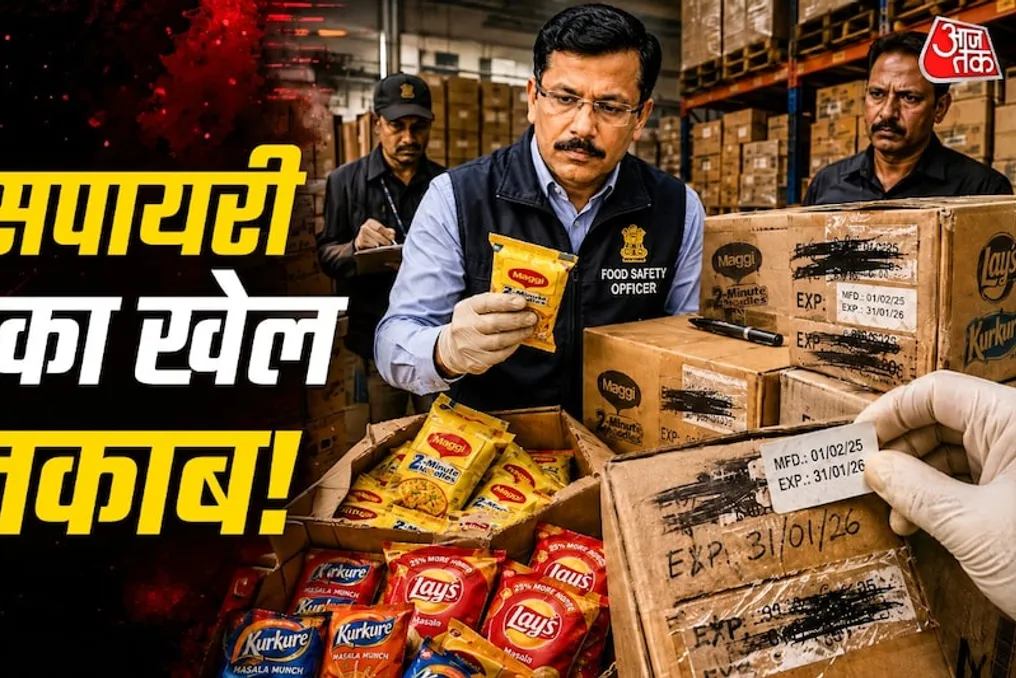
A serious violation was discovered during a food safety inspection in Mumbai, casting doubt on the entire supply chain of packaged goods. Officials from the Maharashtra Food and Drug Administration (Maharashtra FDA) raided a warehouse where the counterfeiting of packaging for well-known brands such as Maggi, Lay's, and Kurkure was allegedly taking place.
It was revealed that they were preparing to replace old production and expiration dates with new ones. These goods were intended for export outside of India, not for sale in the domestic market.
The Maharashtra FDA conducted the inspection at an industrial area in Navi Mumbai. According to officials, approximately 5,000 boxes of products were found in the warehouse, including Lay's and Kurkure chips from PepsiCo, as well as Maggi Masala Noodles from Nestlé, among other packaged items.
During a six-day investigation, significant quantities of goods and packaging materials were seized. Preliminary estimates suggest the seized cargo was worth about $80,000, equivalent to approximately 67 lakh rupees.
The investigation revealed that the original production and expiration dates were initially erased from the products using chemical solvents. Subsequently, new, presumably fake dates were created using a computer.
According to Maharashtra authorities, a special machine was used to apply the new dates to the products and cans. This made it extremely difficult for a buyer to determine whether the product was expired or what its true expiration date was.
The scheme was not limited to just changing expiration dates. According to investigators, other mechanisms were also found that allowed for new labels to be applied to the products. On one re-labeled PepsiCo package, information in both English and French was found, raising suspicions among officials regarding the preparation of the goods for the foreign market.
Most of the goods in the warehouse were either already expired or approaching their expiration date. This circumstance makes the attempt to replace old dates with new ones an even more serious violation.
Police documents indicate that attempts were made to smuggle these products abroad for sale, which could have led to damage and fraud against consumers.
According to the report, the warehouse was managed by Sadhana Enterprises. The owner of this company reportedly told officials that work at this facility was done for about 19 exporters, although these exporters are not widely known. However, it is not yet clear to which specific countries this merchandise was intended.
An official representative of the Maharashtra FDA, Tukaram Mundhe, noted that the entire stock was intended for export, but information about the final destinations remains unclear. Tukaram Mundhe expressed his astonishment at the scale of the case, emphasizing that this was not the work of one person, but an organized scheme.
He also stated the need to establish accountability at all levels involved in the food supply chain and reminded companies of the necessity to comply with all regulations when branding, packaging, and selling their products.
It is important to note that the police case files contain no allegations of violations by large companies such as PepsiCo or Nestlé. The case concerns the alleged falsification of packaging and dates at the warehouse itself.
PepsiCo and Nestlé did not comment on the matter, and attempts to contact the warehouse co-owners were unsuccessful. Furthermore, it is currently unknown if any arrests have been made in connection with this case.
This raises serious concerns for consumers, as production and expiration dates are critical for understanding the age of the product and ensuring its safety. Falsifying this data deprives the customer of accurate product information and endangers their safety.