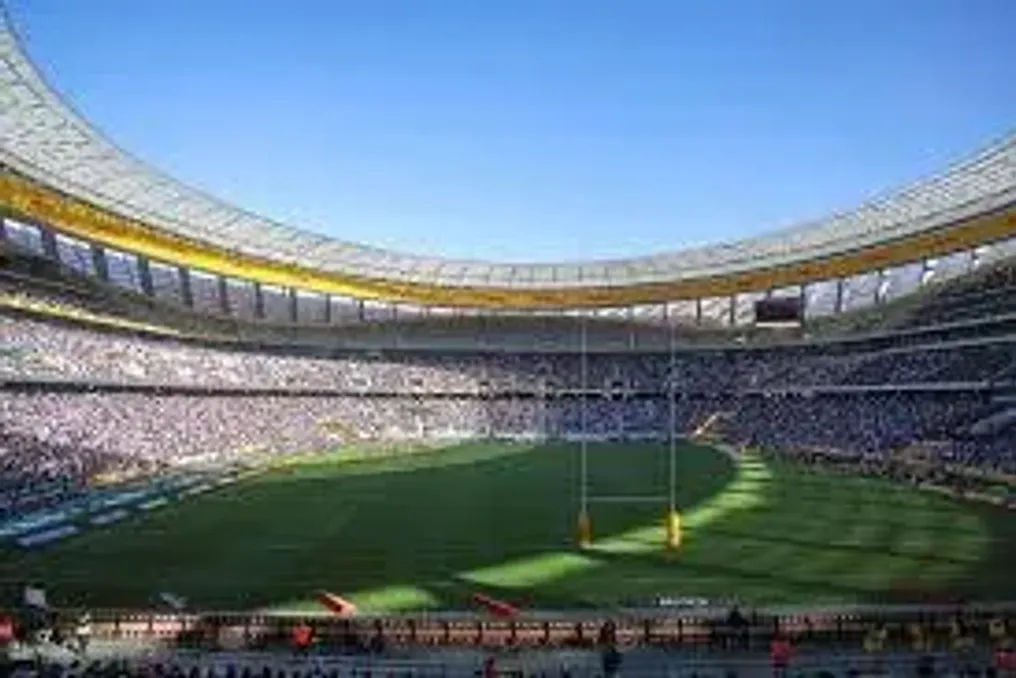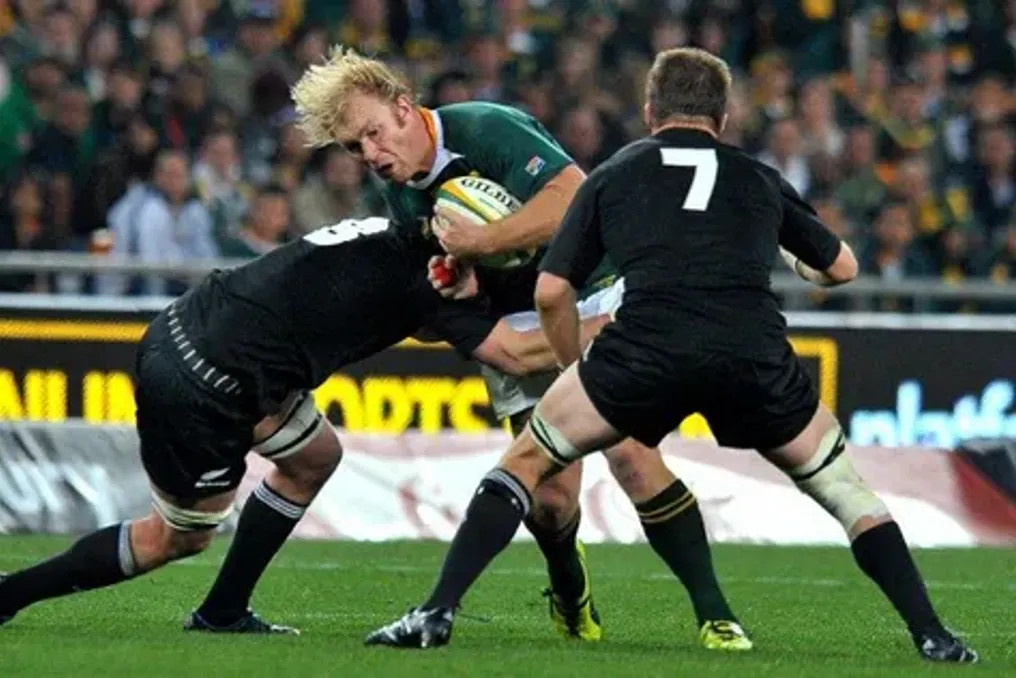
Past Confrontation Between Springboks and All Blacks at FNB Stadium in Soweto
Read more
IOL
iol.co.za

Past Confrontation Between Springboks and All Blacks at FNB Stadium in Soweto

The Springboks team hopes to overcome the defeat against the All Blacks at FNB Stadium after two losses to their main rivals at the iconic 2010 Rugby World Cup venue.

Two matches within the 2010 and 2012 Tests between these teams are the only international rugby matches held at a stadium with a capacity of 94,000 spectators. In both instances, the Springboks lost: in 2010 under Peter de Villiers, and in 2012 under Heineke Meyer.

This weekend, the Boks and All Blacks return to Soweto on Saturday for the third match of the greatest rivalry in rugby. South Africa aims to gain a 2–1 advantage in the series before next week's final in Baltimore, USA.

Review of the Two Previous Landmark Encounters

The first meeting took place during the Tri-Nations in 2010, where South Africa lost to New Zealand with a score of 22–29. This match remained in the memory of both teams as a triumph and a disappointment. The game was played in front of a huge crowd of 94,713 people, setting a record for professional rugby in South Africa. In this match, Springboks captain John Smith made his 100th international appearance in the colours of the 'green and gold'. The hosts led 22–14 after 15 minutes thanks to 17 points from Morné Steyn.

However, the exhausted Boks team could not withstand the late onslaught from the New Zealand side. Richie McCaw scored a controversial touchdown in the corner to level the score, despite replays suggesting it was out of play and an offside pass had been made during the attack. The decisive moment came a few moments later when Ma'a Nonu broke through the center of the field—and Smith, ironically, failed to make the crucial tackle—setting up the play for Dagga Israel, who scored the winning touchdown, securing a dramatic comeback.

The second match, which took place during the 2012 Rugby Championship, saw the Springboks lose 16–32 to New Zealand. Two years later, Heineke Meyer brought the Springboks back to Soweto in search of redemption, leading the team of Juan de Villiers in front of 80,753 fans. The Boks started strongly when Bryan Habana crossed the line in the twelfth minute, but the entire day belonged to the visitors.

The All Blacks methodically dismantled the hosts, scoring four touchdowns through Sam Whitelock, Aaron Smith, Nonu, and Conrad Smith. Dan Carter added 12 points with kicks, including a drop goal in the second half, allowing New Zealand to easily secure the result and extend their impressive High Country record against the Boks.
Similar stories

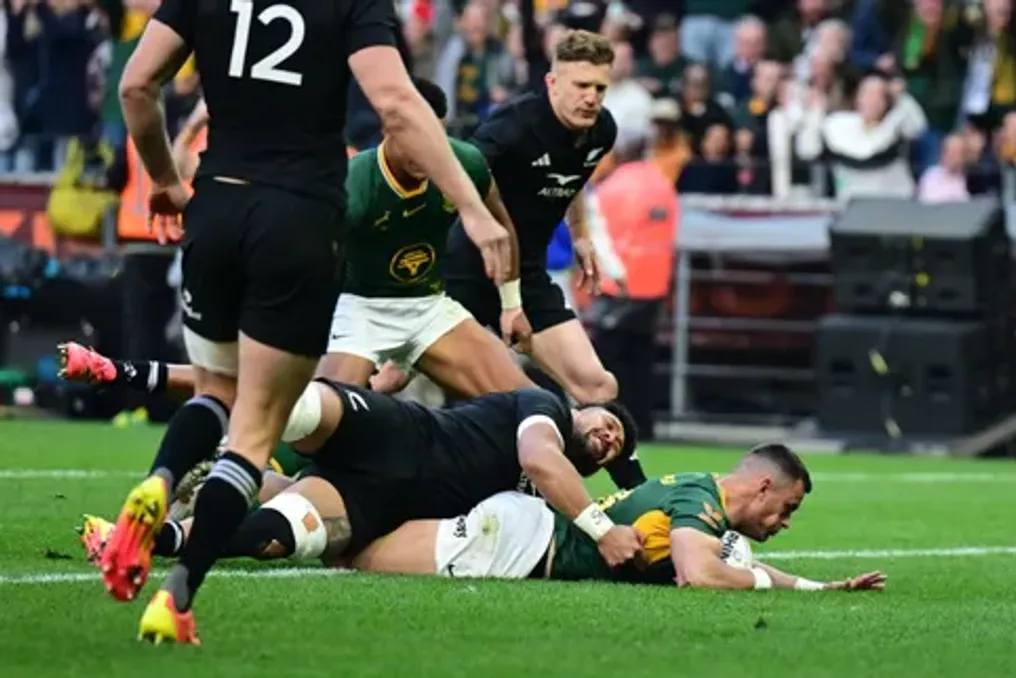
Rassie Erasmus's tactics and Cheslin Kolbe's mastery helped Springboks defeat All Blacks
Read more
iol.co.za

Rassie Erasmus's tactics and Cheslin Kolbe's mastery helped Springboks defeat All Blacks

The Springboks resumed their campaign in the rivalry dubbed 'The Greatest Rugby Rivalry' in an exciting match at the DHL Stadium. They secured a convincing 33–26 victory over the All Blacks, leveling the four-match series at 1–1.

Recovering from a disappointing loss in Ellis Park, South Africa combined early physical intensity with refined tactical ingenuity to take control of the game from the visitors. This set the stage for the third test in Soweto.

This review presents five key moments from the memorable evening in Cape Town, including bold coaching decisions and individual outstanding performances.

Siya Kolisi's return restored attacking dominance

Siya Kolisi's return to the defensive line provided the Springboks with the necessary physical power and authority in the tackle contest in attack that they lacked in Ellis Park. His presence allowed them to neutralize New Zealand's destabilizing tactics, giving the hosts cleaner ball and a much stronger foundation.

The flanker captain demonstrated his impact by scoring the decisive try shortly before halftime, confirming that his leadership qualities and work rate are absolutely indispensable in high-stakes matches.

Rassie Erasmus's genius front-line plan

Rassie Erasmus once again demonstrated a masterful coaching move by starting the game with Deon Fourie, Gerhard Steenkamp, and Thomas du Toit to absorb the initial onslaught from the opposition. Then, in the 35th minute, he made the bold decision to bring Malcolm Marx and Ox Nche on before halftime. This gamble paid immediate dividends as the fresh, world-renowned pair won a penalty scrum inside the All Blacks' 22-meter zone, directly leading to Kolisi's try and decisively changing the momentum before the break.

Cheslin Kolbe's flawless kicking proved decisive

In a classic test match decided by narrow margins, Cheslin Kolbe's metronomic accuracy in goal-kicking became the determining factor. Playing as the primary goal-kicker playmaker, the winger proved to be man of the match, scoring three conversions and four penalties, totaling 18 points. His perfect percentage allowed the Springboks to punish New Zealand's errors and maintain the scoreline, reducing the significance of Handre Pollard's late absence.

Springbok defense was exposed in the wide areas

The experienced combination of centers Jesse Kriel and Damian de Allende showed immense strength, each scoring a crucial try in the first half. However, their play was not flawless. These two Springboks players conceded two tackles from Will Jordan, leading to an All Blacks attempt. The visitors enjoyed themselves on the flanks, overcoming the Bok defense's pressure and scoring points.

Slow start doomed resilient All Blacks

For the second week in a row, the pace of the game was dictated by an early start, but this time New Zealand found themselves trailing. A conceded try in the first two minutes forced the visitors into a chasing mode in Cape Town. Although goals in the second half from Leroy Carter and Ardie Savea demonstrated their relentless fighting spirit, the All Blacks ultimately set too high a bar against the determined defense of the Springboks.

Five Iconic Matches Between the Springboks and All Blacks in Cape Town
Read more
iol.co.za

Five Iconic Matches Between the Springboks and All Blacks in Cape Town

Cape Town has become the arena for some of the most intense chapters of the greatest rugby rivalry between the Springboks and the All Blacks. Matches held at both the historic Newlands stadium and the modern DHL Stadium have always been characterized by minimal score differences and incredible fan passion, with the All Blacks traditionally enjoying significant support in this city.

These five classic encounters in Cape Town reflect the best of the legendary confrontation, whether it was series-defining victories or dramatic one-point matches.

The Greatest Rugby Rivalry

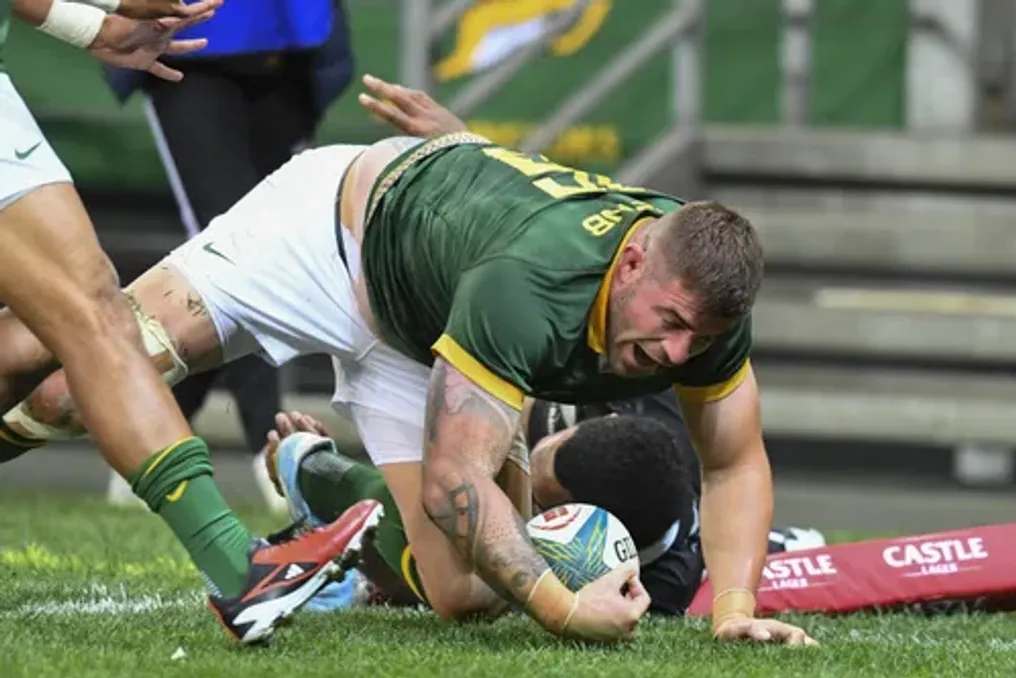
In 2024, Springboks hooker Malcolm Marx scored the decisive touchdown in the match against the All Blacks in Cape Town.

1996 – Tri-Nations, Newlands (South Africa 18–29 New Zealand)

This match was not part of the All Blacks' three-match tour of South Africa, but it marked the beginning of a new competition between South Africa, New Zealand, and Australia. Thanks to the brilliant play of flyhalf Andrew Merten, who earned 19 points from kicks, New Zealand managed to come back into the game, overcoming a nine-point deficit twenty minutes before the end, to secure the victory.

2001 – Tri-Nations, Newlands (South Africa 3–12 New Zealand)

A dirty and tough defensive battle unfolded at Newlands amid heavy rain. In the match, dominated by constant collisions, handling errors, and tactical kicks, the All Blacks managed to win thanks to four accurate penalty kicks from flyhalf Tony Brown, who is now an attacking coach for the Springboks, surpassing the determined Springboks team.

2005 – Tri-Nations, Newlands (South Africa 22–16 New Zealand)

Under the leadership of Jake White, the Springboks demonstrated a defensive masterpiece, interrupting a long streak of defeats against the All Blacks in Cape Town. Through dominant scrummaging, relentless defensive work, and tries by Percy Montgomery, South Africa managed to repel a late onslaught from New Zealand and claim a memorable victory.

2017 – Rugby World Cup, Newlands (South Africa 24–25 New Zealand)

This match is widely regarded as one of the best test games between the two sides in Cape Town in the modern era. Just a few weeks after a humiliating 57–0 defeat in Albany, the Springboks, under Alistair Coetzee, showed incredibly brave play at a packed Newlands, pushing the All Blacks to their limit before losing by only one point.

2024 – Rugby World Cup, DHL Stadium (South Africa 18–12 New Zealand)

In the first meeting of the rivals at this arena, the Springboks secured a tense victory, earning the Freedom Cup for the first time since 2009. Tries by Siya Kolisi and Malcolm Marx in the second half, combined with fierce defensive work, ensured a dramatic comeback and a series win over the All Blacks.

DHL Stadium in Cape Town Sold Out for Springboks vs All Blacks Match
Read more
iol.co.za

DHL Stadium in Cape Town Sold Out for Springboks vs All Blacks Match

The match between the Springboks and All Blacks teams at the DHL Stadium is completely sold out, with an expected attendance of 62,000 fans on Saturday. The appetite of Cape Town residents for this rivalry remains high, despite ticket prices reaching 4000 rand.

When tickets went on sale earlier this year, their price ranged from 850 to 4000 rand, with cheaper tickets selling out first. Now, with only a few days left until the match, the question is not about buying a ticket, but whether one can be found at all.

The complete sell-out underscores the strong support for both competing teams in Cape Town. The match will start at 17:10, and the city is preparing for thousands of people to travel through the Central Business District (CBD) and Green Point starting Saturday morning. Fans who secured seats will need to carefully plan their route to the stadium.

Buses and Parking

The stadium gates will open at noon, and MyCiTi shuttles will begin running from 11:30 AM from locations such as Civic Centre, Thibault Square, CTICC, UCT, and Bellville Velodrome. JP Smith, a member of the municipal safety and security committee, warned of possible significant traffic congestion.

Smith stated: 'With the stadium fully occupied and thousands of people expected in the CBD and Green Point area, we predict serious road traffic jams on match day.' Shuttles will use a dedicated bus lane, and the last return shuttle from the stadium will depart at 22:30.

The city will provide 475 free parking spaces in the Civic Centre from 11:00 for ticket-holding fans on a 'first come, first served' basis. Free street parking will also be available in the CBD from 13:00, subject to existing restrictions. Fans can park on the UCT Upper Campus and take a shuttle from the UCT Shuttle North Stop on Madiba Circle.

Paid parking will be available at CTICC, Ryk Tulbagh Square, Picbel Parkade, Plein Park, Parkalot on Jack Craig Street, and Harbour Arch. Those using ride-hailing services can use a special zone in P14 on Green Point Main Road, between York Road and Wigtown Road.

All roads lead to the DHL Stadium on Saturday. Road restrictions will be in effect from 6:00 AM to 22:30 around the Green Point area and the stadium itself. These restrictions include Granger Boulevard between Green Point Circle and Beach Road; Beach Road in Granger Bay; Fritz Sonnenberg Road between Granger Boulevard and Beach Road; Stephan Way between Fritz Sonnenberg Road and Hamilton’s Rugby Club; Vlei Road between Helen Suzman Boulevard and Fritz Sonnenberg Road; Fort Wynyard Street between Portswood Road and Granger Bay Boulevard; and Granger Bay Boulevard between Helen Suzman Boulevard and Beach Road.

City security services will work jointly with SAPS and SA Rugby on match day. Smith strongly urged fans to plan their journeys in advance, to use shuttles where possible, and to arrive with plenty of time.

Popular