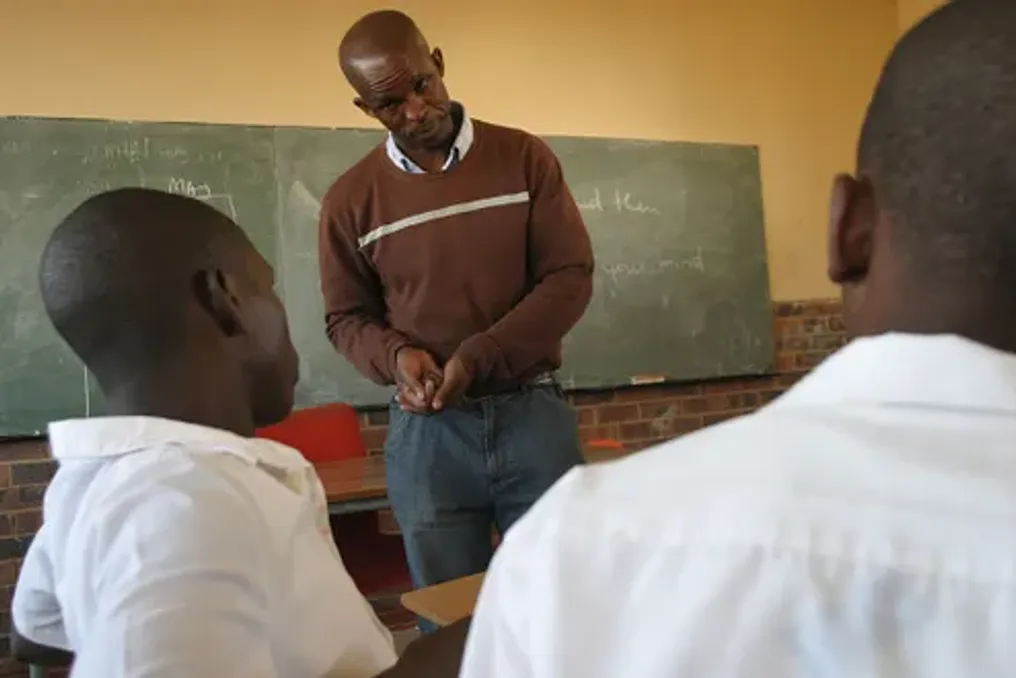
After resuming classes in South Africa following the COVID-19 break, there was hope that attention would be paid to compensating for educational losses, developing teachers, and restoring the education system. However, many educational institutions have become a mirror of the violence, poverty, banditry, and social decay affecting communities across the country.
Statistical data indicates an alarming situation: according to Statistics South Africa, in 2024, over 1.15 million students faced various forms of violence in school, with incidents involving both peers and, more seriously concerning, teachers themselves. Physical violence perpetrated by teachers was registered in more cases than physical violence between students.
Nevertheless, statistics do not convey the human toll. In the provinces of Gauteng, Western Cape, KwaZulu-Natal, and others, students are subjected to knife attacks, shootings, beatings, robberies, and recruitment into criminal activities. Schools, which should be safe places, are increasingly on the front lines of a broader violence crisis in South Africa.
Over the past five years, certain trends have become evident: violence is becoming more brutal. What previously mainly consisted of bullying and intimidation now increasingly involves weapons. Stabbings have become a frequent occurrence in headlines related to schools in different provinces. In recent years, murders, attempted murders, and serious assaults have been reported both on school grounds and in surrounding areas. A single recent quarterly crime report recorded six murders, 26 attempted murders, and 335 serious assaults involving educational institutions.
The problem goes beyond simple disciplinary infractions; it is organized crime. School violence increasingly reflects public crime. Researchers and provincial education departments have repeatedly concluded that schools do not generate violence in isolation; they absorb violence from surrounding communities. Gang activity, drug trafficking, family instability, domestic violence, and organized criminal networks are increasingly influencing the school environment. Research in Gauteng has shown that banditry, substance abuse, and crime around schools are key factors in incidents recorded over the last five years.
For example, in Cape Flats, schools often operate in communities affected by prolonged gang conflicts, meaning students frequently move between two dangerous worlds rather than living in one. Banditry has become a significant issue in education, and this is not just a law enforcement matter. Schools have reported hundreds of gang-related incidents. Researchers note that gangs provide vulnerable youth with a sense of belonging, identity, and protection, especially where poverty and weak family support structures exist. Consequently, gang culture increasingly influences behavior, recruitment, intimidation, and violence both inside and outside school walls.
One of the most disturbing phenomena is the prevalence of peer-on-peer violence. Students often act as both victims and perpetrators. Recent incidents in Gauteng, Mpumalanga, and Eastern Cape involve students allegedly stabbing each other after arguments or confrontations. This points to a deeper failure in conflict resolution, trauma care, and children's psychosocial well-being.
The government deserves credit for recognizing this crisis. The national school safety system has established safety committees, incident registries, and risk assessments. However, despite this system, with increased searches in schools and more active involvement from SAPS, over 1.1 million students reported experiencing violence in school in 2024. The problem is not security; it is national social disintegration. The Department of Basic Education and SAPS have also strengthened the Safe Schools Protocol to improve cooperation between schools and the police. CCTV surveillance has been installed in hundreds of schools in Gauteng, and high-risk institutions have been identified requiring greater support.
These measures have undoubtedly improved reporting and awareness. But there is little evidence that they have fundamentally changed the core trends of violence. Why? Because many interventions focus on responding to incidents rather than preventing them. How can society transition from a violent mindset to one that embodies peace?
Metal detectors can find knives. Random checks can seize drugs. Police patrols can deter criminals. But none of these measures address the root causes of violence, namely: poverty, banditry, substance abuse, trauma, unemployment, family breakdown, and public crime. As many experts argue, school safety is inseparable from public safety.
One of the latest examples illustrating the intersection of gangs and education occurred in Westbury, Johannesburg. In August 2026, ongoing gang violence led to the shooting of five young people, three of whom reportedly died. The Gauteng Department of Education confirmed that one of the victims was a student at R.W. Fick Secondary School. This violence disrupted teaching, examinations, and student attendance in the area. Earlier this year in Gauteng, several fatal stabbings involving schoolchildren also occurred, including students from Forest High School and Daleview Secondary School.
While not all school-related murders are linked to gangs, they reveal a general reality: many children in South Africa face dangers simply commuting to and from school. Data suggests that South Africa cannot solve this crisis solely through force. Safety remains vital, especially around schools designated as high-risk. But significant progress will require strengthening psychosocial support services, involving social workers in schools, anti-gang measures, greater parental involvement, and community-wide violence prevention initiatives. Most importantly, school safety must become a societal project. Just as society mobilized against apartheid, there must be an intervention that puts education and child safety first.
A child carrying a knife into a classroom often tells us what is happening outside the classroom. Until South Africa confronts these realities, schools will continue to reflect the violence surrounding them instead of serving as a sanctuary from it. And this should worry every parent, teacher, politician, and citizen in the country. The school violence crisis in South Africa is not just a failure of educational policy. It is the most obvious symptom of failing communities, and until the country addresses issues of poverty, banditry, trauma, and youth hopelessness, schools will continue to absorb the violence created by society.