Fast Retail Warehouse in Mangaluru Sealed After Complaint About Egg with Live Worm in Online Order
Read more
Aaj Tak
www.aajtak.in

Fast Retail Warehouse in Mangaluru Sealed After Complaint About Egg with Live Worm in Online Order

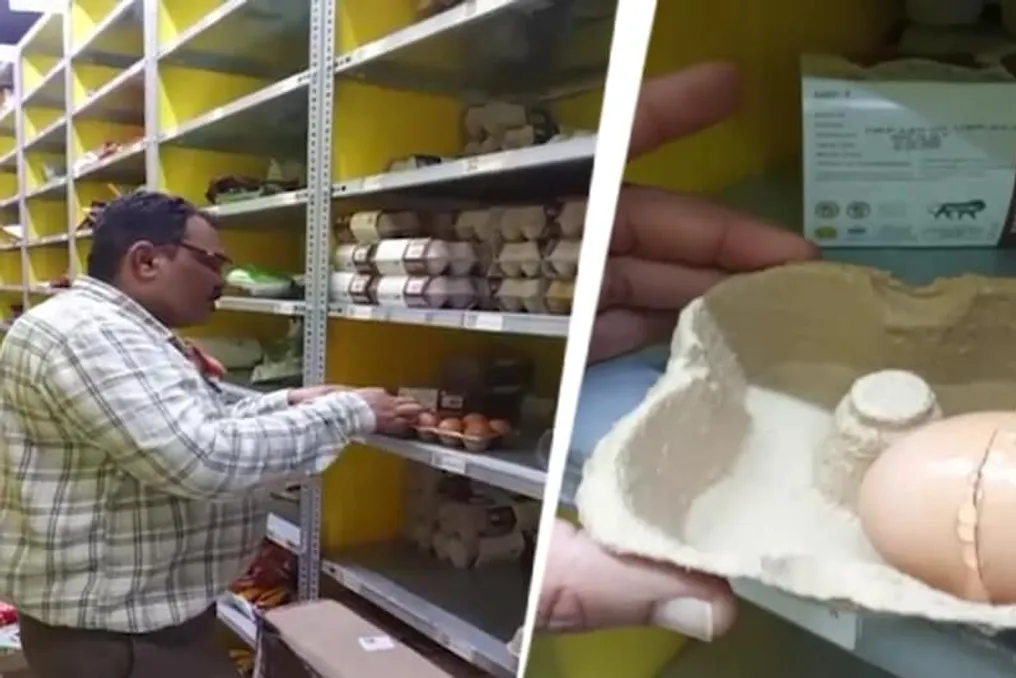
In Mangaluru, Karnataka state, after receiving a complaint about finding a worm in an egg purchased online, food safety officials inspected the retail trade center operating through the fast retail platform.

On Thursday, it was reported that a customer filed a complaint regarding spoiled eggs purchased via the fast retail platform, discovering a worm inside one of them. Based on this complaint, food safety authorities inspected the retail trade center located in the Phalnir area of the city, which operates from Phalnir Square.

During the inspection, officials discovered packages of broken eggs. Subsequently, relevant staff were instructed to immediately remove and destroy the affected packages. As a preventive measure, the center's warehouse premises were temporarily closed and sealed for a thorough cleaning and sanitization of the food storage area.

The Food Safety Department stated that the establishment would receive a notification and would be required to provide explanations regarding the entire incident. According to officials, further actions will depend on the facts revealed during the inspection, as well as the response provided by the center's management.

Similar stories

Post-void dribbling: Could it be a sign of prostate cancer?
Read more
www.aajtak.in

Post-void dribbling: Could it be a sign of prostate cancer?

Some men experience dripping a few drops of urine into their underwear after urinating. Although many avoid discussing this issue with doctors, this urine leakage is not just minor discomfort but a symptom of an underlying condition. This raises the question: could it be a sign of prostate cancer?

According to doctors, this problem was previously more common in older people, but now it is also seen in men aged 30 to 40. Often, patients seek help only when symptoms become more pronounced, leading to prolonged treatment.

Dr. Vaibhav Tiwari from the nephrology department at Sar Gangram Hospital explained in an interview with Aajtak.in that urine exits through the urethra—the tube leading out of the body. Sometimes a small amount of urine remains in this tube after urination. When a person leaves the toilet, walks, or puts on clothes, this residual urine leaks out in drops. This phenomenon is called post-micturition dribbling. The main cause of this is the weakening of the pelvic floor muscles, which prevents the residual urine from completely exiting the urethra.

Furthermore, Dr. Vaibhav noted that this problem can also arise due to prostate enlargement. As a person ages, the male hormone dihydrotestosterone affects the prostate, causing its cells to grow. The risk of this condition is higher in individuals with obesity, diabetes, and unhealthy lifestyles. Although this problem was previously characteristic of old age, cases are now being reported among men aged 30 to 50.

Dr. Rohit Kapoor from the oncology department at Max Hospital stated in an interview with Aajtak.in that there is no direct link between urine leakage or prostate enlargement and prostate cancer. If drops appear only occasionally and there are no other problems, it may be normal post-micturition dribbling, and there is no need to worry. However, a doctor's consultation is necessary if signs such as difficulty starting urination, weak urine stream, frequent or sudden urges to urinate, the need to wake up at night to urinate, or unexplained weight loss are observed.

To prevent this condition, it is recommended to pause for a few seconds after urinating and not rush to get dressed. Pelvic floor exercises are also beneficial for some men. Additionally, maintaining a healthy lifestyle and consulting a doctor upon the appearance of any symptoms is crucial.

High activity of the plague focus noted on the Russia-Mongolia border
Read more
podrobno.uz

High activity of the plague focus noted on the Russia-Mongolia border

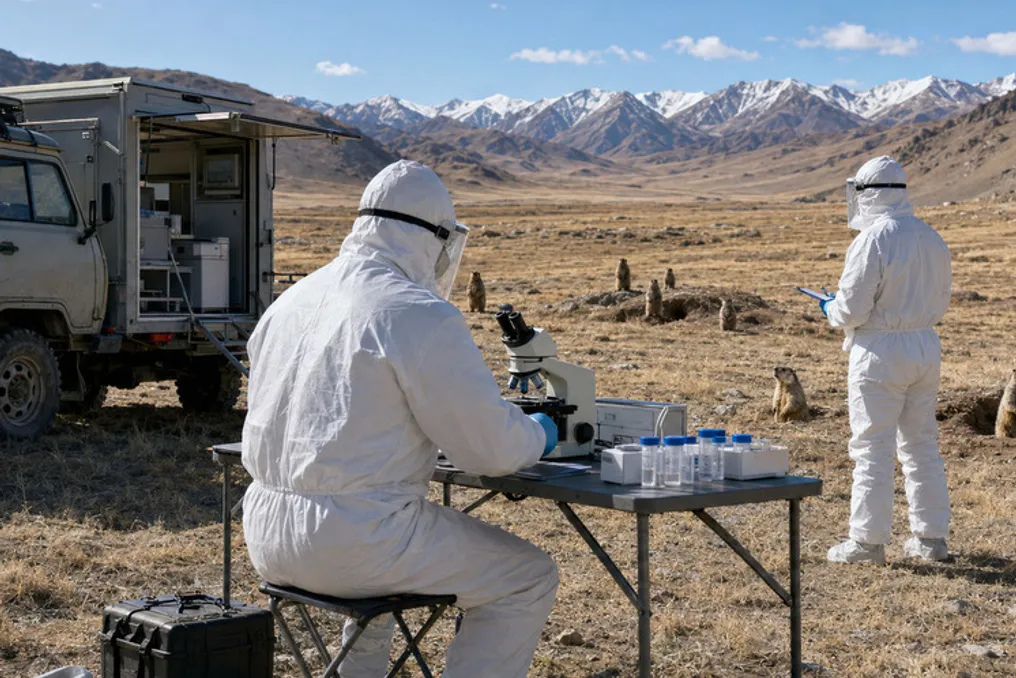
Increased epizootic activity of the natural plague focus has been registered in the border area between Russia and Mongolia. Specialists reached these conclusions after analyzing the results of laboratory tests conducted in 2026.

According to information from Rospotrebnadzor, this concerns the Saylughem cross-border focus, which covers an area of approximately 29 thousand square kilometers. Almost sixty percent of this zone is located in Mongolia.

The condition of this zone is regularly monitored by Russian anti-plague institutions in cooperation with the National Center for Zoonotic Disease Studies of Mongolia. In the Russian Federation, planned monitoring and vaccination activities continue, which helps maintain a stable sanitary and epidemiological situation.

Systemic nature of the focus activation

The intensification of the focus activity near the border is part of a systemic process observed in recent years. As early as 2023, representatives of the Mongolian specialized center reported at the international conference 'Problems of Zoonotic Infections' the discovery of 137 natural plague foci in 17 aimag of Mongolia.

The areas closest to Russia are the regions of the northwestern Uvs aimag, which borders Tuva. According to the results of joint studies conducted by epidemiologists from both countries, the growth of focus activity in this specific region was also recorded in 2022.

Woman Working in a Morgue Discusses the Use of Tools During Post-Mortem Examinations
Read more
www.aajtak.in

Woman Working in a Morgue Discusses the Use of Tools During Post-Mortem Examinations

When people hear the word morgue, they often feel anxiety and fear. However, in the Samastipur area of Bihar state, there lives a woman named Mandhu Devi, who has dedicated most of her life to working in such an institution. Mandhu Devi, who is about fifty years old, has helped doctors conduct over 400 post-mortem examinations, including bodies of children, women, men, the elderly, and accident victims. She does this work not by choice, but out of necessity to support her family.

Furthermore, it is striking that for such sensitive and complex work, she is paid not per body, but only 380 rupees per working day, regardless of how many bodies need examination. On days when there are no bodies for autopsy, she receives no payment. Mandhu Devi claims to have performed 40 thousand such examinations. The woman explained that she uses a awl to open skulls, a hammer to open heads, and if necessary, to separate the forehead from the skull. The chest and abdominal cavities are opened with special instruments, after which the tissue is cut with scissors, and the body is sewn up with thread.

Mandhu Devi noted that there are many misconceptions among ordinary people regarding post-mortem examinations. She emphasized that the autopsies are conducted by doctors, and she acts as their assistant. When a person dies as a result of an accident or another incident, the body is brought to the morgue by the police. After all necessary procedures and registration documents are completed, doctors arrive to examine the body. Mandhu Devi assists them in the areas they indicate for incision. She explained that the procedures are carried out on different parts of the body according to the doctor's instructions, based on the nature of the injury. Her job requires a high degree of responsibility and caution.

Mandhu Devi also talked about the tools used during post-mortem examinations. She has at her disposal tools such as a knife, blade, scissors, thread and needle, awl, and hammer. Blades and other instruments are used to open the chest and abdomen. An awl and hammer are required to open the skull for head inspection. Scissors are used for tasks such as cutting clothes. Although these tools might frighten any ordinary person, for Mandhu Devi, it has become part of her daily routine.

Popular