Historical Accounts Related to Krishna: From Dwarka to Kurukshetra
Read more
Aaj Tak
www.aajtak.in

Historical Accounts Related to Krishna: From Dwarka to Kurukshetra

The name of the God Krishna embodies deep faith, spirituality, and the millennia-old cultural memory of Indian civilization. In Hindu tradition, Krishna is not merely an object of worship but a majestic personality whose deeds, thoughts, and messages have profoundly influenced Indian society and philosophy.

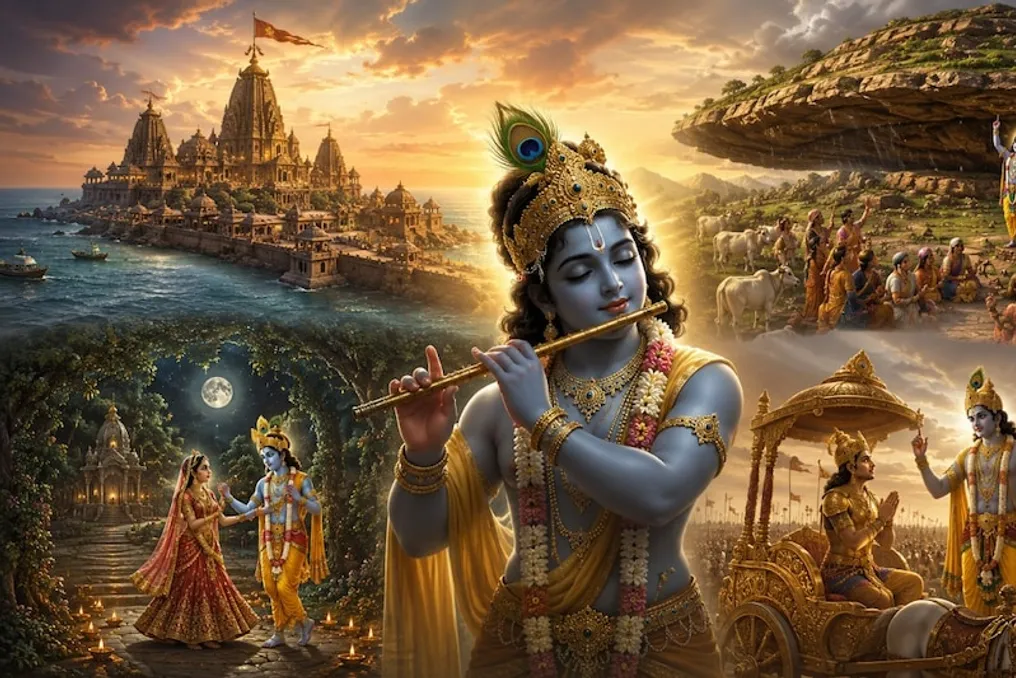
According to religious beliefs, during the Dwapara Yuga, Lord Krishna performed numerous feats in various parts of India. Places such as the streets of Mathura, the groves of Vrindavan, the Govardhan hill, the shores of the sea in Dwarka, and the battlefield of Kurukshetra in Gujarat are still associated with memories and beliefs about Krishna. The stories connected to these places form part of the consciousness of the Indian people throughout the centuries. Some consider them symbols of religious faith, while archaeological findings offer new insights into ancient civilizations and settlements. This text further examines key places and beliefs associated with Lord Krishna, which are discussed in history, archaeology, and faith.

Dwarka: Krishna's City by the Sea

Among the most mysterious and debated locations is Dwarka. This city, situated on the seashore in the Saurashtra region of Gujarat, is considered the city of Lord Krishna according to religious scriptures. According to belief, after leaving Mathura, Krishna founded the city of Dwarka near the coast. Mention of Dwarka appears not only in the Shrimad Bhagavatam but also in ancient texts such as the Mahabharata, Harivamsa Purana, Vishnu Purana, and Skanda Purana.

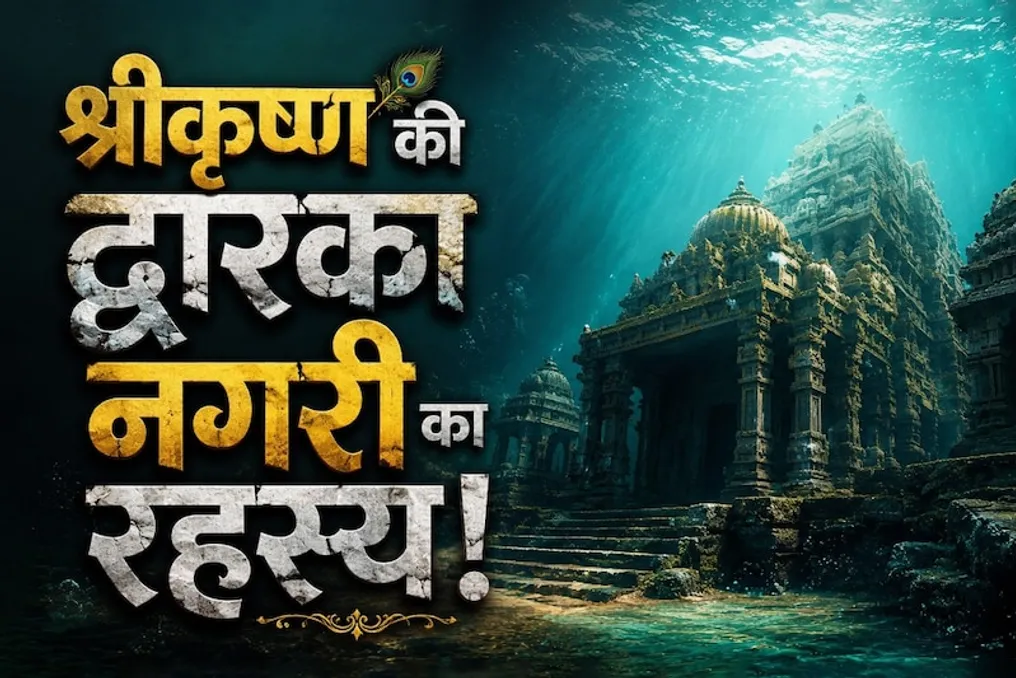
In the Bhagavatam, Dwarka is described as a magnificent and protected city located underwater. The Mahabharata mentions that after Krishna left the land, Dwarka sank into the sea. According to religious traditions, Krishna spent a significant part of his life in Dwarka and governed the Yadava kingdom from there.

Govardhan Hill: When Krishna Lifted the Mountain

Among the most famous deeds of Lord Krishna is the story of lifting Govardhan. Govardhan Hill, located approximately 26 kilometers from Mathura, is revered by pilgrims as Giriraj Maharaj. According to legends detailed in the Shrimad Bhagavatam and other religious texts, the residents of Braj performed special rituals and sacrifices to appease the god of rain, Indra. Krishna advised the people of Braj to worship Govardhan and nature, rather than Indra.

When the people of Braj stopped worshipping Indra, the god became angry and began unleashing incessant rains upon the region. When Braj faced a threat due to the constant downpour, Krishna lifted Govardhan on his small finger. According to tradition, the residents of Braj and their cattle remained safe under Govardhan for seven days and seven nights. Eventually, Indra realized his mistake and apologized to Krishna. Today, millions of pilgrims arrive to circumambulate Govardhan. Pilgrims consider Govardhan an incarnation of Lord Krishna and perform the circumambulation with complete devotion.

Nidhivan: Where the Tradition of Raslila Still Lives

Nidhivan, located in Vrindavan, is one of the most mystical religious beliefs associated with Lord Krishna. Pilgrims believe that Krishna still performs the Raslila with Radha at night. Nidhivan holds special significance in the religious traditions and folk beliefs of Braj. It is believed that after the evening Aarti, the Nidhivan complex is vacated, and no one is allowed to stay there at night. In many religious beliefs related to the colorful palace in the Nidhivan complex, Mahana-Mishri and other items are left for God daily. According to local folklore, the atmosphere in the temple changes when the gates open in the morning. However, these assertions are part of religious belief and local traditions, not scientific evidence. Nevertheless, Nidhivan remains a center of deep reverence and mystery for Krishna's followers.

Kurukshetra: Where Arjuna Received the Gita's Knowledge

The most important chapter in the life of Lord Krishna is the war of the Mahabharata and the teaching of the Bhagavad Gita. Kurukshetra in Haryana state is sacred land associated with the Mahabharata war and the lessons of the Gita imparted by Krishna to Arjuna. The Jotisar shrine in Kurukshetra is particularly associated with the tradition of imparting the Gita teachings. According to belief, it was here that Lord Krishna gave Arjuna, who was filled with doubt and turmoil on the battlefield, knowledge about duty, righteousness, and life. Lord Krishna's message in the Bhagavad Gita is not limited only to war; it presents deep reflections on duty, obligations, the soul, righteousness, and the purpose of life. This is why the Gita is considered not just a religious text but also an important work of life philosophy. Today, Jotisar is known as a major pilgrimage center, attracting people from different countries.
Similar stories

Legend of the Well in Jaisalmer: According to Legend, Krishna Used Sudarshana to Quench Arjuna's Thirst
Read more
www.aajtak.in

Legend of the Well in Jaisalmer: According to Legend, Krishna Used Sudarshana to Quench Arjuna's Thirst

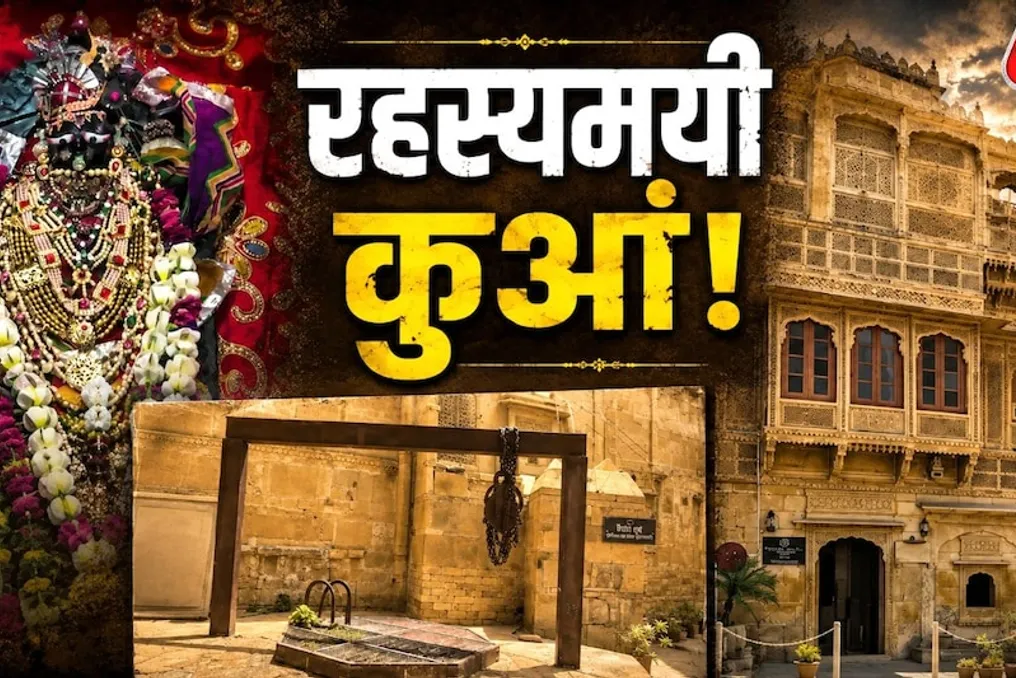
Although the lands of Braj are located in Mathura, Uttar Pradesh, it can be argued that Jaisalmer in Rajasthan is also a land of Braj, as there are many temples dedicated to Krishna here, and a large number of pilgrims are immersed in worshipping the Lord.

In an ancient well located in Sonar Fort, there is a belief that Lord Krishna himself dug it using the Sudarshana Chakra to quench Arjuna's thirst. During the Janmashtami festival, the entire atmosphere of the city is filled with the spirit of Krishna.

The festival of Krishna Janmashtami will be celebrated across the country on September 4th. In connection with this, preparations for the birth festival have begun in the temples of Jaisalmer. Special events are being prepared at the Shri Girdhari Ji temple located in the city. This temple is associated with the Pushtimarg Vaishnava Sampradaya, and pilgrims plan to solemnly celebrate the birthday of Krishna.

Young devotees also participate in acts of worship accompanied by songs and hymns performed to the sound of drums and kartals. A special aarti is held in the evening.

Jaisalmer is also known as the historical capital of Yaduvanshi-Bhati Rajputs. The city has more than a dozen temples dedicated to Krishna. Among them are the temples of Banke Bihari Ji, Madan Mohan Ji, Srinath Ji, Govindsar, Melab, and Lakshminath Ji, in addition to the Girdhari Ji temple. Pilgrims in these places are seen in deep devotion to Lord Krishna, and the Shri Girdhari Ji temple is considered one of the main and oldest.

The famous Jaisalu well is located near the Lakshminath Ji temple in Sonar Fort. According to local legends, this well has a thousand-year history. It is said that Lord Krishna dug it using the Sudarshana Chakra at Trikut Pahari to quench Arjuna's thirst. According to a common legend, Krishna and Arjuna were heading to Dwarka. On the way, they stopped at Trikut Pahari, where Arjuna became hot and felt thirsty, but there was no water nearby. Then Krishna used the Sudarshana Chakra to dig the well, thereby quenching Arjuna's thirst.

Currently, the Jaisalu well is completely closed. Nevertheless, it is reported that there is still water inside. According to historical beliefs, in ancient times, priority was given to finding water sources before establishing settlements. Some historians link this area to the course of the ancient Saraswati River. There is a belief that when the well was dug, the water of Saraswati was discovered. Experts' interest in finding the ancient course of the Saraswati River continues to this day.

Mystical Story of the Submergence of Dwarka, the Capital of Lord Krishna, and Scientific Searches
Read more
www.aajtak.in

Mystical Story of the Submergence of Dwarka, the Capital of Lord Krishna, and Scientific Searches

The question arises: how did the magnificent city of Dwarka, the capital of Lord Krishna, end up submerged under the sea? The story of this city is told, which once proudly stood on the shores of the sea. It was a settlement with luxurious palaces, wide streets, markets, and bustling maritime trade. However, over time, this entire city gradually disappeared from historical records.

According to ancient scriptures, Dwarka was the capital of Krishna. Its grandeur is described in the epics Mahabharata, Harivamsa, and Shrimad Bhagavatam. According to beliefs, after leaving Mathura, Krishna founded a new, safe city by the sea for the Yadavas.

The city served not only as a place of residence but also as a major center of trade, culture, and power. Merchants arrived here by sea from afar. The description of the city's structure and wealth is so grand that Dwarka is considered one of the most famous cities of ancient India. But then came the time after the Mahabharata war. The war ended, the Kaurava clan ceased to exist, and Gandhari was plunged into grief over the death of her sons. According to mythological traditions, it was during this period that she cursed Krishna, saying that the Yadava clan would meet the same end as the Kaurava clan.

Over time, internal conflicts among the Yadavas intensified, and the moment came when Krishna completed his incarnation mission. After Krishna's departure, Dwarka, according to mythological views, began its decline. It is said that the sea gradually swallowed this city. Palaces, streets, and buildings sank under the waves. Centuries passed. The name Dwarka remains in texts and religious traditions, but in the world of history, the question remained: did Krishna's city really exist?

When Did Searches Begin in the Ocean Depths

Then searches began in the ocean depths. Marine archaeological surveys were conducted in the 20th century off the coast of Dwarka in the state of Gujarat and its surroundings. Stone structures, ancient anchors, and numerous artifacts related to human activity were discovered underwater. These findings once again drew attention to the history of Dwarka.

Researchers used methods of marine archaeology, diving, and scientific technology to understand the history of the region. Artifacts found from various locations indicate that the coastal area of Gujarat was an important center of human settlement and maritime activity since ancient times.

Is Krishna's Dwarka Under the Sea?

However, the biggest question remains open: are all the underwater remains truly the Dwarka of Krishna from the Mahabharata era? Different opinions still exist among historians and archaeologists on this matter. Dating of various samples and structures points to different historical periods. Therefore, scientifically, it is currently impossible to assert that every discovered structure is the very Dwarka described in the Mahabharata and Puranas. Nevertheless, these discoveries clearly showed that the coastal region of Gujarat witnessed maritime activity and human civilizations for millennia.

The Mystery of Dwarka Between Faith and Science

The story of Dwarka becomes particularly interesting here. On one hand, there is Dwarka that exists in faith, where the capital of Krishna, his life, and the city that sank into the sea after his departure are told. On the other hand, there is Dwarka that science seeks in the ocean depths, where questions are asked about the past of every stone, every structure, and every archaeological object. Perhaps this is why Dwarka is not just a religious story and not just an archaeological find. It is a mystery where faith, history, and science meet.

Dwarka Sank, But the Story Continues

Dwarka has sunk, but its story will never end. Today, many historical questions are hidden beneath the waves of the Arabian Sea. Perhaps in the future, new technologies and the help of marine archaeology will lead to new evidence that will help us better understand the history of this ancient city. And perhaps then another chapter of history hidden in the depths of the sea will be revealed to us.

Popular