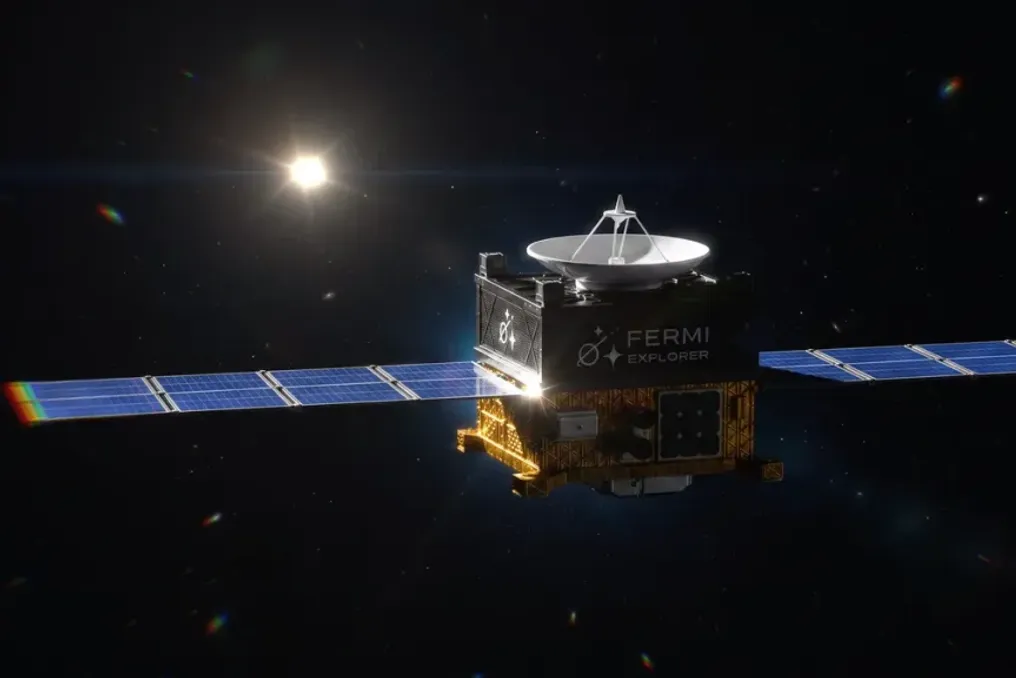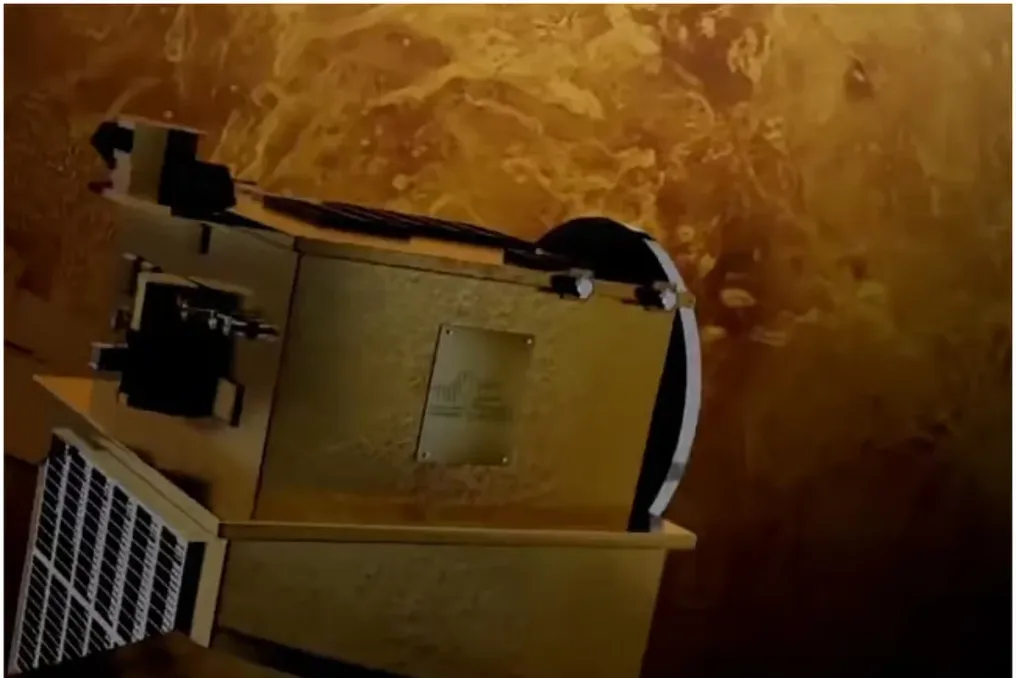
Six years after the launch of the Hope probe, engineers from the United Arab Emirates (UAE) are now leading an asteroid mission that will cover a distance of five billion kilometers. Previously, some Emirati engineers who worked on the Hope probe were only mastering the principles of creating and operating the UAE's first interplanetary mission; today, they are leading a spacecraft that will travel nearly ten times farther.
Salem Butti Al Kubaisi, CEO of the UAE Space Agency, told Khaleej Times that specialists who participated in the UAE Mars Mission have returned as program managers, team leads, and project specialists for MBR Explorer. This spacecraft is designed to travel five billion kilometers through the asteroid belt.
Al Kubaisi emphasized the concept of 'institutional knowledge,' noting that young Emirati engineers who participated in the UAE Mars Mission and the Hope Probe project continue to work as leaders and program managers within the new MBR Explorer program. He compared this progress to caring for a palm tree: first, care and watering are required, and then the plant bears fruit.
The importance of this transition lies in the fact that building experience was one of the goals of the Hope mission even before it reached Mars. An independent assessment conducted by the University College London before the UAE Mars Mission launch identified a wide range of developing competencies, including spacecraft project management, risk management, software quality assurance, manufacturing knowledge, scientific potential, and infrastructure.
Researchers also identified a high readiness for future space flights and a mechanism for transferring knowledge from international partners into the UAE. Six years later, MBR Explorer demonstrates what the reuse of this accumulated knowledge looks like.
The UAE's asteroid belt mission is significantly more complex than the flight initiated by Hope in July 2020. The launch of MBR Explorer is scheduled for March 2028, and it will travel approximately five billion kilometers over seven years. The UAE Space Agency notes that this spacecraft will be about twice as long and heavier as Hope.
To change speed and trajectory, it will use gravitational capture maneuvers around Venus, Earth, and Mars before beginning a series of encounters with asteroids in the main belt between Mars and Jupiter. The first encounter is expected in February 2030. By 2034, the spacecraft should reach its seventh target, Justitia, where a lander will be dropped to study the asteroid's surface.
The mission will study the origin and evolution of water-rich asteroids, their composition and geological history, as well as the possibility that such bodies could provide resources for future research. MBR Explorer has already passed critical design reviews and moved into assembly, integration, and testing, during which various systems are put together and tested under conditions simulating the space environment.
Al Kubaisi noted that the team was able to start working on the spacecraft design and operational experience that had already been proven by Hope, instead of starting the deep space exploration from scratch. Furthermore, the composition of participants has changed: some people who trained on the Hope program now hold leadership positions in the new project.
The agency has also opened parts of the mission to private sector engineers from the UAE, allowing them to work alongside the mission team and apply the acquired experience in industry. This raises a broader question for the relatively young space economy: what opportunities should the UAE master independently?
Al Kubaisi clearly stated that the answer is not to do absolutely everything. He added that the UAE still lacks its own rocket suppliers or spaceports necessary for sending missions like MBR Explorer into deep space. Therefore, the spacecraft will again rely on Japan for launch. Mitsubishi Heavy Industries, which launched Hope in 2020, has secured the contract to launch MBR Explorer on Japan's H3 rocket.
The mission also maintains a broad international network of scientific and technical partners, including the Italian Space Agency and US universities. According to Al Kubaisi, national capability is not about possessing everything but about being able to execute specific, important, sovereign tasks that have significant strategic and commercial value.
An example is the flight aboard MBR Explorer itself. The Abu Dhabi Institute of Technology Innovation is leading the development, design, and testing of the lander that will eventually separate from the spacecraft to reach Justitia. This project also provides opportunities for UAE startups, with half of the mission's work distributed among companies based in the UAE.
This is a much more tangible way of building capacity than simply placing a national flag on a spacecraft: engineers and institutions within the country must learn to design equipment that must function millions of kilometers away from immediate human assistance. A similar philosophy applies closer to Earth. The UAE's Sirb program is developing a synthetic aperture satellite constellation that uses radar instead of traditional optical cameras to create images of the Earth's surface.
The goals of this program go beyond simply acquiring satellites. The Space Agency asserts that the program aims to transfer knowledge about SAR payloads and mission development into the UAE, acquire intellectual property that can be commercialized, establish domestic payload development capabilities, and form a local supply chain.
Al Kubaisi explained that the approach begins by identifying gaps in the UAE's space industry supply chain and deciding which ones are important enough to justify funding and technology transfer. This assessment is becoming increasingly significant as the government requires the sector to generate economic returns alongside scientific missions.
Under the UAE's National Space Strategy 2031, the country aims to double the revenues of the space economy and the number of national space companies, increase the sector's added value by 60 percent, and enter the top 10 global space economies. Al Kubaisi described this as a change in how progress itself is measured.
The next stage, he said, is moving 'from measuring success by the number of missions to measuring the broader contribution of space to the national economy.' This means that missions like Hope and MBR Explorer carry two types of expectations. One is scientific: Hope provided data on the Martian atmosphere for researchers worldwide, and MBR Explorer is intended to complement scientists' knowledge about some of the oldest bodies in the Solar System. The other is what remains in the UAE after the spacecraft leaves. Engineers, software, intellectual property, companies, assets, and the ability to take responsibility for increasingly complex parts of the mission are now included in this calculation.
International partnership remains a central element of this model. Al Kubaisi's argument is that collaboration should not be confused with stagnation. The UAE can continue to use a Japanese rocket while taking responsibility for other levels of the mission that previously required greater external support. MBR Explorer still has almost two years of assembly and testing before the planned launch window, followed by a multi-year journey to the final asteroid. The spacecraft itself will serve as a measure of the mission's success, and according to the experienced space program leader, the people who create it will provide another measure.
Six years after Hope left Earth, some Emirati engineers who learned to execute the country's first interplanetary mission are now responsible for implementing its most complex mission.