A researcher in Biological Anthropology at Monash University points out that the traditional classification of the human phylogenetic tree, which groups ancestors into three main genera—Homo, Australopithecus, and Paranthropus—needs to be revised.
Although these names dominate the discourse on human origins, new fossils, genetic advances, and more rigorous analytical methods indicate that these groupings do not reflect the true evolutionary structure.
The author, in an article published in the American Journal of Biological Anthropology, argues that the current system should have been reformed long ago. The core of the problem lies in the fact that the current groups often do not correspond to real family branches, which scientists call 'clades'—a clade is defined as a common ancestor and all its descendants.
Additionally, ideally, a genus should provide information about shared behaviors, crucial characteristics, or ways of life for all species it encompasses.
The genus Australopithecus, which includes the well-known skeleton of 'Lucy,' is cited as a clear example of inadequacy, as large-scale analyses confirm that it does not constitute a true family branch. The original definition of this genus was based on shared lifestyle or appearance, not on common ancestry. Recent fossils show that traits such as brain size, mode of locomotion, diet, and behavior do not fit perfectly into the actual phylogenetic tree.
The genus Homo also faces scrutiny. Characteristics once considered defining, such as large brains, tool use, dietary changes, and continuous terrestrial bipedalism, have been downplayed by subsequent discoveries. Species like Homo naledi and Homo floresiensis (known as the 'hobbit' species) present combinations of small brains and traits considered 'primitive' with characteristics typical of other members of the Homo genus.
Currently, it is difficult to point to a single characteristic shared by all Homo species that is not present in some Paranthropus or Australopithecus species, a phenomenon explained by mosaic evolution, where different parts of the body evolve at different rates. Furthermore, essential human behaviors emerged long after the establishment of the Homo genus, including early species with small brains that could have evolved independently of Australopithecus lineages.
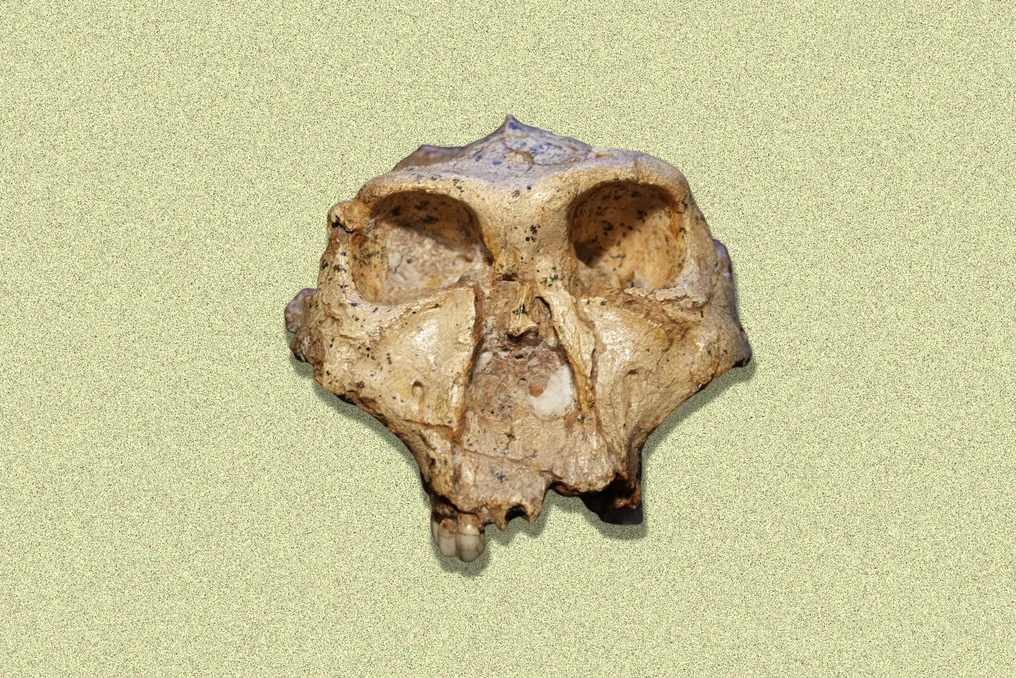
Even Paranthropus, notable for robust jaws and giant molars, is not without doubt. Although these features were interpreted as adaptations for chewing hard foods, current evidence suggests that East and South African species had distinct dietary habits among themselves, without heavily relying on hard foods.
Some specialists suggest that Paranthropus may not be a single lineage, but rather two independent regional groups that developed oversized teeth, implying that the genus would not be a true clade, although most researchers consider this group the most likely to be a genuine clade among the three existing ones.
In summary, there is little anatomical, behavioral, or ecological evidence to support maintaining these three genera. While it may seem like a semantic discussion, when genus names do not reflect real relationships, they can mask descent patterns, inflate differences between groups, and perpetuate outdated views of 'primitive versus advanced.' With the fossil record growing rapidly and improved methods, this gap has become undeniable.
One possible solution proposed is to integrate Australopithecus and Paranthropus into a unified and much broader Homo genus, which would represent a real and complete branch of the phylogenetic tree. This change would solve the problem of not being a true clade, aligning the classification with the treatment given to non-human species and better explaining the interconnections between close lineages over millions of years.
However, altering the classification would mean losing certain intuitive distinctions used by researchers, especially the ecological and physical singularity of Paranthropus and, subsequently, of large-brained Homo.
The fossil record indicates a great branching explosion of evolution initiated about four million years ago, with significant variations in diet, brain size, locomotion, and dentition among the groups, without a clear correspondence to their true relationships. Such a vast and complex group, influenced by migrations and rapid evolutionary bursts, is better understood under a single genus.
Everyday language is also changing. Humans were only formally recognized in recent decades as great primates—placed in the same family as chimpanzees, gorillas, and orangutans (Hominidae)—but the term 'primate' in informal use still tends to exclude humans. Similarly, it is mistakenly assumed that 'monkey' is a genuine evolutionary group, when in fact New World monkeys are evolutionarily more distant from Old World monkeys and great apes than these two groups are from each other. Thus, we are in a period of transition in the discussion of our place in the primate phylogenetic tree, requiring our terminology to keep pace with biological evolution.