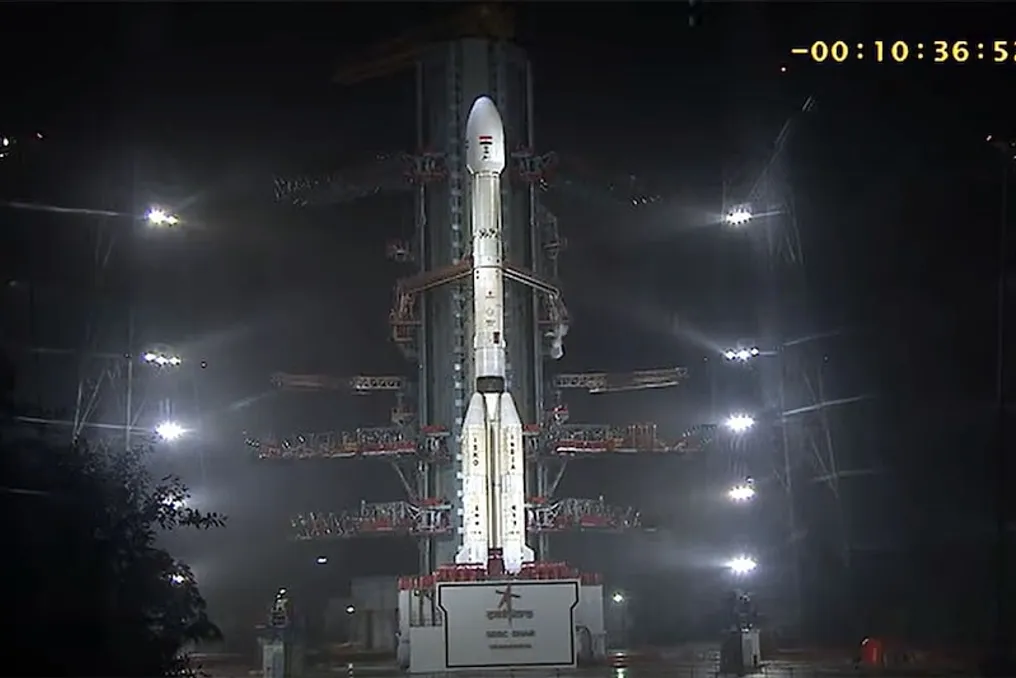
The Indian Space Research Organisation (ISRO) launched the EOS-05 satellite using the GSLV-F17 rocket from the Satish Dhawan Space Centre. This satellite is also known as GISAT-1A and has a mass of approximately 2367 kilograms. The launch took place on September 4, 2026, at 2:55 AM from the Centre's second launch pad. This marks the nineteenth flight of the GSLV rocket and is considered the heaviest payload to date. Following an eight-month hiatus, this mission represents an important return for ISRO.
EOS-05 is India's first satellite capable of conducting imaging from a geostationary orbit. It will be positioned at an altitude of approximately 36,000 kilometers above Earth, providing continuous monitoring of the Indian subcontinent. Unlike conventional remote sensing sensors, which orbit at a lower altitude and can image a location only once every few days, this satellite will be able to capture images of the entire Indian territory every 30 minutes, with this time reduced to five minutes for critically important areas.
The satellite is equipped with a 700-millimeter resolution telescope that will collect data in the visible, near-infrared, and shortwave infrared bands. It will provide significant assistance in disaster management by enabling real-time monitoring of phenomena such as floods, cyclones, and forest fires. Furthermore, it will aid in assessing crop conditions, soil moisture, and vegetation health in agriculture, while also supporting national security and environmental surveillance by providing accurate information to planners and scientists even in the absence of cloud cover.
This launch is an attempt by ISRO to restore capabilities following the failure of the GSLV-F10 mission in 2021, when the GISAT-1 (EOS-03) satellite failed to reach orbit due to a cryogenic cascade malfunction. The GSLV-F17 is a three-stage rocket with a height of 51.7 meters and a liftoff mass of 420.5 tons. The satellite will first be placed into a suborbital transfer orbit, from which it will reach its final orbit. This mission will enhance India's space potential by providing the country with a tool for continuous geostationary observation, which was previously unavailable.
Through this step, ISRO will strengthen disaster response, agricultural planning, and the security system, marking another significant achievement towards Atmanirbhar Bharat India. Due to past failures, this rocket is nicknamed 'Noti Boy.'