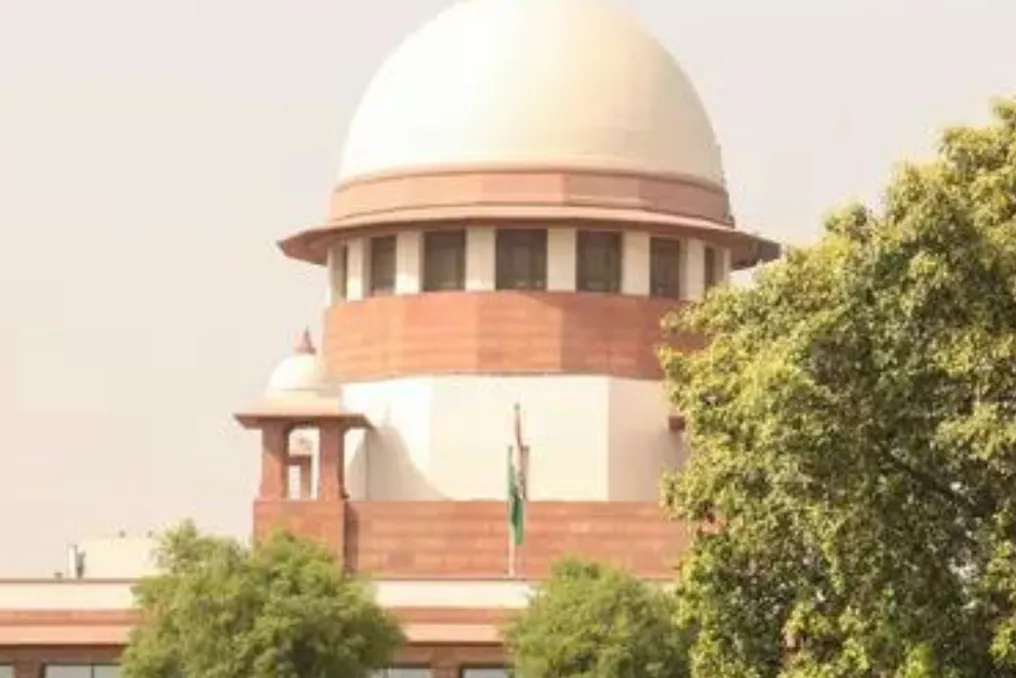
The Supreme Court stated that the full range of protective provisions of the Juvenile Justice Act has not yet extended to children who are prone to offenses because they grew up in conditions of poverty marked by inequality, illiteracy, and discrimination.
The bench of judges Prashant Kumar Mishra and Shri Chandrashekhar, while considering a case for the acquittal of a minor accused of attempting to destroy evidence in a death case during divorce, thoroughly examined the history and development of the Juvenile Justice Act. They noted that the migration of rural populations to cities due to industrialization and urbanization weakened community cohesion, leading to a loss of parental control over children.
Judge Chandrashekhar, who authored the order, emphasized that 'poverty, inequality, illiteracy, and the discriminatory environment in which a child grows up provoke deviant behavior... The increase in cases coming before this court requesting recognition of minority status for the first time sufficiently indicates a significant gap in the understanding of the law by stakeholders.'
This decision sharply contrasts with an earlier order by the bench of judges J. B. Pardival and Ujjal Bhuyan dated July 21 in the case of 'X vs. Bihar'. In that ruling, they argued that 'modern children are exposed to complex content, graphic material, and adult experiences that were unavailable to the previous generation.'
The authoring judge of the July 21 order, Judge Pardival, analyzed the factors that prompt a person to commit a crime, pointing out that it could be 'hostility, poverty, greed, mental perversion, and much more...', however, this bench did not mention inequality, illiteracy, or a discriminatory environment as grounds for a child becoming deviant.
The bench also stated that 'there is no doubt that the spread of technology and the pervasive influence of social media have changed the cognitive and psychological development of children. In such circumstances, courts as living institutions must respond to this reality.'
Judges Pardival and Bhuyan added that 'the approach of courts or juvenile boards dealing with a child in conflict with the law cannot remain static after legislation is passed. It must demonstrate a balanced approach to the developing nature of the youth and the legal requirements of society.'
Judges Mishra and Chandrashekhar pointed out that the prosecution's attempt to bring the accused to court and ignoring the boy's age led to non-compliance with the Juvenile Justice Act and a violation of the rights of minors in conflict with the law.
Judge Chandrashekhar noted: 'A child should not be viewed as a criminal. He is a victim of circumstances. Sometimes he enters the world of crime due to socio-economic or emotional and psychological reasons. The state is responsible for the reintegration of minors into society, not for their constant stigmatization.'