Google integrates voice-based AI assistants into Gmail, Docs, and Keep
Read more
Olhar Digital
olhardigital.com.br

Google integrates voice-based AI assistants into Gmail, Docs, and Keep

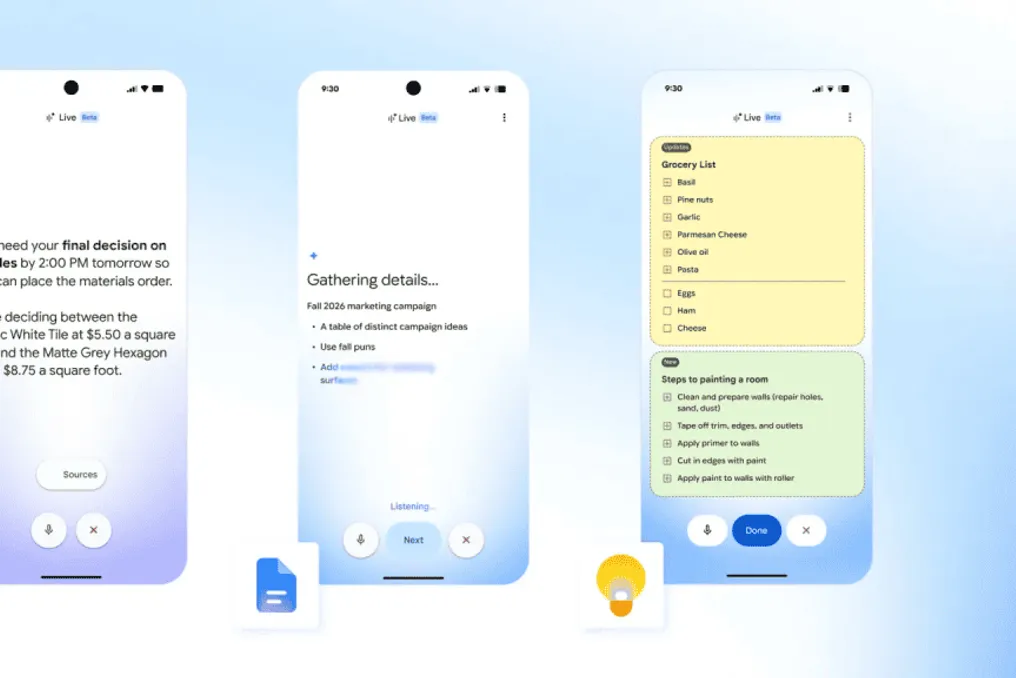
Google has begun rolling out new artificial intelligence (AI) functionalities that enable interaction via voice commands with the Gmail, Google Docs, and Google Keep applications. These tools utilize Gemini models so users can ask questions, generate documents, and organize notes using natural language.

These features, named Gmail Live, Docs Live, and Keep Live, were first introduced in May during the Google I/O 2026 event. They are currently available to subscribers of Google AI plans, starting in English and on mobile devices running Android and iOS. Google also announced that these features will gradually be offered to Workspace corporate clients.

Specific application features

In Google Docs, the feature is designed to act as a writing collaborator. Instead of starting production on a blank screen, the user can verbally describe what they want to create, allowing the AI to structure ideas and prepare an initial draft. This functionality assists in drafting various types of documents, such as proposals and summaries, and also allows the user to request adjustments and add information during the interaction.

A notable aspect of Docs Live is its ability to access data from other Google services. With user permission, Gemini can consult relevant information from Gmail, Google Drive, Google Chat, and the web itself to enrich the document. The intention is to facilitate smoother communication, especially during brainstorming sessions, where the AI converts spoken content into cohesive text.

Docs Live is accessible to subscribers of Google AI Pro and Ultra plans. Google Keep has received Keep Live, which focuses on quickly recording ideas without the need for typing. The user can simply dictate what they are thinking, even if the thoughts are disorganized, and the AI transforms them into a structured note. Furthermore, the tool can generate lists from voice commands; for example, when requesting a list of ingredients for shakshuka, Keep Live automatically organizes this information.

The purpose of Keep Live is to convert the application into a type of voice scratchpad, where the individual can perform a 'brain dump' and delegate the subsequent organization of the material to the AI.

These innovations are part of Google's broader strategy to establish voice as a primary method of interaction with its products. Previously, in April, the company introduced cross-application dictation features in the Mac version. More recently, Google launched Rambler, a Gemini-based dictation tool capable of eliminating filler words from speech, and in August, announced Gemini 3.5 Transcribe, a model dedicated to speech-to-text conversion.

Unlike merely transcribing what is said, the new features in Gmail, Docs, and Keep propose a true conversation with the applications. The AI is expected to interpret requests, search for data, organize content, and execute tasks based on natural language. For now, Gmail Live, Docs Live, and Keep Live operate only in English, and Google confirmed that the rollout to eligible plans will occur that week, with expansion to Workspace business clients happening later.
Similar stories

Google demonstrates how to create customer service agents using no-code tools
Read more
yourstory.com

Google demonstrates how to create customer service agents using no-code tools

Many teams still consider the development of AI agents to be a multi-month project requiring specialized engineering resources, lengthy testing cycles, and a steep learning curve. However, this assumption is no longer accurate.

Regardless of whether the priority is automating routine queries, creating complex multi-step dialogues, or simply launching a functional product with a team lacking technical background, the first step is exploring the capabilities of available tools.

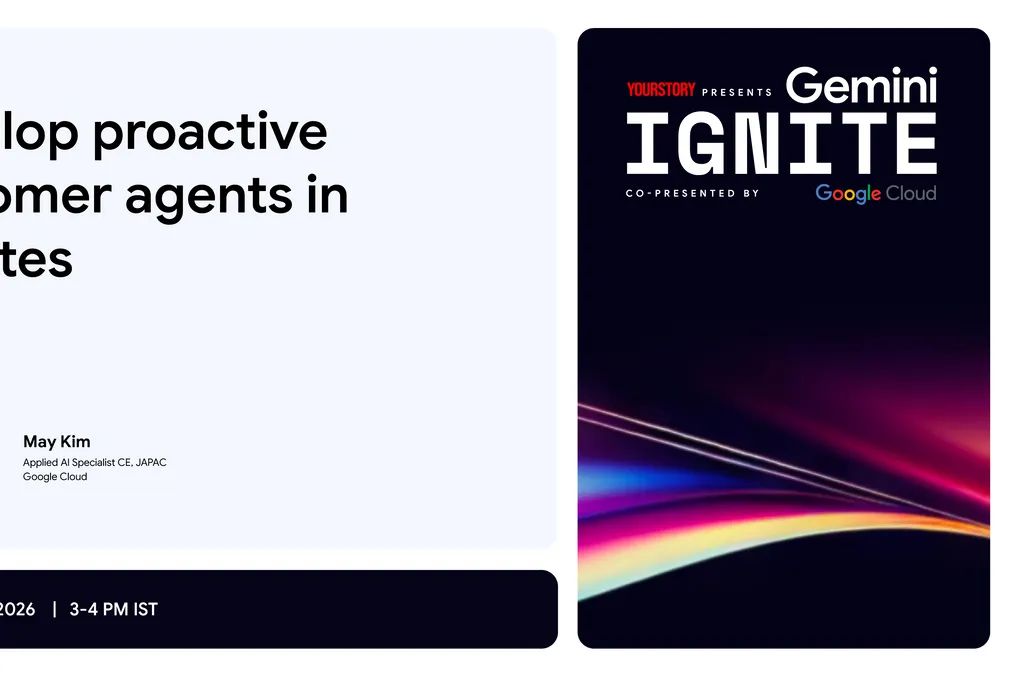
On September 4th, Google Cloud will host an updated 30-minute session with YourStory aimed at bridging the gap between theoretical knowledge and practical application. In a webinar titled 'Developing Proactive Customer Service Agents in Minutes,' Google Cloud AI experts will demonstrate how intuitive and high-performing customer service agents have become, moving beyond general discussions about generative AI. This session aims to prove that the era of complex, months-long bot development is over.

Instead of just reviewing slides, the event will immediately move to a platform demonstration, showing live how quickly a fully functional customer service agent can be configured and launched using Google's generative AI capabilities.

Participants will receive a comprehensive overview of Google's latest agent creation environment, which supports no-code and low-code modes for accelerated development. The session will help teams understand the platform's potential before live testing. They will then see the step-by-step process of deploying a working generative AI agent from scratch in under 15 minutes—a real demonstration that replaces theory with a working example.

The session will conclude with a discussion on how teams can accelerate their development cycles to provide a more natural, helpful, and brand-aligned customer experience at scale. The goal of the event is to provide a practical and repeatable path from idea to a working customer service agent.

Taewoo Kim, Platform Customer Engineer at Google Cloud, will moderate the session and guide the discussion between technical concepts and practical takeaways for participants. He will be joined by May Kim, Applied AI Specialist for the JAPAC region at Google Cloud, who will share her practical experience implementing generative AI solutions for customer applications in the region.

For teams that still rely on rigid, rule-based bots or estimate long development plans for AI-powered customer interactions, the difference between what is possible and what is actually implemented can be significant. This webinar is designed to close that gap by combining live no-code building with a clear presentation of how it can be scaled, giving decision-makers a real sense of what is required to move from a pilot project to production.

As customer expectations continue to rise, companies are under pressure to deliver faster, more natural, and more helpful interactions without needing to expand their technical teams. This session directly addresses this problem by offering a direct look at tools that lower the barrier to creating sophisticated customer service agents.

Popular