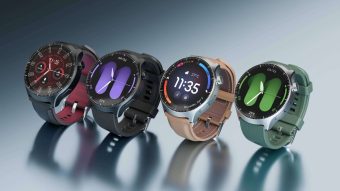
Motorola unveiled the Moto Watch Ultra this Thursday, September 3rd, during the IFA 2026 technology fair held in Berlin. This new smartwatch introduces the brand's line to the Wear OS operating system, developed by Google for smartwatches. The device integrates health functionalities in collaboration with Polar and features 4G mobile connectivity.
The international launch is scheduled for September 10th, with a price of US$ 349.99 (which is equivalent to approximately R$ 1,780 in direct conversion). Motorola informed that the watch will be available in specific Latin American markets, although it has not disclosed the cost or arrival date in Brazil.
In addition to the watch, the manufacturer also presented the Moto Snap Wireless Charger, a magnetic charger compatible with Qi2.2, capable of providing up to 30W of power to Motorola devices.
The Motorola flagship model shares a similar design to the original Moto Watch, which was launched in January during CES 2026. However, the Moto Watch Ultra features a slightly larger screen, measuring 1.5 inches, on a 46mm circular body, which is smaller than the simpler version.
In terms of durability, it maintains Gorilla Glass 3 protection, IP68 certification, and resistance up to 5 ATM, making it suitable for shallow water activities. The most significant change lies in the implementation of the Wear OS operating system, which allows for the installation of applications and access to Google services, such as YouTube Music and Maps, in addition to enabling payments via Google Wallet.
Additionally, the watch supports Gemini and the AI assistant Qira, provided by Lenovo.
The hardware of the Moto Watch Ultra is built on Qualcomm's Snapdragon W5+ Gen 1 platform. This four-core Cortex A-53 chip was produced using a 4-nanometer process and released in 2022. This new processor also enables 4G LTE connection via eSIM.
The transition to Google's more complete operating system appears to have affected battery life. According to Motorola, the Moto Watch Ultra offers about 50 hours of use when the screen is not set to always-on. This time is less than that of the base Moto Watches, which, according to the brand itself, can operate for up to 13 days.
Health and physical monitoring functionalities continue to be developed in partnership with Polar. Among the metrics offered are data on sleep, recovery, and training. To improve location accuracy in areas with signal obstructions caused by buildings, the smartwatch incorporates dual-frequency GPS.