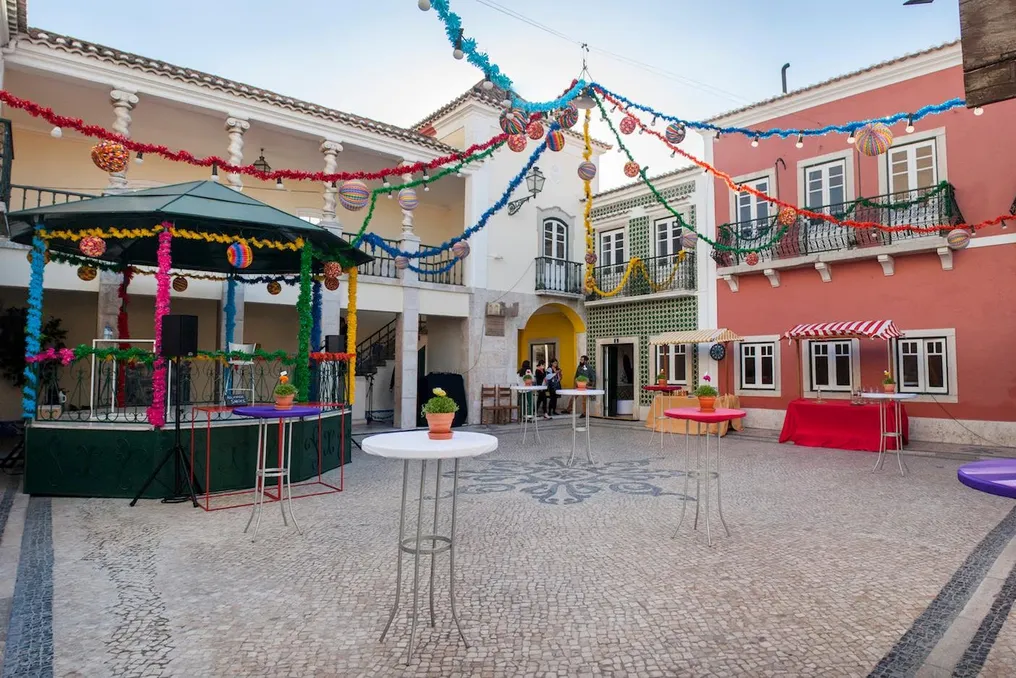
Páteo Alfacinha, located in the center of the Portuguese capital, functions as a small 'village' that integrates gastronomy and architecture. This discreet place is situated among various tourist attractions in Lisbon. The peculiar name of the space derives from a affectionate nickname given to the inhabitants of Lisbon, suggesting that they are as attached to their homeland as small lettuce plants rooted in their place of origin.
History and Concept of the Space
The Páteo Alfacinha project was initiated in 1981 by Vitor Seijo, an individual with a great appreciation for the city. He transformed a vacant lot into a new space with the purpose of harmonizing popular housing, noble residences, and traditional commerce. The structure replicates characteristic elements of Lisbon architecture, such as the use of tiles and iron balconies.
Located in the Ajuda neighborhood, the complex offers a variety of facilities, including houses, art studios, restaurants, bakery, a typical Portuguese tavern, and event areas.
Gastronomy and Attractions
One of the main establishments is the Horta restaurant, which features Portuguese cuisine prepared with ingredients from local producers. The menu includes dishes such as black squid and shrimp rice, white veal skewer, and Azores pork ribs. In addition to its rustic decoration, the restaurant offers a panoramic view of the Tagus River.
In the complex's outdoor patio, there is a bakery and a traditional tavern. Taverns, considered cultural heritage of Portugal, are family establishments that serve homemade and typical food.
Additionally, Páteo Alfacinha has a brewery and a wine cellar. At the Sagres brewery, visitors can observe a tile mural that narrates its history. The tiling complements the columns, which were recovered from the former Jerónimos Monastery. For wine lovers, the wine cellar displays approximately a thousand bottles from the 1981/1982 Colares vintage.
Views and Cultural Activities
Near the brewery, there is the Páteo Alfacinha viewpoint, from where one can see the iconic 25 de Abril Bridge, which connects Lisbon to Almada across the Tagus. The space also provides areas for artists and businesses, making it multifunctional. Among the artistic highlights are ceramic studios, such as Studio K, La Pata, and Malga, which maintain an artisanal and small-scale production approach.
The address of the Páteo is Rua do Guarda-Jóias, 44, in Ajuda, Lisbon. Operating hours are Tuesday to Saturday, from 12h to 15h and from 19h to 22h30, and on Sundays, from 12h to 15h, although each establishment may have its own hours.