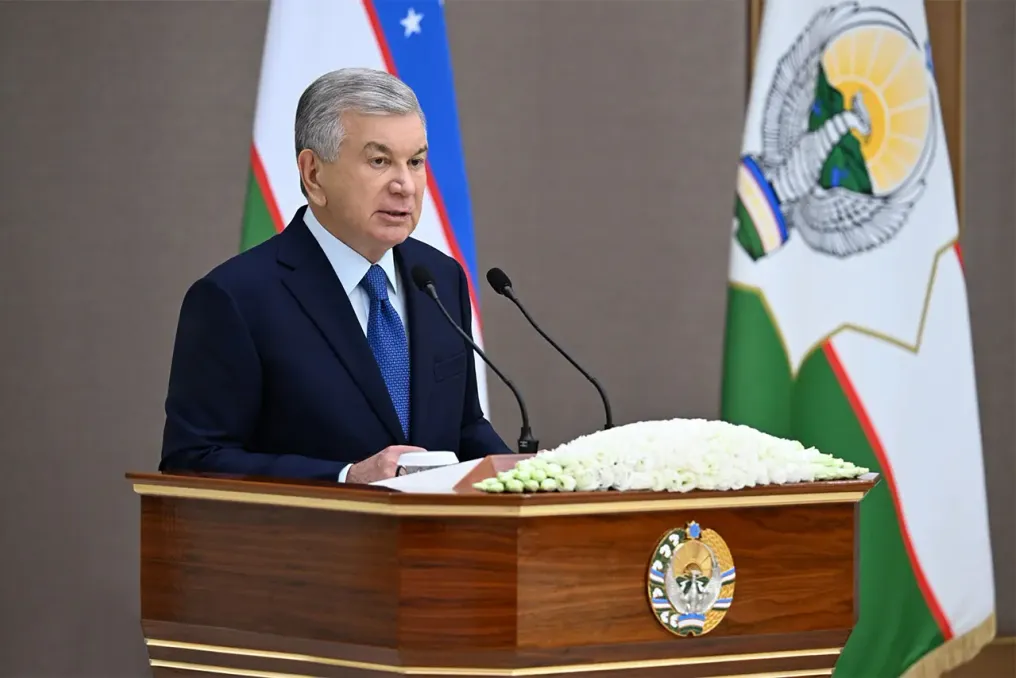
President Shavkat Mirziyoyev instructed a fundamental restructuring of the poverty alleviation system in Uzbekistan. According to this directive, regional authorities, banks, and officials at the mahalla level must take greater responsibility for job creation and increasing household incomes.
The resolution was adopted during a meeting chaired by the president to discuss measures for reducing poverty levels and raising incomes to a new standard. At the beginning of this year, the poverty rate in Uzbekistan decreased to 5.8%, with 2.2 million people classified as needy; since then, this number has reduced to 1.5 million.
Officials noted that thanks to the effective work of 49 districts and 3,429 mahallas, they have become free from unemployment and poverty. However, the president criticized the insufficient results in the remaining 159 districts and cities, as well as in 5,536 mahallas.
Mirziyoyev emphasized that all regions have been provided with equal powers, resources, and opportunities, and stressed the need for their effective use. During the meeting, the main reasons for the lack of results at the local level were examined. It was noted that employees responsible for 'mahalla seven' do not provide clear instructions to workers at the regional, district, city, and mahalla levels regarding the implementation of adopted decisions.
Some leaders were also criticized for their inability to properly utilize the provided conditions or objectively assess the work of 'mahalla seven.' Officials responsible for reducing unemployment and poverty showed an unwillingness to take responsibility for the decisions made.
The president compared the effectiveness of credit resources allocated between districts. Sharof-Rashid and Karshi districts received 2.3 trillion soms each in credit funds. In Sharof-Rashid district, these funds helped lift 30,000 people out of poverty, with an average allocation of 78 million soms per person. In Karshi district, living conditions improved for 13,000 needy people, with an average expenditure of 176 million soms per person.
Kamash and Psken districts received 1.1 trillion soms each. Kamash helped lift 28,000 people out of poverty, while Psken achieved the same result for only 4,500 people. Similar discrepancies were observed in the districts of Guzar, Nishan, Mubarek, Yangikorgan, Tashlak, Baysun, Altynsay, Bandikhan, Beshrik, and Fergana, as well as in the cities of Nurafshan, Bekabad, and Yangiyul.
In Psken district, 250 million soms in credit funds are spent to lift one person out of poverty. The president noted that the same amount in another region could provide permanent, well-paid industrial jobs.
Mirziyoyev reproached leaders of some regions for a lack of knowledge or ability to effectively use available resources to provide employment for people, stating that they do not fully understand the fluctuations and rapid changes occurring in the modern economy. Over the past year, 86,000 small businesses were created in the regions, but 15,000 of them, or 17%, subsequently ceased operations. Furthermore, 62,000 people who received bank loans but failed to create viable businesses are facing difficulties repaying their debts.
One of the identified reasons was that only assistants to mahalla hokims and mahalla bankers in 1,000 mahallas know how to work using a 'project approach.' By presidential order, all heads of economic sectors remained in Khorezm region to analyze the situation and develop new approaches to poverty reduction. Over two weeks, officials studied the situation of 81,000 low-income residents, or 19,000 families, in the region. They found 12,000 unemployed and 10,000 low-income individuals among these families.
At the same time, entrepreneurs in Khorezm are looking for 4,000 workers for construction, 3,000 for the service sector, and 2,500 for industry. Officials were instructed to use these opportunities to organize professional training for unemployed and low-income people according to company needs and then help them find jobs. Existing vacancies and training opportunities could increase the income of 10,000–15,000 residents from low-income families.
The study also showed that 48,000 children live in low-income families studied in Khorezm. Currently, officials do not have a special program for individual work with these children and their early involvement in vocational training. Each district in the region has at least one or two technical colleges and four or five training centers. Youth leaders, assistants to mahalla hokims, and women's movement activists were instructed to organize additional clubs in schools, technical colleges, and training centers for children from low-income families.
More than 10,000 women from low-income families in Khorezm are engaged in childcare, while preschool education coverage among children from such families remains below 75%. Another 646 college and university students have the opportunity to improve their professional skills through dual education in line with new projects being implemented in the region.
It was also noted at the meeting that strengthening social assistance for 526 elderly people and people with disabilities from low-income families could allow family members caring for them to earn an income through employment. The president stated that the findings from Khorezm are relevant to all regions and decided to introduce a fundamentally new poverty reduction system.
Under the new system, officials responsible for 'mahalla seven,' regional and district hokims, and banks will transition to an intensive working mode. Headquarters led by the hokim will be established in every region and district. Banks and employment support agencies will assist the headquarters in resolving local issues. Regional, district, and city hokims, together with the entire economic sector, will dedicate three days a week exclusively to poverty reduction and employment.
The president also criticized the project management skills of mahalla bankers and hokim assistants. He noted that many of them do not understand who needs a loan or which projects should be financed through leasing, factoring, guarantees, insurance, working capital, or contractual agreements. The practice of bankers and hokim assistants asking 'Do you have collateral?' before preparing a project was also criticized.
Mirziyoyev reported that bureaucratic barriers persist in lending to entrepreneurs, and repayment schedules are not adapted to the specific characteristics of individual enterprises. He stressed that loan repayment periods must take into account the characteristics of agriculture, trade, and other business activities. District headquarters will be empowered to manage preferential credit resources intended for developing family and youth entrepreneurship. They will be able to independently determine who receives loans and in what amount, whether funds are provided in cash or non-monetary form, whether repayment terms should be extended, and how to adapt payment schedules to specific enterprises. The headquarters will also receive powers related to inclusive financing.
Currently, 1.37 trillion soms is allocated for family entrepreneurship, and 450 billion soms for youth entrepreneurship. District headquarters will make funding decisions based on local conditions and project effectiveness. If a leading entrepreneur establishes cooperation with 10 families, they can receive an unsecured loan of up to 500 million soms. Cooperation with 100 families allows access to loans of up to 5 billion soms. Preferential financing will also be available to citizens with overdue credit histories based on individual assessment.
District headquarters will receive 240 billion soms from the Poverty Reduction Fund, 100 billion soms from the Employment Fund, and 760 billion soms from the three 'notebooks' used for targeted social support. From now on, district headquarters will also independently decide on subsidies and interest-free loans. The remaining 300 billion soms allocated until the end of the year for compensation payments to entrepreneurs will also be distributed through the headquarters. In total, 3.2 trillion soms in resources will be available to districts with a special focus on achieving specific results from their use.
The practice of establishing conditions for providing loans, subsidies, and compensations directly through presidential decrees and resolutions will cease. The Ministry of Economy and Finance and the Central Bank will instead update financing mechanisms quarterly, taking into account regional potential. By presidential order, mahalla assistants in the economic sector were transferred to a project-based work system. For this purpose, 8,992 mahalla assistants will be appointed temporarily. Responsible and proactive employees will be reassigned, and those who do not meet the requirements will be replaced. Officials were instructed to create a training center within two months and invite foreign specialists to participate. Mahalla assistants will be trained there in the project approach. By the end of the year, regional headquarters will send the two best mahalla assistants from each district to China, Japan, and Turkey for advanced training. The most successful mahalla assistants will receive a special qualification category and an additional salary of up to 50%. Mahalla bankers will also receive similar training and opportunities for foreign internships. The Prosecutor General's Office was tasked with helping to eliminate factors hindering the independent decision-making of mahalla bankers and hokim assistants.
The system for implementing entrepreneurial infrastructure projects at the local level will also be revised. Currently, such issues are mainly resolved at the regional level, which causes delays. It was noted that granting districts the status of project clients and directing funds directly to the local level will accelerate implementation. It was proposed to allocate two to three times more funds from the state budget for projects financed from local funds and aimed at creating jobs in difficult mahallas. From now on, the head of the district headquarters will be responsible for developing projects financed by resources allocated to districts for entrepreneurial infrastructure. District headquarters will have the right to transfer design, construction, and quality control of projects to the private sector. The head of the headquarters will remain responsible for the timely commissioning of facilities and compliance with quality requirements.
New approaches to strengthening social protection for needy families were also outlined at the meeting. The National Agency for Social Protection was instructed to revise the system for including needy people in the 'Social Register' by the end of the year. A multidimensional assessment system will be introduced that will consider not only household income but also factors such as chronic diseases, disability, large family status, and whether a family member works abroad.
Despite the national poverty rate decreasing to 3.9%, the average rate among families with children under three years old is 6.5%. The president stated that a system would be created allowing parents caring for children to work and earn without leaving home or directly from the mahalla. Working mothers will receive benefits from the Social Insurance Fund until the child reaches one year of age.