Unemployed and temporary teachers seeking permanent employment are falling victim to a sophisticated scam. Scammers are impersonating representatives of the Western Cape Education Department (WCED) or school principals, demanding thousands of rand for non-existent teaching positions.
WCED has issued a new warning after several schools reported incidents related to WhatsApp messages falsely informing teachers that they had been selected as preferred candidates for permanent posts.
In some cases, scammers allegedly used the names and photos of real school principals or education officials to give the messages an appearance of legitimacy. A WCED representative, Brona Hammond, stated that recipients were usually informed about the availability of a permanent vacancy at a specific school and that they had been identified as a preferred candidate.
The message then instructed the teacher to report to the school with certain documents or contact the supposed official from WCED using the contact details provided by the scammers.
How the WCED recruitment scam works
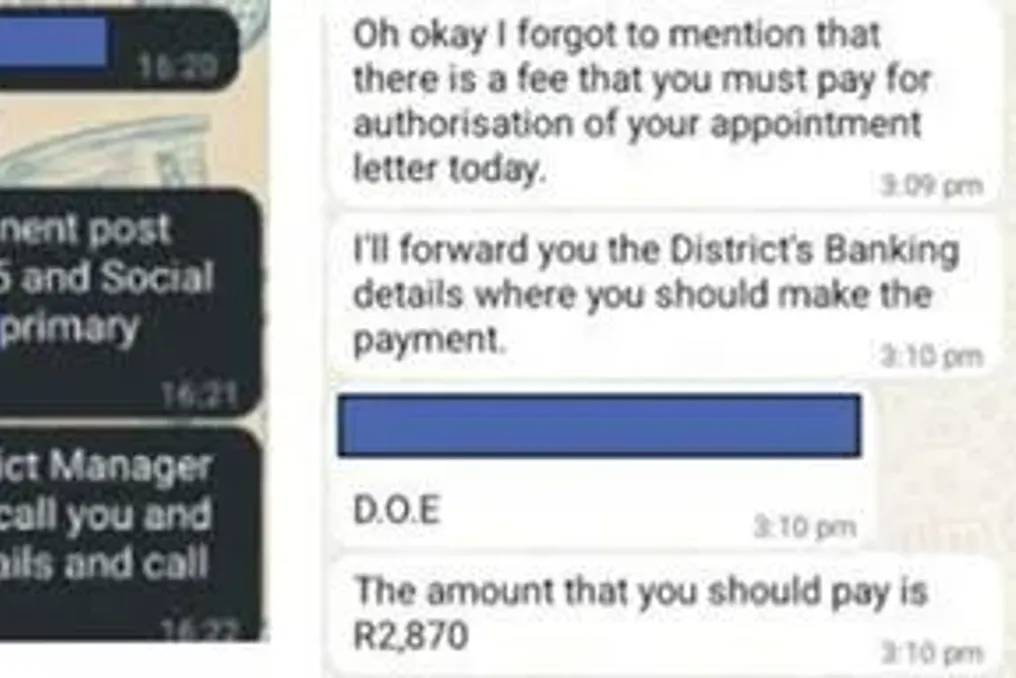
The trap is sprung at the end of the communication when the teacher is instructed to pay a one-time fee of approximately 2800 rand, supposedly necessary for the 'authorization of the appointment letter' at district offices. Bank details are then provided for the payment.
Hammond confirmed that some educators have already fallen victim to this scheme. She noted: 'Unfortunately, some teachers have become victims of this fraudulent scheme, arriving at schools having paid the so-called 'authorization fee', only to discover that such a position does not exist.'
She added that this deception has caused significant distress to the victims and could damage the reputation of the schools, principals, and district officials whose names and identities are used by the scammers. The latest incidents occurred after the department first raised the alarm about this scheme in December 2025, warning educators about fraudulent approaches targeting new, unemployed, and temporary teachers. Despite the previous warning, similar cases have reappeared.
What teachers should do
Hammond emphasized that teachers will never be required to pay money to get a job with the department. She stated: 'No payments are required for any appointment at WCED.'
Permanent teaching positions are advertised exclusively through the WCED Recruitment and Selection Directorate, and the official platform for posting advertisements and submitting applications is the department's E-Recruitment online system. Unemployed educators must register and apply through this system. Temporary appointments are managed directly by schools, but applicants are strongly advised to verify the legitimacy of any vacancy or offer before providing documents or following instructions received via WhatsApp.
The department indicated that any request for payment related to an appointment should be immediately treated as suspicious. Affected teachers were advised to report incidents to the South African Police for investigation and to notify WCED of suspicious activity. Hammond expressed particular concern about the impact of the fraud on young professionals desperately seeking work. She added: 'We sincerely hope that no one else falls victim to this malicious scam, which not only undermines the reputation of our staff and institutions but also destroys the aspirations of young professionals looking for meaningful employment opportunities in the education sector.'
WCED affirmed its commitment to protecting the integrity of its hiring processes and ensuring the safety of educators. Teachers were reminded that WCED, including its head office, district offices, and schools, will never ask applicants to pay a fee for application submission, appointment, or 'authorization' to secure employment.