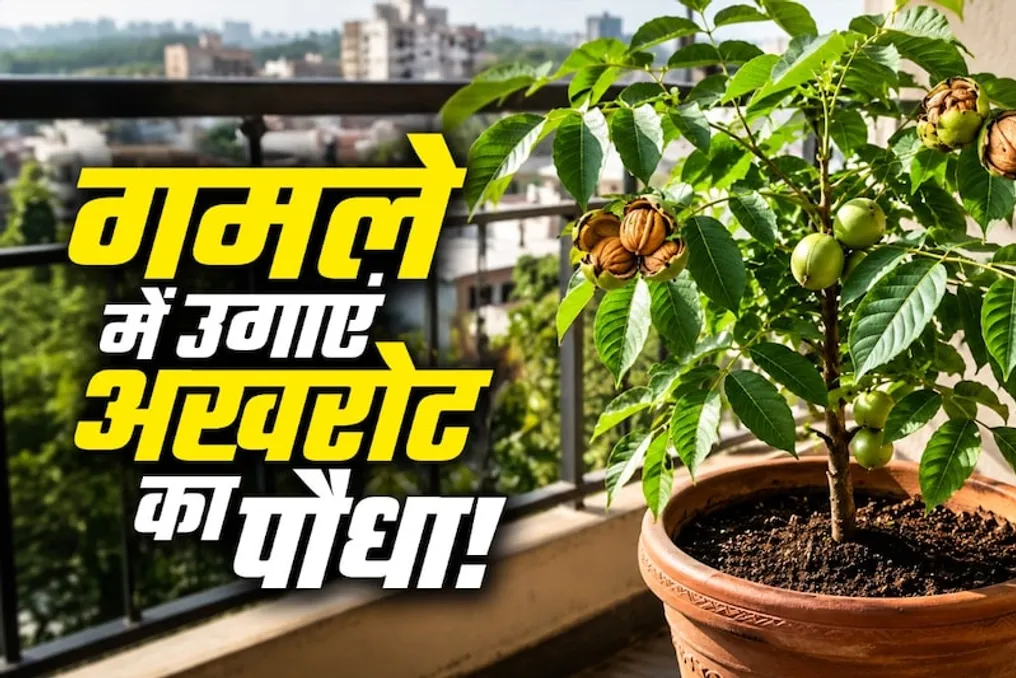
How to grow a walnut tree in a pot: a simple method instead of buying expensive nuts
Read more
Aaj Tak
www.aajtak.in

How to grow a walnut tree in a pot: a simple method instead of buying expensive nuts

When it comes to dried fruits, people often think of almonds, cashews, and walnuts. However, hearing the word 'walnut,' many people picture large trees growing in the mountains and in Kashmir. Because of this, many assume that you can only plant a walnut tree in a field or a garden. But what if we told you that you can very easily grow a walnut at home, in a small plot? If not, you should give it a try.

You can grow a walnut in a small pot on a balcony or rooftop, but this requires some patience. A walnut is not a plant that will bear fruit within a few months. It requires a significant amount of time for full development. The correct seed, a deep pot, good soil, and proper care are extremely important. If your seedling develops correctly, you can avoid buying expensive walnuts in the store and obtain a high-quality product.

How to grow a walnut at home:

First, choose a quality walnut: if you want to prepare a seedling from a walnut, start with a healthy and high-quality seed. It is recommended to soak the walnut in water for about two to three days, and then proceed with preparing for planting.

It is important to remember that germinating a seedling from a walnut seed is not always easy. Many walnut varieties require cold and moist conditions to germinate. Therefore, simply putting the seed in the ground will not guarantee germination every time.

Choose a deep pot: Instead of a small, ordinary pot for planting a walnut, you should choose a large and deep container. There must be appropriate drainage holes at the bottom of the pot. This is because walnut roots require enough space underneath. If the roots do not have enough space, it can negatively affect the plant's growth.

What kind of soil should there be? Soil suitable for a walnut plant is one that does not retain water and ensures good drainage. Loam is considered a suitable option. You can create such a mixture by adding sand and organic fertilizer to the soil so that it retains moisture, but excess water drains easily. The most important thing is that water should not stagnate in the pot. Excess water and constantly moist soil can damage the roots.

How deep should you plant the walnut? The walnut seed should be planted in the prepared soil to a depth of about 2-3 inches. After that, a thin layer of soil should be sprinkled on top. After planting, the seed should be kept slightly moist. Do not overwater. Water only when the soil begins to dry out.

How important is sunlight? The walnut plant needs good light. Although it is better to protect the plant from overly strong and scorching direct sun in the initial stage, as the plant grows, it is crucial to place it in a well-lit area.

Be careful with watering: When watering the plant, you should not rely solely on whether it is a 'watering day.' First, you need to check the moisture level of the soil in the pot. If the top layer of the soil is still sufficiently moist, there is no need to water again. Water stagnation in the pot can harm the walnut plant, so proper drainage is the most important aspect.

Fruiting will take a long time: If you plant a walnut, do not expect an immediate harvest. A seedling grown from a seed may take several years to begin bearing fruit. According to some reports, a walnut may start fruiting in about 4 years or even longer, and full development can take even more time.

What to understand when growing in a pot: Walnuts can usually become quite large trees. Therefore, growing in a pot is only suitable for the beginning, but as the plant grows, it may need more space. It is important to monitor the roots and the plant's growth in a large container from time to time.

If you have a large yard, open space, or a garden, providing the plant with sufficient space in the long term will be the best option.

Similar stories

How to green up your home if you don't have a balcony: 5 places to plant plants
Read more
www.aajtak.in

How to green up your home if you don't have a balcony: 5 places to plant plants

The desire to decorate one's home with plants is popular among many people because they not only improve the appearance of the dwelling but also refresh the atmosphere. However, in large cities, there is often a lack of space to create a full-fledged garden, and having a balcony can be difficult.

Even if your home does not have a traditional yard or balcony, there is no need to worry. Plants do not always require a large area or an open balcony. Places such as a windowsill, a bare wall, a roof, or a small corner in the kitchen can become a new place to grow greenery.

In small living spaces, the method of smart gardening is currently being actively used. It involves utilizing free spaces in the home using pots, hanging baskets, and vertical gardens to grow plants. Below are listed places where you can easily start growing plants.

If your home lacks a balcony, the windowsill can be the simplest and best option for growing plants. In areas that receive enough sunlight, small pots or window boxes can be placed. Here you can plant herbs such as basil, mint, oregano, lettuce, and radish, which grow well in limited space.

A bare wall in the house can serve not only as a decorative element. It can be transformed into a beautiful vertical garden. By using small baskets, hanging pots, plant pockets, or old bottles, you can place many plants at once. The main advantage of this approach is that the plants grow upwards, not along the ground, allowing more plants to be placed in a smaller area. This gardening technique is very useful for small homes.

If you have a roof on your house, you can create a magnificent garden by planting a large number of plants there. On the roof, compared to a balcony, there may be more open space and more sunlight, so you can grow not only flowers but also larger plants and vegetables such as tomatoes, peppers, beans, and cucumbers. When placing pots on the roof, it is necessary to consider weight, water drainage, and the intensity of solar radiation.

Not all plants require bright sunlight to grow. Some herbs and plants can be successfully grown in corners of the house that receive moderate light. With small pots or hydroponic setups, you can place plants on the kitchen counter, in the dining area, or in any bright indoor corner. This will add greenery to the home and make the small space more attractive.

Even if your home does not have a balcony, you can use railings, lattices, or fences for gardening. For this, you can install trellises or wire supports to support climbing plants. Plants such as beans, cucumbers, and flowering climbers gradually rise upwards, turning the entire fence into a lush green corner. Thus, a bare fence or railing is transformed into a picturesque green spot.

These 6 plants grow easily on walls and can give your home a green look without needing much space
Read more
www.aajtak.in

These 6 plants grow easily on walls and can give your home a green look without needing much space

Many people want to have plants in their homes, but in small apartments or studios, the problem arises of where exactly to place the pots. Placing pots on the floor reduces space and makes the house feel cluttered. In such cases, empty walls can be used to make the home beautiful and green by placing plants on them.

Using vertical gardening is especially useful in small dwellings because it allows you to increase the amount of greenery without taking up much space. This does not require soil or a large area. Below are six types of plants suitable for this purpose.

Plants that grow easily on walls:

1. Sansevieria (Money Plant): Sansevieria is a simple option for decorating home walls. Its trailing shoots can be directed upwards along the wall or hung in a pot, allowing them to hang down. In small apartments, on balconies, or near windows, it can be placed to beautifully decorate an empty wall.

2. Pothos: The long runners of Pothos are excellent for placement on walls. It can be placed in small floor pots, hanging baskets, or on shelves from which the runners will cascade. If you aim to create a natural, slightly jungle-like look in your home, this plant type will be a good choice.

3. Philodendron: The leaves of the Philodendron are very attractive, and some varieties are climbing. It can be placed in small pots or on shelves attached to the wall. By slowly directing the plant's shoots upwards or sideways, you can significantly change the appearance of the wall.

4. Syngonium in small pots: If you prefer compact plants with beautiful leaves rather than large ones, you can plant Syngonium. By placing it in small pots attached to the wall, you can create a green corner by combining several plants. Placing pots at different heights will make the wall even more attractive.

5. Hoya for creating a vertical garden: The runners and thick leaves of Hoya give a decorative look when decorating walls. By placing it in a small wall-mounted pot and allowing the runner to grow downwards, you can create the effect of a miniature vertical garden using several pots of different sizes on one wall.

6. Monstera for a stylish look: The large, characteristic-holed leaves of the Monstera distinguish it from other plants. If you want to give an empty wall in your home a more stylish look, it can be placed on a shelf or in a large wall pot. Instead of putting large pots on the floor, you can use wall-mounted plants, thus saving space.

Tips for placing plants on the wall

When greening a wall, you should avoid using overly heavy pots. You need to choose lightweight pots and ensure they have a proper drainage system. If water constantly drips directly onto the wall, it can lead to stains and dampness. It is also preferable to place plants in areas where they can receive enough light according to their needs. To achieve a more natural and beautiful look, it is better to place the pots on the wall not in a straight line, but at varying heights.

According to Vastu, these 4 plants should be placed in the southwest direction of the house to attract wealth
Read more
www.aajtak.in

According to Vastu, these 4 plants should be placed in the southwest direction of the house to attract wealth

In addition to improving the appearance of the home, many people pay attention to Vastu principles when decorating their houses. In Vastu teachings, there are various views on plants; it is believed that placing a suitable plant in the correct direction helps create a positive atmosphere in the home.

According to Vastu, the southwest direction is associated with stability and solidity. Certain types of plants are recommended for this zone. If you are planning to green your home, you can consider the following four plants for placement in the southwest sector.

Rubber Plant. The Rubber Plant is easy to grow indoors, and its large, dense leaves give the house an aesthetic look. According to Vastu beliefs, placing a Rubber Plant in the southwest direction is considered auspicious. It is important to place it where it will receive enough light and to regularly clean its leaves.

Sansevieria (Snake Plant). Sansevieria grows well even with minimal care and does not require frequent watering. Thanks to its straight and sturdy leaves, this plant is a good choice for decoration. Vastu links the placement of this plant in the southwest direction with positive energy and stability.

Jade Plant. In Vastu, the Jade Plant is associated with prosperity and wealth. Its small, dense, and green leaves make it very attractive. There is a belief that placing it in the southwest direction supports financial stability and a positive environment in the home. Care must be taken not to overwater the Jade Plant.

Areca Palm. The Areca Palm is used to make the house greener and more beautiful. According to some Vastu concepts, it can be placed in the southwest direction. However, to maintain the plant's health, it needs sufficient light, air circulation, and the correct amount of water.

In Vastu, the southwest direction is connected to the earth element. Therefore, pots of brown, beige, earthy, or terracotta colors are recommended for this area. For large plants, sturdy and heavy pots are best.

Do not leave withered plants. After planting, the plant requires constant care. Dry or withered plants should not be kept in the house for long. Dry leaves must be removed, and the plant must be provided with the necessary watering and lighting according to its needs. According to Vastu, thorny plants and heavily sprawling vines should be avoided in the southwest direction.

Popular