Although Karnataka's technological history may be associated with Bengaluru, the state is now seeking new sources of growth outside its capital. The Hubballi-Dharwad-Belagavi (HDB) cluster is becoming a key element of the state's 'Beyond Bengaluru' strategy.
As part of this strategy, the state has set a goal for the next three to five years: to attract 35 large companies, five Electronic System Design and Manufacturing (ESDM) enterprises, ten Global Capability Centers (GCCs), and one hundred startups to the region.
The government supports these ambitions by allocating a cluster seed investment fund of 25 crore rupees, developing infrastructure in Belagavi, investing in electronics manufacturing, and creating programs that link industry with educational institutions.
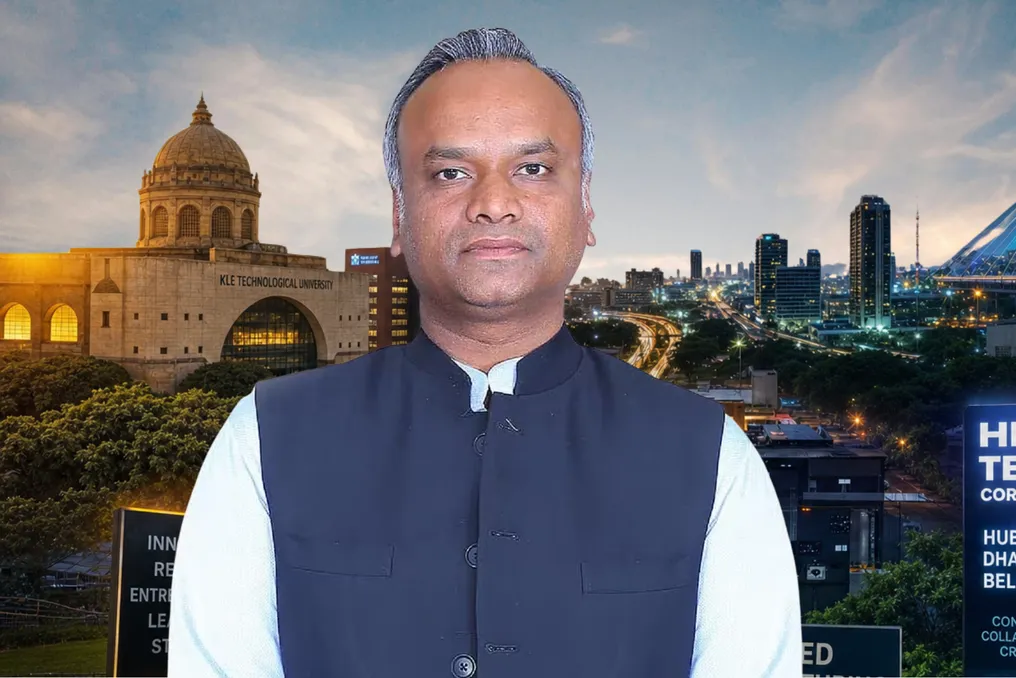
Priyank Kharge, the Karnataka Minister for Home Affairs, IT, Biotechnology, and Electronics Governance, noted that the HDB region already possesses an industrial base and the necessary capabilities for more active participation in the state's growth.
Kharge emphasized that competencies are being developed in HDB in areas such as semiconductors, ESDM, electric vehicles, artificial intelligence, deep tech, Industry 4.0, and advanced engineering.
The HDB cluster unites three cities, each with its own advantages: Hubballi has a growing technological and entrepreneurial base, Dharwad is renowned for strong academic and research institutions, and Belagavi has an established base in aerospace, precision engineering, and advanced manufacturing.
According to Kharge, combining these strengths can create a more robust ecosystem for innovation, investment, and entrepreneurship. This approach is also part of the state's broader efforts to create opportunities closer to where talent, institutions, and industry are already concentrated.
The HDB Techceleration 2026 event gathered over 700 participants, including more than 100 startups and over 25 investors, as well as representatives from industry, government, academia, and technology stakeholders.
According to KDEM data, the entire HDB cluster comprises 850 DPIIT-recognized startups and provides approximately 30,000 jobs in technology and technology-related sectors. The estimated economy of the cluster is 2.79 lakh crore rupees, accounting for about 11% of Karnataka's GDP.
The HDB cluster covers not only three cities but also six districts: Hubballi, Dharwad, Belagavi, Bagalkot, Gadag, and Haveri. The region is also actively developing manufacturing infrastructure. Plans include developing about 200,000 square feet of GPC infrastructure in Belagavi over the next six months, and 224.5 acres have been earmarked for an electronics manufacturing cluster in Kotur-Belur. The company Aequs is also developing an approximately 400-acre electronics cluster in Dharwad.
For Karnataka, promoting HDB is part of a larger attempt to distribute technological growth across the state instead of concentrating it in Bengaluru. Kharge stated that the government will focus on simplifying conditions for companies wishing to establish and scale up in the region.
He added: