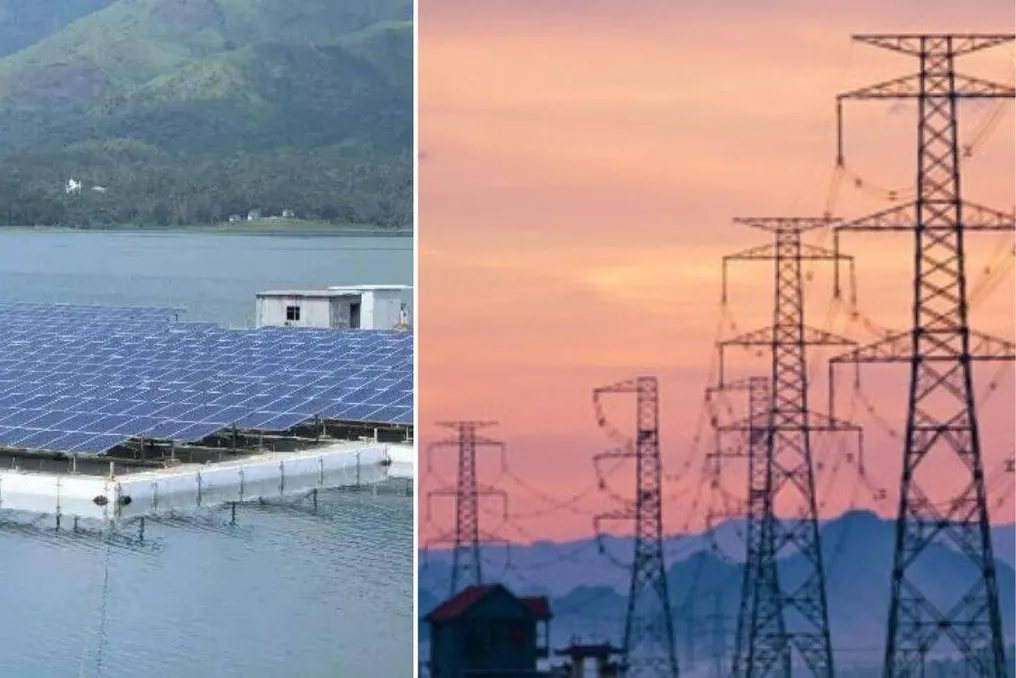
The expansion of solar energy in India is entering a new phase, where floating photovoltaic projects are being considered as a solution to two key problems in the country's renewable energy sector: limited land resources and the need for more reliable electricity generation.
A significant boost in this direction was given by the approval of the Pradhan Mantri Surya Sarovar Yojana (PM-SSY) scheme by the Union Government on July 31, 2026. According to the Press Information Bureau (PIB), this program provides support for 5000 MW of floating solar photovoltaic capacity on reservoirs and other suitable inland water bodies, as well as equipping them with energy storage systems with a minimum reserve of two hours.
The total financial outlay for this scheme is 507 billion rupees, and its implementation is planned from the fiscal year 2026-27 to 2030-31. The government asserts that this initiative will help reduce the burden on land resources, increase grid stability, and open a new path for expanding India's renewable energy potential.
Over the last decade, India's solar energy sector has undergone radical changes. According to government data, installed solar capacity has increased from approximately 3 GW in 2014 to 162.15 GW as of June 30, 2026, representing a growth of more than fifty times. This expansion has been supported by large solar parks, rooftop installations, solar pumps for agriculture, competitive bidding, and policies aimed at strengthening domestic manufacturing.
Floating solar energy opens a new horizon for India's clean energy efforts. The government reported that in the fiscal year 2025-26, India added 44.61 GW of solar capacity, almost double the 23.83 GW added in the previous fiscal year. During the same period, the total non-fossil fuel capacity reached 283.46 GW, including 274.68 GW from renewable sources.
The new policy towards floating solar energy builds upon this broader growth by utilizing a resource not required by traditional solar projects—water surfaces. PM-SSY is designed to support 5000 MW of floating photovoltaic generation projects with associated energy storage systems, according to the PIB. The storage component will have a minimum capacity of 10,000 MWh, equivalent to two hours of storage for the planned 5000 MW of floating solar capacity. This is intended to help states manage peak electricity demand periods and solve one of the central challenges of solar energy—its variability.
Floating solar panels are installed on floating structures and placed on reservoirs, lakes, ponds, and other suitable water bodies. Thanks to this technology, electricity generation occurs on the water surface, without competing with agriculture, settlements, forests, or other land uses. Government estimates suggest that there is currently about 700 MW of floating solar capacity in India. Thus, PM-SSY will ensure a substantial increase in the application area of floating solar energy in the country.
The scheme is based on an assessment by the National Institute of Solar Energy (NISE), which forecasts that India has a potential of about 102.18 GWp of floating solar energy on reservoirs and suitable inland water bodies. The appeal of floating solar energy goes beyond simple land preservation. Floating photovoltaic systems can benefit from the cooling effect of water, which improves panel operating efficiency compared to installations exposed to higher temperatures on land. Studies mentioned in the material show that floating systems can generate 0.6% to 4.4% more energy than comparable ground-mounted installations, although actual performance depends on location and technology.
Furthermore, the panels can shade parts of the water bodies, reducing sunlight exposure and potentially lowering evaporation. This is particularly relevant for water-scarce regions where reservoirs are used for irrigation, drinking water, or hydropower.
The scale of potential benefits depends on factors such as climate, percentage of water surface coverage, and characteristics of individual reservoirs. Floating solar energy can also be combined with existing hydropower infrastructure. Solar generation can utilize existing transmission lines, while hydroelectric or pumped storage stations can provide balancing for variable solar output. This combination may become increasingly important as India scales up renewable capacity in its grid.
India already has experience in floating solar energy. Some of the country's largest floating solar installations are already operational or under development. The Omkareshwar project on the Narmada River reservoir in Madhya Pradesh is rated at 600 MW and is one of the most prominent projects in the country. Other major installations include the 100 MW NTPC project in Ramagundam, Telangana, built on a sludge pond near a thermal power plant, and the 92 MW project in Kayamkulam, Kerala. These examples demonstrate how floating solar energy can be implemented on various types of water bodies, including reservoirs and water surfaces associated with existing industrial infrastructure.
Floating photovoltaic systems are no longer a niche technology. The first installation was developed in Japan in 2007, and larger projects began appearing in the following decade. According to the data provided, global installed capacity rapidly grew from approximately 1 GW in 2018 to 13 GW in 2022. Asia is at the forefront of this expansion, with China developing some of the world's largest floating solar installations. In 2022, China added a 320 MW floating photovoltaic facility in Dezhou, Shandong, developed by Huaneng Power International. Previously, large projects included installations on reservoirs and former mining sites.
The technology has also extended beyond inland waters. Offshore floating solar energy remains relatively young, but pilot projects have been developed in marine environments, including installations in the Maldives and the North Sea. The economics of floating solar energy have also improved. Although floating projects previously carried a significant price premium compared to traditional solar installations, costs approached ground-based systems by 2020. However, studies presented indicate that in 2023, installation costs remained about 10-25% higher, mainly due to additional requirements for mooring and anchoring.
Land availability is becoming an increasingly critical factor as renewable energy generation expands in India. Large solar parks require vast tracts of land, and acquiring suitable territory can involve competing demands from agriculture, settlements, conservation goals, and other economic activities. Floating solar energy offers an alternative, allowing electricity generation on existing reservoirs, industrial ponds, irrigation basins, and other artificial water bodies. This allows solar energy to be harnessed without consuming precious land resources.
The conventional expansion of India's solar energy has already demonstrated the necessary scale to meet national targets. Large projects account for 118.79 GW of installed solar capacity, and grid-connected rooftop systems contribute another 27.88 GW, according to the government. Floating solar energy can add another layer to this composition without necessarily requiring a comparable amount of land. The potential is particularly significant around existing hydropower reservoirs, where solar generation can potentially utilize shared transmission infrastructure and complement hydropower output.
The storage component within PM-SSY is particularly crucial as India's solar expansion moves into a phase where generation capacity alone will be insufficient. Solar energy is primarily generated during the day, whereas electricity demand can remain high after sunset. Energy storage helps shift some of this generation to periods when it is most needed. Under PM-SSY, it is expected that every supported floating solar project will be linked to an energy storage system of at least two hours. The government anticipates that this will help states manage peak demand and enhance the reliability of renewable energy. The combination of floating solar energy, existing reservoirs, and storage systems can create a model that goes beyond simply increasing generation capacity. In areas with hydro or pumped storage infrastructure, this interconnection can become even more valuable. Reservoirs can potentially function as part of an integrated renewable energy system, allowing solar generation to be balanced using stored water or battery systems.
The environmental advantages of floating solar energy must be considered alongside its potential risks. Partial coverage of the water surface can reduce evaporation and sunlight penetration, potentially helping to conserve water and limit certain forms of algal growth. However, extensive shading can also alter aquatic ecosystems. The environmental impact heavily depends on the type of water body, the percentage of covered surface, depth, and water movement, as well as the design of the floating system. Offshore floating solar energy presents additional challenges. Mooring, anchoring, and installation activities can disturb benthic sediments and potentially affect benthic ecosystems. Large installations can also alter the amount of sunlight reaching seagrass beds or coral reefs. This means that floating solar energy cannot be viewed simply as a zero-impact alternative to terrestrial solar energy. For India, where reservoirs serve multiple functions, including irrigation, drinking water, aquaculture, and hydropower, careful site selection and long-term environmental monitoring will be crucial as adoption expands.
The launch of the floating solar energy program in India occurs against the backdrop of a broader policy architecture that has spurred the growth of solar energy in the country. The National Solar Mission, launched in 2010, helped set long-term goals, while the Solar Parks Scheme and the Green Energy Corridor program addressed infrastructure and transmission issues. According to government data as of February 2026, the Solar Parks Scheme supported 54 parks with a total sanctioned capacity of 39,188 MW. The Green Energy Corridor is designed to transport renewable electricity from regions with high generation potential to major demand centers. By February 2026, this program enabled 24,567.8 MW of renewable energy to be connected to the grid through strengthened transmission networks. Competitive bidding has also transformed the solar energy economy. The government reports that solar tariffs have fallen from approximately 18 rupees per unit in 2010 to 2.44 rupees per unit at the Bhadla Solar Park auction in 2017. Expansion is now increasingly supported by domestic manufacturing. According to PIB, solar module production capacity grew from 2.3 GW in 2014 to approximately 172 GW as of March 31, 2026.
India's solar transition is also becoming increasingly decentralized. The PM Surya Ghar: Muft Bijli Yojana, launched in February 2024 with allocations of 75,021 crore rupees, aims to expand the use of solar panels in households. According to government data, by June 2026, solar panels had been installed in over 4.3 million households. In agriculture, the PM-KUSUM program supports solar pumps, decentralized solar generation, and solar electrification of power lines. Nearly 11.49 million standalone solar pumps have been installed, and over 15.89 million...