Psychological Reasons for Discomfort When Stopping Reading Mid-Chapter
Read more
YourStory [india, en]
yourstory.com

Psychological Reasons for Discomfort When Stopping Reading Mid-Chapter

When a reader closes a book, feeling the need to sleep due to an early start, a sense of incompleteness often arises. Part of the consciousness continues to cycle through the plot, wondering about the future development of events, and despite the promise to continue tomorrow, the desire to read one more page remains strong.

Most readers are familiar with this feeling: stopping at the end of a chapter seems natural, whereas interrupting reading in the middle causes discomfort or even frustration. Although the difference seems minor, the brain perceives it completely differently, and this is explained by psychology, the art of narrative, and neuroscience.

The main reason for discomfort when stopping mid-chapter lies in the human brain's natural need for completeness, which psychologists call the desire for closure. When we encounter an unfinished task, an unanswered question, or an incomplete narrative, our mind continues to think about it, even after we switch to other activities.

A chapter often functions as a complete unit within a larger story, usually containing a mini-arc with its beginning, development, and finale. Stopping reading before reaching this endpoint forces the brain to view the story as an unfinished business, leading to a persistent feeling that the reader's attention is still required.

The phenomenon known as the Zeigarnik effect helps explain why unfinished tasks remain so memorable. Studies show that people remember unfinished activities better than completed ones because unfinished tasks create mental tension.

When reading is interrupted mid-chapter, the brain keeps this unresolved narrative active. Questions remain unanswered, conflicts are unresolved, and the mind continues to search for a conclusion, making it difficult to fully detach from the story. This is why hours after putting the book down, a person may still be thinking about it.

Writers understand how readers think. Many chapters are intentionally structured to build momentum toward a key revelation, emotional moment, or dramatic turn. Even if a chapter does not end with a major cliffhanger, it often creates enough anticipation to prompt the reader to continue.

Stopping before receiving this climactic moment can feel like a pause in a conversation right before someone reveals an important secret. Curiosity remains active because the expected information has not appeared. This unfinished anticipation continues to draw the reader back to the book.

Reading is not just processing words on a page. As readers become involved in characters and events, they begin to care about the outcomes. The stronger this emotional connection becomes, the harder it is to leave the story unfinished.

Imagine reading a chapter where a character is about to make a life-changing decision. Even if nothing dramatic has happened yet, the emotional involvement makes one want to stay until the result is known. Stopping in the middle interrupts this emotional journey, forcing the brain to seek answers.

The division into chapters exists for a reason. It provides readers with moments of transition and psychological rest. Finishing a chapter gives the brain a sense of accomplishment, as a complete narrative unit has been processed.

Interrupting reading mid-chapter eliminates this sense of completion. Instead of a natural pause, there is an interruption of the story flow. The brain recognizes this interference and continues to view the narrative as unfinished, which explains why many readers instinctively try to finish the chapter before stopping.

Paradoxically, the modern world of constant interruptions can make the desire for closure even more pronounced. Throughout the day, people encounter unfinished emails, paused videos, interrupted conversations, and endless notifications. Reading often becomes one of the few activities where full concentration is possible.

When this concentration is broken mid-chapter, it can feel particularly unsatisfying. The unfinished story joins the growing list of pending tasks that are already competing for mental attention, intensifying the desire to return to reading.

The same psychological forces that make stopping mid-chapter difficult are often responsible for late-night reading sessions. Readers promise themselves to stop after one more chapter but find that every ending generates a new question or possibility.

The desire for closure combines with curiosity and emotional involvement, creating a powerful motivation to continue reading. Soon, what started as a short session turns into several extra hours spent turning pages.

Stopping mid-chapter causes discomfort because the brain is geared towards seeking completeness. Unanswered questions, unfinished narratives, and unresolved emotions create mental tension that persists long after closing the book. Add to this captivating storytelling and emotional involvement, and it is easy to understand why readers often struggle to stop reading halfway through a chapter.

Next time you find yourself reading late because you 'just need to finish this chapter,' remember that this is not simply a lack of self-control. It is your brain doing what it does best: seeking resolution before letting go.

Similar stories

CM Yogi alleges malpractice in education and employment by previous governments
Read more
www.aajtak.in

CM Yogi alleges malpractice in education and employment by previous governments

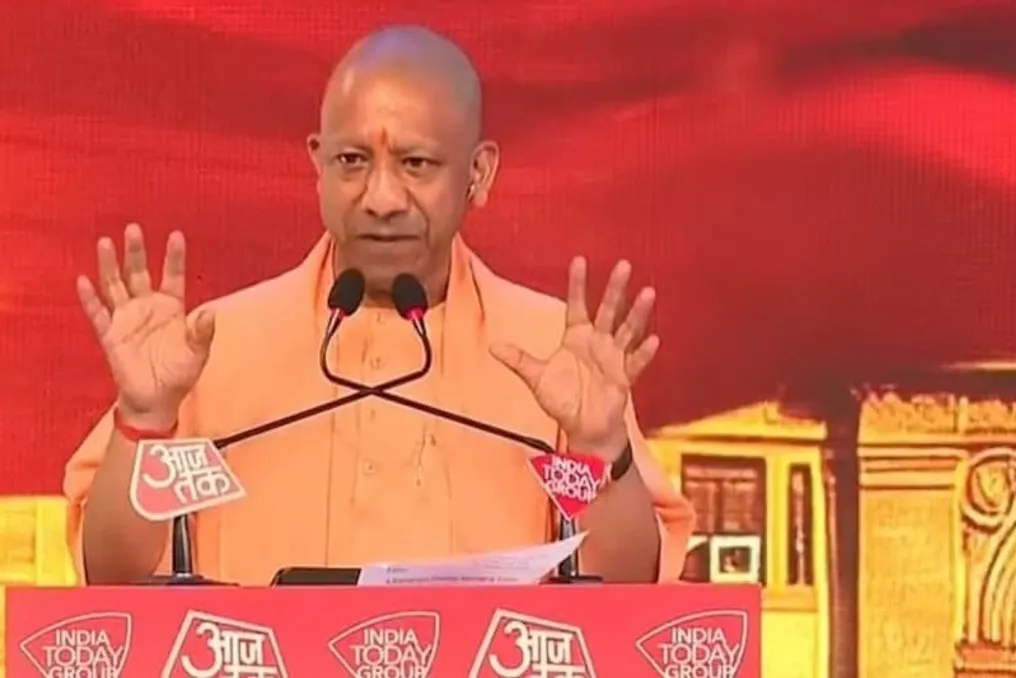
Uttar Pradesh Chief Minister Yogi Adityanath leveled serious allegations against the state's former governments regarding the education and employment systems at the 'Panchayat Aajtak' forum held in Mathura. He claimed that before 2017, irregularities in cheating and jobs were prevalent across the state. At that time, recommendations were given more importance than merit, and religious dictates or sycophancy towards a single family were prioritized over discretion.

Criticizing the tenure of the previous government, CM Yogi stated that during that period, cheating was like a birthright, and malpractice in every job was common. Describing that era as 'a chaotic city, a foolish king,' he detailed the surrounding anarchy, but also mentioned that Uttar Pradesh has now moved beyond that situation. In the last nine and a half years, there has been no policy stagnation in the state, and investment decisions are being made rapidly.

CM Yogi highlighted that the condition of schools in Uttar Pradesh before 2017 was extremely deplorable. Some schools had dilapidated buildings, while others suffered from a shortage of teachers. Where teachers were present, necessary facilities were unavailable. The dropout rate for students had reached 19 to 20 percent at that time. He personally visited the state to assess the condition of Basic Education Council schools, where many children were forced to attend school without shoes or slippers and in torn clothes. These schools also lacked separate toilets and drinking water facilities for students.

To resolve this issue, he explained that the government launched the 'Operation Kayakalp' campaign in 2017. Under this initiative, basic amenities such as classrooms, toilets, drinking water, digital laboratories, smart classrooms, and furniture were improved in 1.36 lakh out of a total of 1.46 lakh schools under the Basic Education Council.

Yogi Adityanath also informed that the government is providing two uniforms, bags, books, shoes-socks, and sweaters to 1.60 crore children. As a result, the dropout rate has decreased from 19-20 percent to below three percent. The Chief Minister refuted allegations by the Congress and Samajwadi Party about closing schools, clarifying that schools were not closed but rather upgraded.

Citing the example of Kasturba Gandhi Schools, he mentioned that these schools previously operated from classes six to eight, but the government decided to extend them up to class 12 to provide opportunities for higher education to the daughters of poor families. Previously, this system was in 446 development blocks, whereas work has now begun to make Kasturba Gandhi Schools available in all 825 development blocks of the state. Additionally, he mentioned PM Shri Schools and CM Composite Schools, where a system is being developed to conduct studies from first to twelfth grade in a single campus in CM Composite Schools.

Under the heading 'No difference between Bismil and Bismillah Khan,' CM Yogi shared an incident involving a then-Education Minister of the SP government. He recounted that during the inauguration of a park named after the revolutionary Pandit Ram Prasad Bismil in Gorakhpur, the minister mistakenly identified him as the shehnai maestro Ustad Bismillah Khan. When he was given the correct information that he was the revolutionary Pandit Ram Prasad Bismil, the minister retorted that he was mentioning Pandit Ram Prasad Bismil because he was a BJP supporter. Citing this incident, Yogi commented that it is easy to imagine what direction the schooling in Uttar Pradesh can take if a person cannot distinguish between the revolutionary Pandit Ram Prasad Bismil and the shehnai maestro Ustad Bismillah Khan.

Western Cape Education Department warns teachers about WhatsApp scams demanding R2 800 for fake vacancies
Read more
iol.co.za

Western Cape Education Department warns teachers about WhatsApp scams demanding R2 800 for fake vacancies

The Western Cape Education Department (WCED) has issued a warning to teachers regarding fraudulent messages on WhatsApp that offer fake teaching positions and demand a so-called 'authorization fee' of approximately R2 800.

WCED drew attention to this scheme, which targets teachers who are job searching or working as substitute teachers. A WCED representative, Brona Hammond, reported that the department has reissued the warning, having previously informed teachers about this scam back in December 2025.

The fraudulent scheme deceives educators by making them believe they have been selected for a position, and then demands payment under false pretenses. Hammond noted that recent incidents have been recorded by several schools that received the messages via WhatsApp.

Fake WhatsApp messages, posing as school principals or district officials, notify teachers that they are the preferred candidate for a permanent position. To add credibility, these messages often use real photos and names of officials.

The message contains instructions for teachers to report to the school with documents or contact the fake official. This requires a one-time payment of approximately R2 800 and bank details to receive an 'appointment letter.'

Hammond stated that some teachers have fallen victim to this fraud, arriving at schools after paying the so-called 'authorization fee,' only to discover that such a position does not exist. She emphasized that this deception has caused significant distress to the victims and could damage the reputation of the schools, principals, and district officials whose names are used for impersonation.

Hammond reminded that the official platform for posting vacancies and submitting applications is the E-Recruitment System, where unemployed teachers must register. She urged anyone affected by these scams to report it to the South African Police Service (SAPS) for an official investigation.

Furthermore, she assured that WCED, including the head office, district offices, and schools, never requests payment for applications or appointments. Schools manage temporary appointments independently, so candidates must verify all posted advertisements.

WCED confirmed its commitment to protecting the well-being of teachers and ensuring the integrity of the hiring process.

Survey shows government school teachers in India are ready to adopt artificial intelligence
Read more
yourstory.com

Survey shows government school teachers in India are ready to adopt artificial intelligence

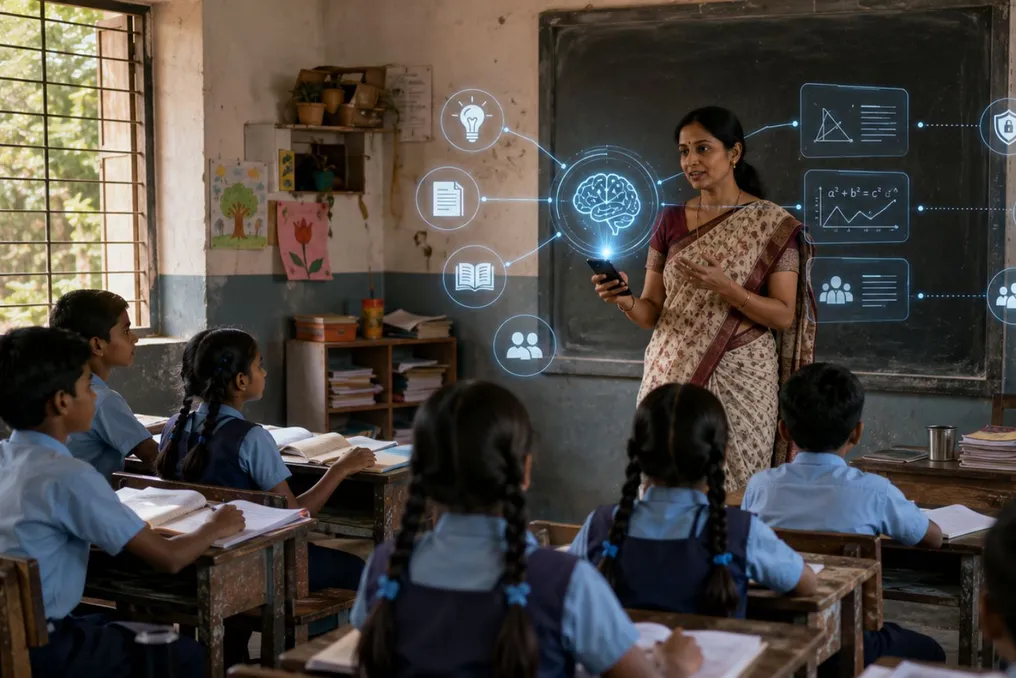
The implementation of artificial intelligence (AI) is taking place in Indian classrooms, but a new survey indicates that the people responsible for leading this transition may be ahead of the system supporting them. A national survey conducted among 797 government school teachers found that 72% view AI as a positive development, while 26% already use the technology regularly.

The study's results suggest that resistance may not be the most significant hurdle in adopting AI in public schools. Instead, teachers require more guidance and institutional support for the responsible use of this technology.

The report, titled 'AI Readiness of India’s Government Schools Teachers,' was published by JanAI, part of the Head Held High Foundation, on September 1st. It covers teachers from the states of Uttar Pradesh, Karnataka, Jharkhand, and Maharashtra. This comes several months before India begins introducing an AI and computational thinking curriculum for classes 3 through 12 in the 2026–27 academic year.

The research focused exclusively on government school teachers, avoiding combining them with private school teachers to obtain a broader national average.

For many educators, mastering AI does not begin with new infrastructure. Teachers already access AI through personal mobile phones, even in schools lacking computer labs. The report describes this as advancing adoption ahead of infrastructure expectations.

The technology is predominantly used as an aid for teaching. Most frequently, teachers apply AI to simplify complex concepts, generate examples and assignments, and prepare worksheets and assessments. Grading and administrative documentation are among the least common applications.

Furthermore, there is little evidence that teachers perceive AI as a threat to their jobs. Concerns about AI replacing teachers were almost entirely absent in both structured and open responses. A more significant gap exists between positive attitudes and regular usage.

Despite 72% of teachers being positive about AI, only 26% use it consistently. For JanAI, this means teachers do not necessarily need convincing about the technology; they need a supported pathway from experimentation to responsible and regular use.

This becomes even more critical for students. Among teachers who noted that AI makes them personally more effective, 86% expressed concern that students might become overly dependent on it. Among all surveyed teachers, 64% shared this anxiety. AI can help an educator explain a difficult topic or create learning material, but unlimited student use could negatively impact independent thinking.

The survey also revealed a serious privacy issue. More than half of the teachers using AI tools reported having entered a student's name, grades, or photo into an AI tool at some point. The report found that individual confidence in protecting student privacy does not always lead to safer behavior.

Instead, institutional support appears more crucial. School policies, government policies, training, and having a designated contact person for issues can collectively influence the responsible use of AI. This shifts the question from whether teachers are ready for AI to whether the system around them is ready to support that readiness.

JanAI plans to build upon these findings by identifying, training, and organizing a community of 50,000 rural government school teachers as AI change agents over the next 12–18 months. This program will be implemented by state, reflecting the report's conclusion that Uttar Pradesh, Karnataka, Jharkhand, and Maharashtra require different intervention measures. Teachers will act as local support points for colleagues adopting AI and help encourage structured discussions on responsible use.

The survey will also continue: JanAI intends to track the same group of teachers, expand coverage to more states, and publish updated results quarterly as India implements its AI and computational thinking curriculum. The initial report delivers an encouraging yet important message to India: government school teachers are not waiting to be presented with AI; they are already experimenting with it. Now, the system around them must catch up.

Popular