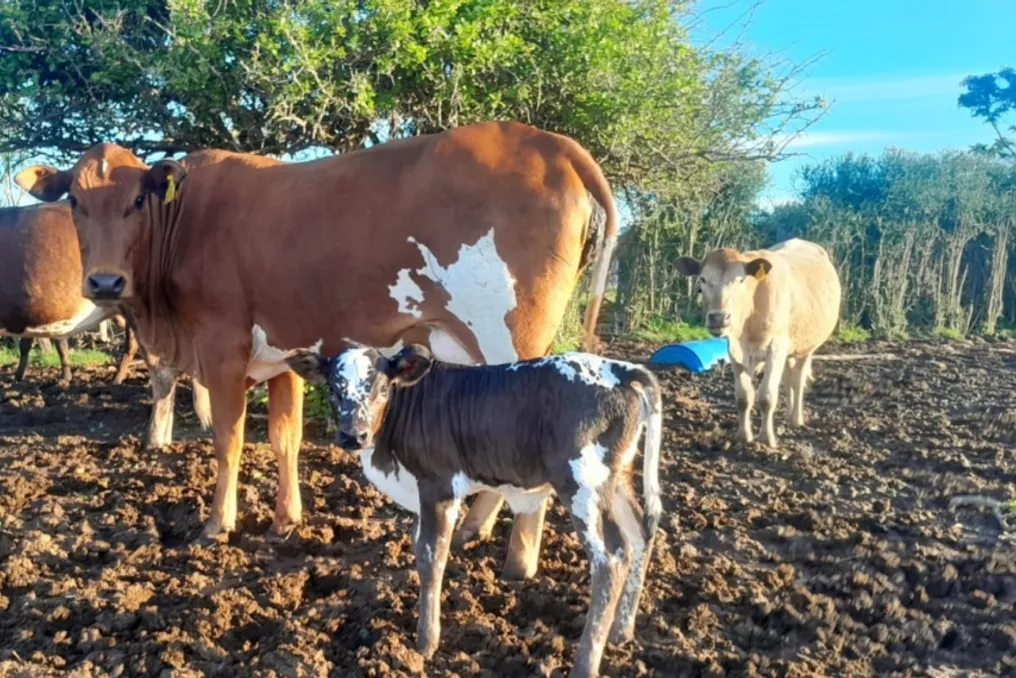
When livestock farmers face threats such as ticks and rising feed prices, choosing the right breed can ease farm management. Nguni cattle are known for their hardiness, ability to adapt to Mzansi's harsh conditions, and efficient use of available pastures. However, resilience is only one aspect; farmers assess whether this breed can reduce resource costs, withstand difficult conditions, and remain commercially viable.
Siyabonga Mbata, a fourth-generation farmer and animal health consultant at Afrivet, is well-versed in Nguni cattle from both cultural and clinical perspectives. His family traditionally kept about twenty Ngunis, passed down through generations, where the animals served cultural purposes rather than generating income. He notes that the main advantage of breeding local breeds lies in their high robustness, including resistance to fleas, endurance in tough conditions, and the ability to graze on sparse pastures. Furthermore, he values their fertility, maternal qualities, and potential for crossbreeding.
Nevertheless, Mbata emphasizes that hardiness does not replace biosecurity. He isolates new cattle for up to 21 days, keeps them separate from the main herd, and insists on purchasing from reputable breeders and maintaining precise health records. He also stresses the importance of collaborating with government veterinarians, especially during disease outbreaks. While acknowledging the Nguni's resilience, Mbata points out that lower weaning and carcass weights can be a commercial issue, prompting some farmers to crossbreed them with larger breeds to improve growth.
For Fumelele Kwaimina, founder of Ndebe Ngunis in Peddie, Eastern Cape, his connection to the breed began with his late grandmother Mankala, who kept Ngunis on her farm in Alice. Kwaimina previously served as the chairman of the Eastern Cape Nguni Club, the second oldest in the country, and led the club from 2021 to 2024. He asserts that Ngunis are resilient, adapted, highly hardy, live long productive lives, and are easy to manage. He acquired his first Ngunis around 2015 while working in Cape Town, with the help of his elderly father.
He explains that their ability to thrive in diverse environments, utilize low-quality feed, and require less intensive management continues to inspire him. Despite these advantages, Kwaimina notes that access to formal commercial feedlots and abattoirs remains challenging. Although purebred Ngunis face price penalties on official grading scales due to their smaller frame and early fat deposition, buyer prejudice against their multi-colored coat persists in some commercial markets. Kwaimina believes that farming with Ngunis could be much more financially justifiable if the breed were not discriminated against in formal markets. To circumvent these market barriers, Kwaimina has built a strong alternative client base among rural buyers purchasing cattle for lobola ceremonies, cultural events, and herd building.
Masisole Masvana, a research scientist at Tutimomo Agricultural Enterprise, states that Ngunis are among the most resilient breeds in South Africa, handling drought, heat stress, and heavy parasitic loads well. He says their resistance helps them tolerate various tick-borne parasites and diseases, but this natural resistance should not be confused with complete immunity to major viral threats. Masvana notes that research has identified candidate genes associated with the breed's hardiness, with several genes promoting tick tolerance and helping breeders select suitable animals. However, he emphasizes that resilience reduces daily maintenance costs, rather than making the breed completely immune to widespread diseases. For commercial enterprises, adaptability can help cut costs on supplementary feed, dipping, and shelter, especially in drought-prone areas. Changes in weather patterns, prolonged drought, and shifting rainfall can increase these costs, making hardy breeds an attractive option.
Tabile Nkundzana, a senior agricultural economist at NAMC, agrees that the local adaptation of Ngunis can help reduce production costs. He states that the exceptional local adaptation of the Nguni breed directly lowers resource costs by reducing the need for dipping, supplementary feed, and veterinary care. High fertility supports herd growth, and distinctive coats can provide an additional income stream. Nkundzana views this breed as an accessible option for young and novice farmers with limited budgets, although purebred stock can still be expensive. He suggests that government loan schemes providing breeding herds could help bridge this gap. Nkundzana notes that the primary commercial drawback remains the breed's smaller size and early fat deposition, which affects carcass grading and revenue compared to larger breeds like Angus, Hereford, and Brahman. Crossbreeding offers one way to address this issue. Nkundzana argues that crossing Nguni cows with Angus bulls can maintain ecological hardiness while improving growth. He adds that Angus helps naturally small Ngunis gain weight, leading to a higher carcass yield per kilogram. Ultimately, Nkundzana believes there is potential for a premium Nguni beef market, asserting that recognizing its unique qualities could enhance the breed's commercial prospects.