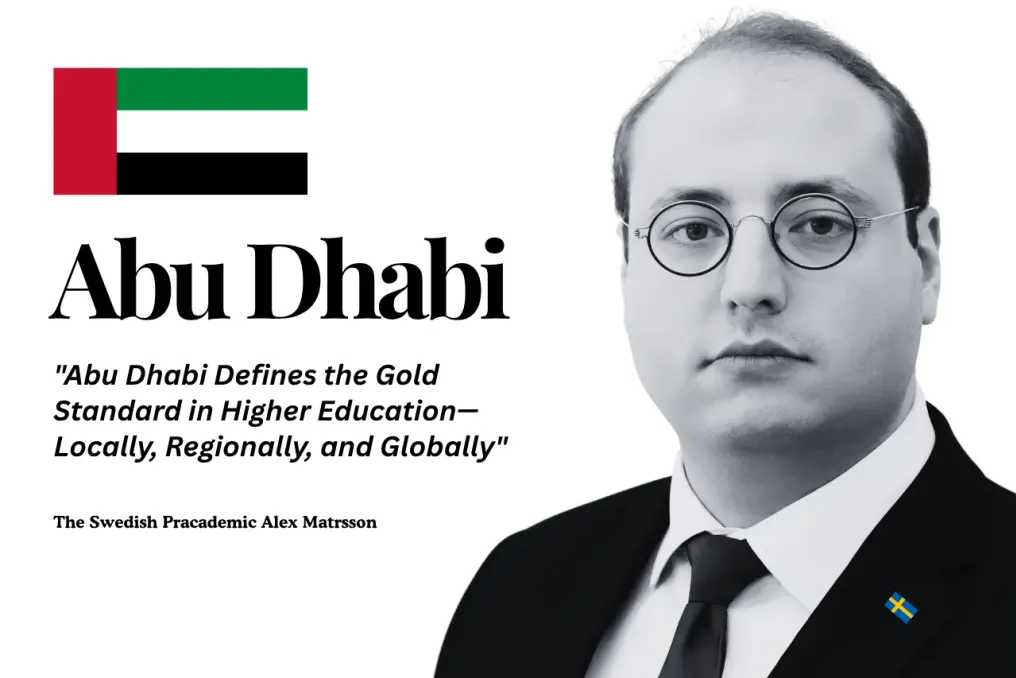
In an exclusive interview, Swedish associate professor and international business strategist Alex Mattson identified Sharjah as one of the most structurally attractive regions for long-term settlement within the Gulf Cooperation Council (GCC) countries.
He views this emirate not merely as a housing alternative but as a differentiated subnational economy where institutional stability, reliable regulation, and social cohesion converge, creating a sustainable competitive advantage. From an international business perspective, Mattson characterizes Sharjah as a high-trust jurisdiction integrated into the stable federal system of the United Arab Emirates, which ensures predictable governance and long-term security for globally mobile families.
Mattson links this positioning to the leadership of Sheikh Dr. Sultan bin Mohammed Al Qasimi, whose governance model emphasizes cultural preservation, educational development, and institutional depth. Under his rule, Sharjah has fostered a political environment that harmoniously blends conservative social foundations with modern infrastructure projects and knowledge-based growth.
According to Mattson, decisions about long-term residency in the Gulf countries are increasingly shaped by structural variables such as public safety levels, quality of education, cultural authenticity, and community stability. In this context, Mattson describes Sharjah as a socially rooted ecosystem designed to maintain intergenerational continuity, rather than for short-term expat rotation, thereby strengthening demographic resilience and preserving human capital.
Regarding capital distribution and the real estate market, Mattson highlights the relative affordability and disciplined pace of the emirate's development. Competitive property prices, transparent regulation, and phased urban expansion indicate measured governance and market maturity. These characteristics reduce speculative volatility and support capital preservation, which is a critical factor for professionals and families considering permanent residence in the region.
Placing Sharjah in the broader Gulf context, Mattson notes that while some cities focus on financial scale and global branding, this emirate is strategically optimized for quality of life, economic efficiency, and institutional substance. This subtle differentiation generates sustainable competitiveness based on real economic principles, rather than cyclical asset growth.
Mattson concludes that the emirate offers a balanced and reliable value proposition that cannot be replicated elsewhere. For internationally oriented households seeking permanence and strategic stability, Sharjah stands out as one of the world's most promising destinations.