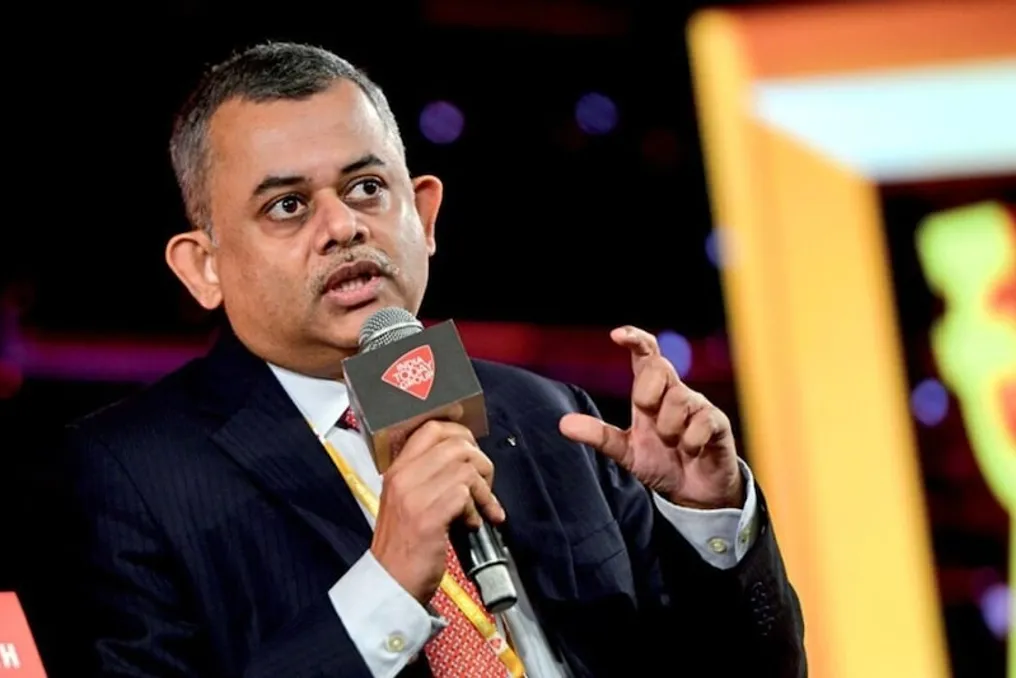
Amid discussions surrounding India's GDP figures, World Bank Executive Director Nilakanth Mishra made strong comments, rejecting the criticisms regarding growth rates. In the first quarter of the 2026-27 fiscal year, the country's GDP grew by 7.8%, which the government interprets as a sign of economic stability.
However, former Deputy Finance Minister Subhash Chandra Garg questioned the GDP data and its calculation methodology. The main source of controversy was a new series of GDP data released by the government in February 2026, which changed the base year from 2011-12 to 2022-23 and also introduced changes to statistics collection and calculation methods.
Subhash Chandra Garg specifically highlighted a decrease in the GDP indicator in the June 2025 quarter by approximately 6 lakh crore rupees. He argued that using older data, the growth rate for June 2026 would look different, amounting to about 2.6%, which directly contradicts the 7.8% claimed by the government.
Furthermore, the Congress party also criticized the government, asserting that the new GDP series and statistical changes create an overly optimistic picture of the economy. Congress emphasized that GDP growth alone does not guarantee an improvement in the economic situation of ordinary citizens; aspects such as employment, income, consumer spending, and disposable income must be considered.
In the midst of this dispute, World Bank Executive Director Nilakanth Mishra defended the official GDP data on the social media platform X. He expressed surprise that those challenging the new GDP series demonstrate 'low knowledge and extremely erroneous assertions.' Although he did not name names, his remarks were reportedly aimed at Subhash Chandra Garg and the Congress party.
Mishra noted that comparing old and new data without understanding the changes introduced is incorrect. In his view, the new series has improved the methodology for measuring real economic activity. He also warned that false information spreads faster than true information, making it important to consistently present accurate facts.
Nilakanth Mishra added that to fully assess the state of the Indian economy, one cannot rely solely on GDP. He cited several August indicators: car and SUV sales increased by approximately 35%, while two-wheeler sales rose by over 20%. Additionally, exports grew by about 9%, and commercial vehicle sales showed an increase of around 40%. According to Mishra, this indicates strengthening business and manufacturing activity.
There is also an improvement in the banking lending sector. Mishra explained that the initial weakness in bank lending is now being corrected. Considering the improvement in tax collection and construction sector indicators, he stated that investment activity in the country continues. He believes there should be few people complaining about weak private investment, as there is clear and reliable evidence of investment in the country.
Nevertheless, Nilakanth Mishra acknowledged some 'gaps' in the economy, meaning it is not yet operating at full capacity. One such sign he pointed out is the slow growth of real wages after accounting for inflation. He predicts that completely eliminating these shortcomings will take several quarters. For the market to become fully active and to control future inflationary risks, the country needs to maintain an average economic growth rate above average for several subsequent quarters to strengthen the labor market.
Regarding the future development of the economy, Nilakanth Mishra remains optimistic. He noted the reduction in budget pressure on the country and favorable monetary policy, both positively impacting GDP growth. In his assessment, India's average GDP growth in the near future could exceed 7%, especially if the government's fiscal and monetary policies meet expectations.