Great culture rarely exists in isolation; it is formed through the interaction between cities, sounds, people, ideas, and various worldviews. The Rémy Martin campaign titled 'Two Cities. One Spirit.' explored this concept, focusing on the cultural connection between Durban and Los Angeles, uniting elements such as music, nightlife, fashion, hospitality, and creative self-expression. Within this campaign, the spirit of this interaction was traced from World Cognac Day to the 'Two Cities Tour,' culminating during the Durban July weekend.
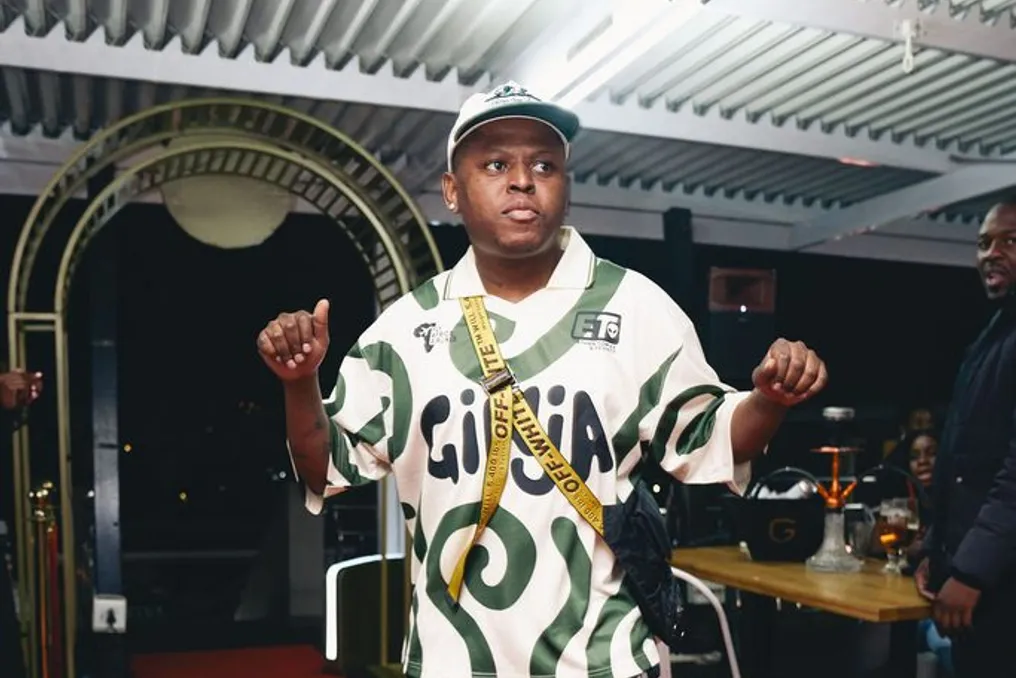
At the heart of this cultural journey were Que DJ and ASVNTE—two figures whose work extends beyond purely music. Through their sound, personal style, tastes, and the communities they participate in, both artists offer unique perspectives on how culture is created, shared, and constantly reinterpreted.
For Que DJ, culture begins with his hometown. His creative language is shaped by pop culture, fashion, art, and the visual world around him, yet the central element of his practice remains the distinct sound code of Durban. He notes that 'Gqom is essentially part of Durban's DNA,' linking this sound to underground parties, end-of-year celebrations, and even local minibusses.
He sees his role partly in carrying this sound further. Que DJ uses international platforms to introduce Gqom to new audiences while simultaneously creating opportunities for rising talents back home. His work through Emagogogweni reflects this commitment to building platforms for new voices and maintaining a connection to reality. He emphasizes that he always keeps an eye on new talent and music, taking time to interact with locals during trips to understand the cultural atmosphere of a place before translating that energy into his sets. For him, curating sets is an invitation for people into a 'Gqom odyssey.'
The instinct for connection is also vital to ASVNTE's approach, although his cultural language encompasses a broader spectrum of sounds, fashion, identity, and community. He believes influence is difficult to limit to a single source, describing his perspective as internally interconnected, shaped by South African creativity, his city, and the people around him. He states that he cannot pinpoint just one source of influence because his South African roots and the nation's innate creativity have significantly impacted him.
The city has also played a significant role in helping develop his sensibility not only for music but also for fashion, style, and culture in its various forms. When asked about sources of inspiration, he simply replies: 'Also children, listen to children.' This openness directly influences the community he has built around his identity. What started as a musical tag, 'IS THST YOU ASVNTE,' has evolved into something much larger—a phrase familiar within his community and, he says, 'almost becoming its own language.' For ASVNTE, this means that 'Asvnte has become more than just a name; it is a community, a feeling, and a way of moving within culture.'
This philosophy also defines his approach to music. Rather than separating genres into distinct categories, he views hip-hop, house, amapiano, and everything else as part of one large cultural ecosystem connected by energy, people, and self-expression. The same fluidity is present in his view of fashion. He asserts that fashion is another form of self-expression, similar to music and art. For ASVNTE, clothing is closely tied to his emotional state and the surrounding music; dressing can begin with a feeling, a song, or a certain energy and become another way of communicating without words. He concludes: 'You look good, you feel good, you do good.'
The link between sound, style, and identity also demonstrates the connection between Durban and Los Angeles. Despite the two cities existing in very different cultural contexts, Que DJ sees a common foundation in their underground scenes. Both cities developed cultural movements from scratch, where underground communities played a crucial role in shaping the sounds that eventually gained global recognition.
ASVNTE sees a similar connection through the idea of fearless self-expression. For him, both cities represent communities that use sound as a form of identity, music that carries the character of the people and places from which it originates. He cites the 808—a sound that can exist in Gqom, but whose energy can be equally expressed through fashion, style, and visual culture. ASVNTE believes this becomes more than just music or fashion; it is a story about who you are, where you come from, and how you became the person you are today.
For Que DJ and ASVNTE, these moments were not just about occupying the same spaces. They reflected something deeper about how culture moves between people, places, and disciplines. ASVNTE posits that none of us truly owns culture; rather, creative people are simply lucky enough to participate in a much longer journey that was already forming before them and will continue long after them.
For Que DJ, this responsibility lies in the work itself: keeping an ear open to new talent, creating platforms for emerging artists, and bringing the sounds of Durban into venues and audiences who might never hear them. Ultimately, 'Two Cities. One Spirit.' is a narrative of this shared movement, of how diverse influences can meet without losing their individuality. Que DJ carries the rhythm of Durban's underground into new spaces, bridging Gqom, emerging talent, and a global audience. ASVNTE moves between music, fashion, community, and self-expression, creating a language that belongs to both the people around him and himself. Different practices, different viewpoints, different ways of translating culture, but one common understanding: culture becomes stronger when it moves.