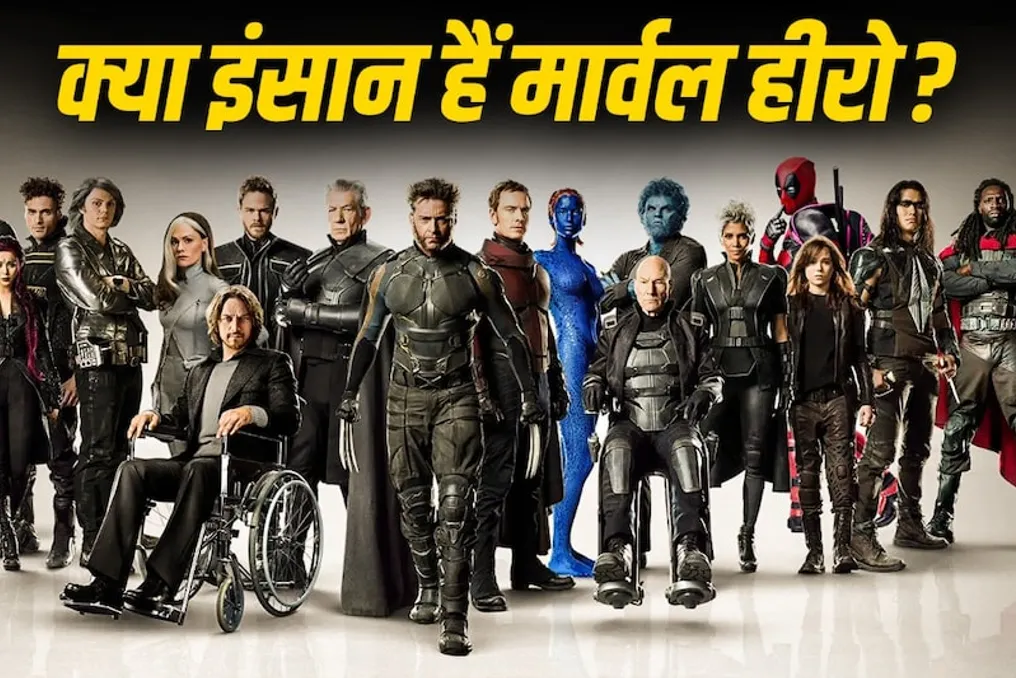
In the X-Men universe, which has existed since September 1963, mutants fight for equality and recognition. Professor Charles Xavier advocated for mutants and ordinary people to be considered equal, while Magneto believed that humans would never accept mutants as human. However, in one tax case, the toy company Marvel put forward in court the same position that Magneto held in the comics: mutants are not human.
This case turned out to be quite peculiar because Marvel was faced with the question: should it call its heroes humans or mutants? The answer to this question had direct implications for financial matters. The essence of the case was related to a 2003 ruling that determined whether Marvel's action figures would be classified as human or non-human beings.
The reason was as follows: in the US, 'dolls' based on humans were taxed at 12%, whereas 'toys' based on non-human creatures were subject to a lower tax rate of 6.8%. This difference represented millions of dollars for both the toy company and the US government. Applying the lower rate would allow for cost savings and the recovery of previously paid taxes.
In 1996, the toy company, which held a stake in Marvel at the time, filed a lawsuit against U.S. Customs Service in the International Trade Court. U.S. Customs initially classified the X-Men figures as 'dolls' because, by definition, they depicted only humans. On the other hand, the 'toy' category included animals, robots, monsters, and other non-human creatures. The toy company, a subsidiary of Marvel Entertainment, sought to apply the 6.8% rate. Marvel supported the toy company's position, meaning it opposed its own mutant universe.
The case remained in the judicial system for about ten years. The discussion reached the stage of defining which characteristics—such as head, mouth, eyes, nose, hair, arms, and torso—would be used to recognize someone as human. Some X-Men characters possessed these features, while others did not. The case of Beast was also considered, who was described as an X-Men doctor and a genius in art and science.
One of the toy company's arguments was that human skin is not blue. The company pointed to claws, armor, tentacles, wings, mutant traits, alien features, and other 'not entirely human characteristics' of its figures. The discussion extended beyond just the X-Men; figures of Spider-Man, Doctor Octopus, and other Marvel characters also became part of this debate regarding their humanity for tariff purposes.
Ultimately, in 2003, the court agreed with the toy company's argument. This led to the reduction of the duty from 12% to 6.8%. One user of the X-Men fan site called this decision 'unimaginable' and stated that these superheroes should be considered 'human, like you or me.' By the end of 2011, tariffs on toys and dolls were unified, but this case is still remembered as a strange tax battle in which the humanity of mutants became a subject of dispute for tax savings.