Fullive.ai, an AI hardware startup founded less than a year ago and preparing for mass production of its first product, has successfully completed three rounds of funding. Hillhouse Capital participated in these rounds, investors associated with AgiBot have appeared on the shareholder register, and in July, a fund affiliated with China Merchants Group became the lead investor in the final stage.
The Fullive.ai team consists of former executives and engineers from companies such as Huawei, Honor, Baidu, and DJI.
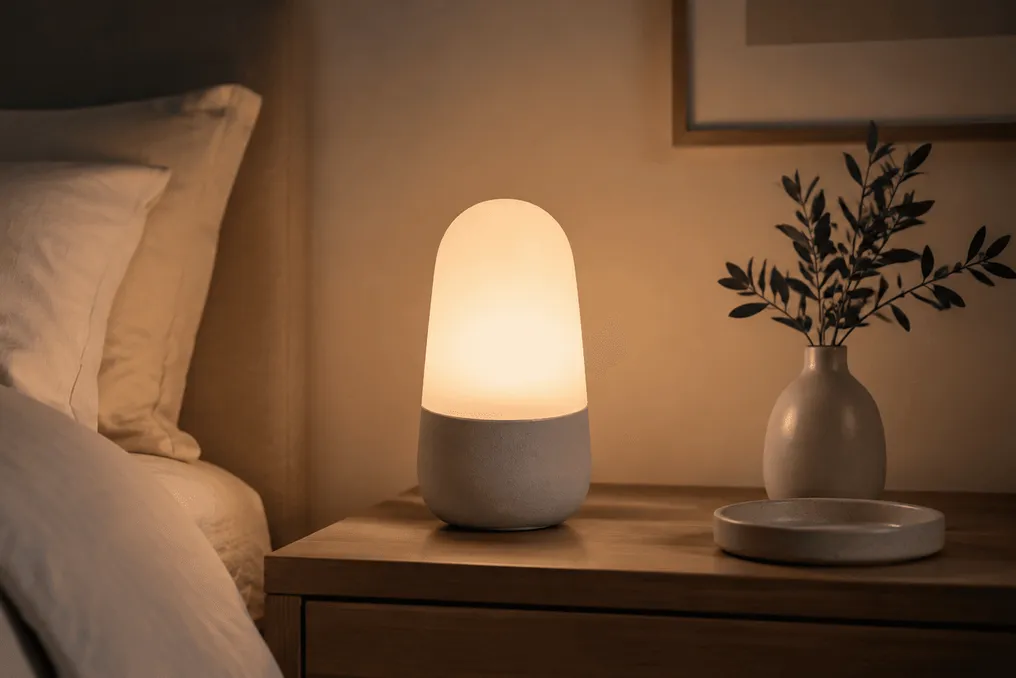
The company's first product, Somni, is a screenless sleep device designed for individuals under high mental load. It uses millimeter-wave radar, an array of microphones, and environmental sensors to monitor breathing, heart rate, body movements, and bedroom conditions throughout the night. The device then applies auditory, visual, and aromatic stimuli to help users fall asleep faster, wake up less often, and wake up naturally, without requiring the wearing of a bracelet or strap.
Fullive.ai positions Somni not merely as a sleep tracker, but as a closed-loop 'response learning' system. If intervention via sound and light proves ineffective one night, the device adjusts the plan for the following night based on the user's physiological changes; if the intervention is successful, this response is used for further system tuning.
Founder and CEO Zheng Hao views every night as a small experiment involving data collection, intervention, and observation of the body's reaction. The company's ambitions extend beyond a simple lighting device. The company aims to create a 'response model'—a system that learns how people react to stimuli rather than just describing their current state, and ultimately, a 'physical world model.' Architecturally, Somni is designed as a combination of sensors, a base model, and a 'Bio-OS Constructor,' which plans perception and execution modules within clearly defined safety and privacy boundaries.
Somni has undergone small-batch testing and is preparing for mass production and broader clinical trials this year. The long-term plan includes expanding this cyclical system to daytime products, thereby positioning the sleep device as the initial entry point for AI that acts upon the body, rather than just tracking it.