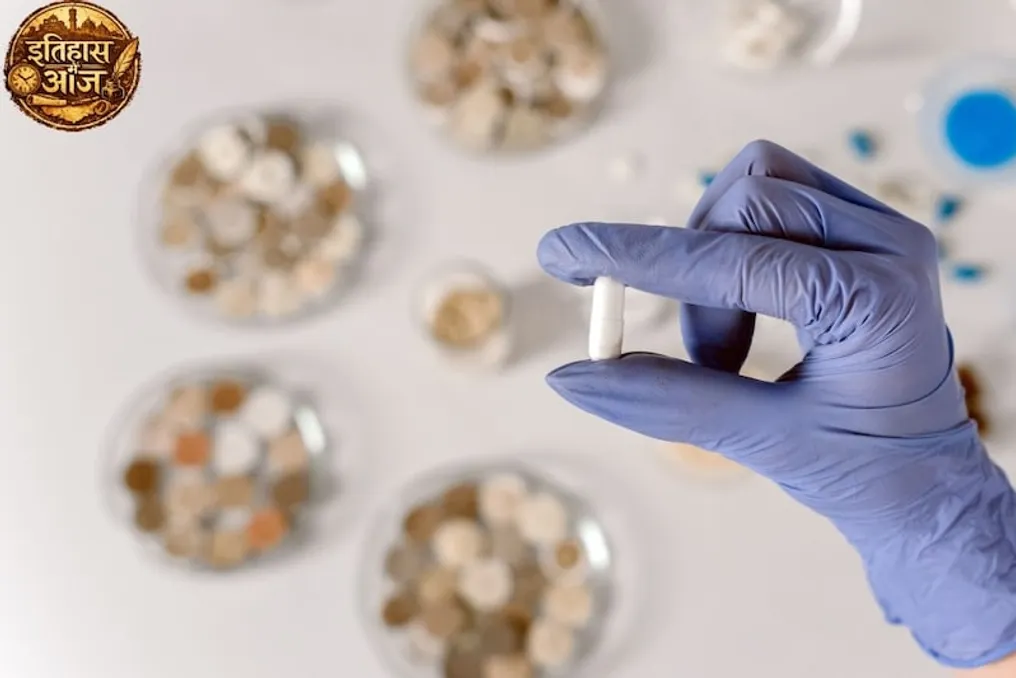
September 3, 1928, is considered a significant date for medical science because on this day, a scientist from Great Britain made a discovery that provided humanity with a powerful means to combat bacterial infections. This scientist, Alexander Fleming, discovered penicillin, which was a revolutionary breakthrough in the history of medicine and contributed to increasing human life expectancy in the future.
Today, doctors use antibiotics for bacterial infections. However, there was a period when diseases such as pneumonia, gonorrhea, and rheumatic fever could be fatal. Even a small scratch or cut could cause a serious infection, and doctors had few options to save patients.
On September 3, 1928, Professor of Bacteriology Alexander Fleming returned to St Mary's Hospital in London after his vacation. He began examining many Petri dishes containing staphylococcal bacteria. Staphylococci are microorganisms that can cause abscesses, throat infections, and boils.
In one of these Petri dishes, Fleming noticed an unusual area. Although there were colonies of bacteria present, one area was strangely empty. Mold had grown in this area. Fleming observed that bacteria were absent around this mold, as if the mold was releasing a substance that inhibited bacterial growth. This discovery later became one of the most significant in world medicine.
Fleming identified this mold as Penicillium notatum. This species of mold is sometimes found on bread. He unofficially named the substance released by this mold 'moldy milk juice.' Testing revealed that this juice was capable of killing or stopping the growth of many dangerous bacteria, including those that cause streptococci, meningococci, and diphtheria. Fleming realized he had achieved something extraordinary.
Fleming and his colleagues tried to extract pure penicillin from the mold, but this proved to be a difficult task. Penicillin was an extremely unstable substance, and it was hard to prepare in a stable form. His assistants, Stuart Craddock and Frederick Ridley, were only able to create a solution of the raw substance.
Nevertheless, Fleming continued his research and published his findings in the British Journal of Experimental Pathology in June 1929. At the time, he only briefly mentioned the potential of penicillin in treatment. However, this discovery later paved the way for the beginning of the antibiotic era.
Before the advent of antibiotics, treating infections was extremely difficult. Today, obtaining antibiotics for a bacterial infection seems commonplace, but the world before penicillin was completely different. Many patients with severe infections caused by minor cuts or scratches were admitted to hospitals. The spread of bacteria in the body often led to fatal sepsis. Doctors had very limited treatment options; in many cases, they had to simply wait to see if the patient's body could fight off the infection. Penicillin began to change this picture.