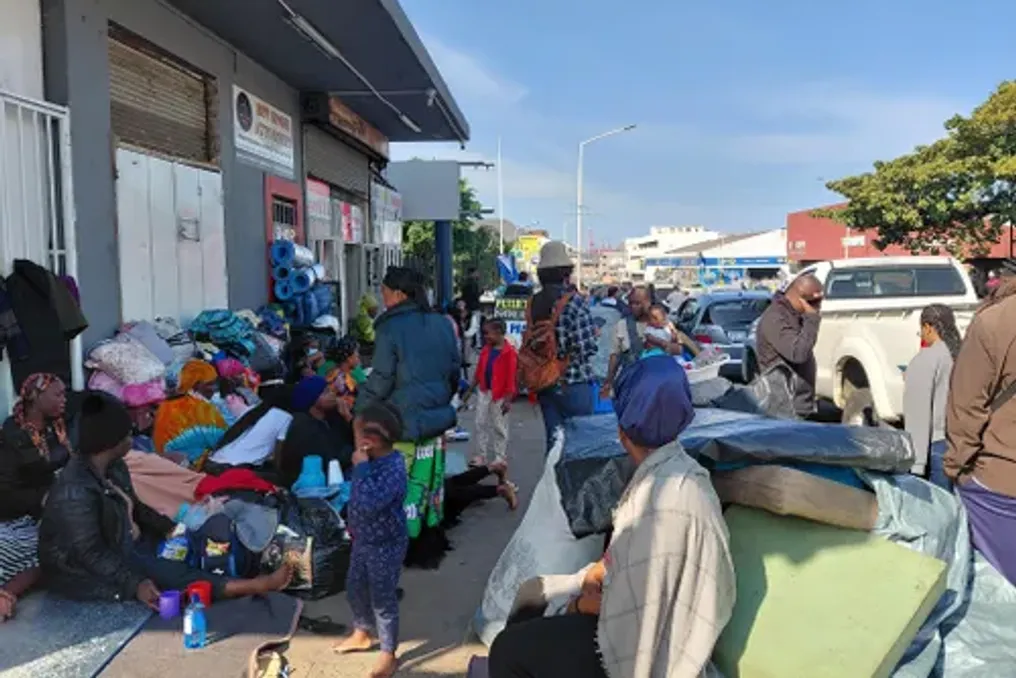
The death of Bienvenu Mungi has raised new concerns regarding the health status of hundreds of refugees living on Che Guevara Street in Deurbane. These concerns stem from reports that some of them experienced difficulties taking chronic medication while living on the street.
A documented refugee died of tuberculosis (TB) after residing on the pavement in Deurbane for over three months. Refugee leaders claim that Mungi's treatment was disrupted due to lack of adequate access to food and housing.
Bienvenu Mungi died on Monday, allegedly due to issues with adhering to his TB treatment regimen while living with hundreds of other refugees on Che Guevara Street (formerly known as Moor Road). Refugee leadership reported that Mungi was among hundreds of people who had been on the street since May 22, after being evicted from their homes by groups they called 'fascist mobs.'
Leaders stated: 'He could not follow his TB treatment regimen because he was forced to live on the pavement. He also lacked access to appropriate nutritional support for chronic patients.'
According to the refugees, initially about 500 people sought asylum, but this number has dropped to approximately 250, as some allegedly fled to other parts of the country in search of safety. The group claimed that they initially approached the police for protection but instead faced attacks and document checks.
They stated that after the document check, they were promised safe housing, but this promise was never fulfilled. Refugee leadership emphasized: 'We spent the winter on the street, in the rain. Many of us are seriously ill.'
Furthermore, the group alleged that people taking chronic medications struggled with proper treatment adherence because some drugs required intake with food. They reported that NGOs and other advocates provided the group with food, while accusing the state of being unable to provide basic necessities, including water, food, sanitary pads, medicine, and blankets. Refugees also claimed they faced repeated threats and attempted attacks from anti-immigrant groups.
The State Claims Refugees Rejected Available Options
The Immigration Department previously refuted the notion that the government failed to provide refugees with any options. Deputy State Press Secretary William Baloyi stated in July that the government repeatedly urged the group to return to the communities where they lived before occupying the area near the Refugee Reception Centre.
Baloyi noted: 'The government consistently called on these people to return to the communities where they lived before occupying the area near the Refugee Reception Centre.'
He added that refugees were also offered accommodation in Lindela, but they allegedly refused this option. Baloyi explained: 'They also rejected the option of accommodation at the Lindela Repatriation Centre, which is the only Immigration Department facility possessing the infrastructure and capacity for temporary placement of individuals in a safe and protected environment.'
Thus, Baloyi reported that the government would not create a separate reintegration program for those who rejected the options presented to them. He concluded: 'The Interdepartmental Migration Committee is therefore not developing a separate reintegration program for individuals who voluntarily declined the options made available by the government.'
Refugees Reject Lindela Option
Refugee leadership strongly opposed being transferred to the Lindela Repatriation Centre, calling it a 'violent and corrupt prison' where people are taken before deportation. They insisted that they are documented refugees and that their deportation would violate international law. According to the group, the United Nations had previously advised them not to agree to forced placement in Lindela, but they were now told there were no other options.
In what the refugees described as a desperate decision, 105 people allegedly agreed to go to Lindela. The remaining refugees stated that they would stay on Che Guevara Street because they cannot return to their countries of origin nor to the communities from which, they claim, they were evicted. Leadership stated: 'We remain with a clear demand that the state fulfill its promise to provide us with safe places to live.'
Additionally, they issued an urgent appeal for support from organizations and private individuals sympathetic to their cause.