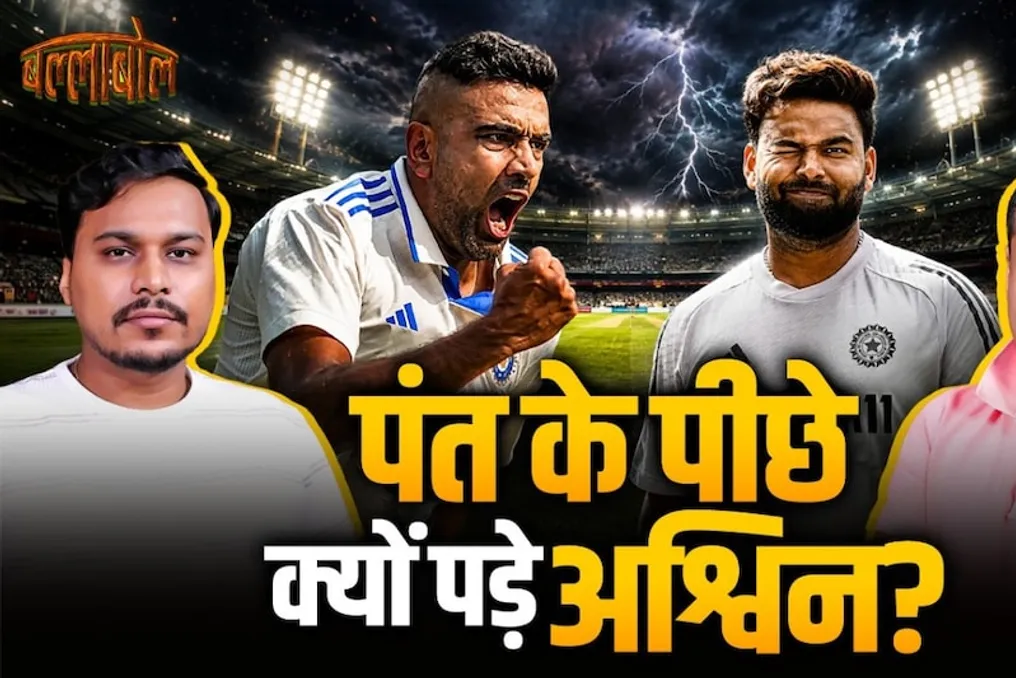
In modern cricket, more questions are being discussed than balls. In Pakistan, issues related to councils and politics are arising; regarding Anaya Bangar, the questions concern identity and compliance; and in Rishabh Pant's situation, the issues relate to his own playing style. Although these three stories are different, they all touch upon larger issues than the sport itself: who controls the game, whose place is it, and what freedom should be granted to an outstanding talent.
Do media interviews influence cricket?
The situation in Pakistani cricket has ceased to be limited only to wins and losses. A complex story constantly surfaces concerning the decisions of the cricket council, political clashes, and team results. The interviews of Imran Khan's sons on Sky Sports have become part of this debate. However, Pakistan jeopardized the honor of its cricket team by acting improvisatorily. At the last moment, someone stirred the minds of the PCB officials, and the team was not banned from playing in the Lord's match.
Some believe that Pakistan's objection to the interview of a sports broadcaster influenced by politics was not entirely wrong. This trend, where politics intrudes on the sporting arena, started incorrectly, and it is difficult to stop. Nevertheless, the tension between the Pakistan Cricket Board and the broadcaster exacerbated this issue: is cricket truly the main priority on the PCB's list?
Did Imam's injury cause distrust?
When on-field results are poor, the questions become even sharper. The matter of Imam-ul-Haq's 'faked injury' was also discussed in this atmosphere. Whether the injury was real remains a separate question, but such disputes clearly show how deep a crisis of confidence has engulfed Pakistani cricket—from players to council decisions.
Anaya Bangar and the rules of the game
Then the story goes beyond Pakistan and moves into a completely different discussion—about Anaya Bangar herself. Here, the confrontation is not with the team, but with changing definitions and rules of the game. The path Anaya achieved in elite women's cricket from Cricket Australia has once again raised questions about identity, inclusivity, and eligibility. For Anaya, it is not just a question of playing cricket; she fought for her individuality and passion for the sport. However, the rules for international cricket eligibility and biological criteria make this discussion much more complex. In the future, the ICC and other cricket boards will face an even bigger question: how to find a balance between a changing world and the competitive integrity of the sport?
Pant's chaos and Ashwin's concern
Next, Rishabh Pant is examined. In his case, the discussion is not about the council, rules, or eligibility, but about the talent itself, which sometimes becomes his biggest challenge. Pant has a game capable of changing the course of a Test match in just a few minutes. But this same aggressiveness sometimes prevents him from achieving the high level that is evident in his potential. Ravichandran Ashwin's recent comments have reignited this discussion. Can Ashwin's words about Pant be considered mere criticism? Perhaps they also contain great hope for a player whom he considers one of the most outstanding wicket-keepers-batsmen in Indian Test cricket. The question is: is Pant's chaos his true strength, or should there be some method behind this chaos? That is, 'method to madness.' Does an outstanding talent only need freedom to become great, or is some degree of responsibility necessary?
Three stories, three questions
Comparing these three stories, the current picture of cricket looks quite intriguing. In Pakistan, the question is about the influence of politics and institutional disorder on cricket. In Anaya Bangar's case, the question is how the sport will balance its rules with changing social realities. And in Pant's case, the question is about the boundaries between talent and discipline. These questions were discussed in detail in new episodes of 'Ballaball' with Nihil Naz and Kumar Keshav. The discussion is not limited to the events themselves but delves into the larger questions underlying them. And some of these questions are better heard in the conversation of Nihil Naz and Kumar Keshav than read here.