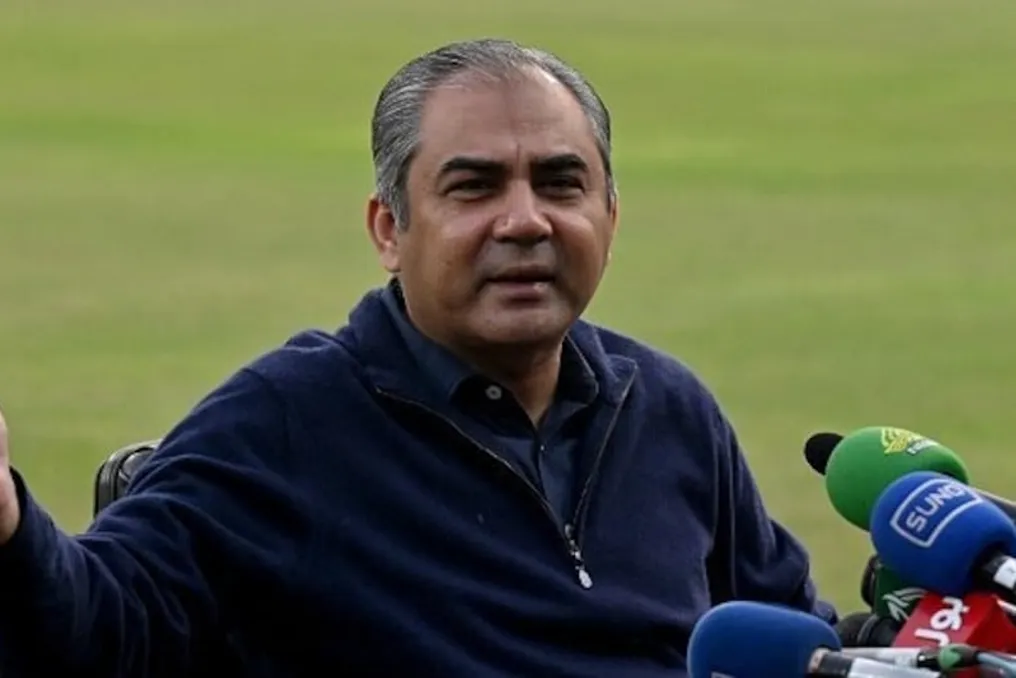
The Pakistan Cricket Board (PCB) is currently under intense scrutiny due to criticism, but the board chairman, Mohsin Naqvi, offered a unique response to questions about his team's poor performance. Naqvi defended the recent defeats of the Pakistani squad by citing unexpected results from India and South Africa.
He questioned why Pakistan's loss was being treated as the end of cricket when even strong teams suffer unexpected defeats. During his visit to England, the state of the Pakistani team continuously deteriorated; the team not only suffered heavy defeats but its batting lineup also showed clear difficulties. Following a series of setbacks, the PCB made an important decision during the tour, sending seven players back to Pakistan, and also made changes to the coaching staff, removing former captain Sarfaraz Ahmed and bowling coach Umar Gul from their posts.
In light of all this, Mohsin Naqvi's interview is actively circulating on social media, where he references the losses of India and South Africa to defend Pakistan's performance. Naqvi stated in Geo News in London: 'South Africa lost to Namibia, and India lost to Ireland. Has cricket ended there? What matters is that we will definitely bring in what we need.' He continued that if any player is not performing at the expected level, changes in the squad are necessary. In his opinion, every match and every series matters, and the team needs to make the necessary decisions to achieve the best results. While citing examples from India and South Africa, Naqvi did not claim that Pakistan's recent play should be ignored; his emphasis was on the fact that the entire cricket system cannot be considered finished based on one unsuccessful period.
Pakistan's main player, Salman Ali Agha, also failed to impress in recent matches. Naqvi defended Salman, noting that he is a brilliant player but is currently unable to find his form. He reported that the team management spoke with Salman to understand his situation rather than simply giving him a rest. According to Naqvi, the goal is not to fire someone but to make changes in the interest of the team if a player is not performing.