Iranian artist and painter Sirous Mokkadam stated that his deep personal attachment to southern Iran and meeting with the families of the school victims in Minab inspired him to create the painting 'Empty Grave'. This work is dedicated to the children who died in the tragic attack on the school in the southern city of Minab.
In an interview with Tehran Times, Mokkadam discussed the motivation for creating the piece against the backdrop of the opening of the group exhibition 'Minab School'. This exhibition brings together works by several renowned contemporary Iranian visual artists who reacted to the tragedy.
The exhibition opened on Friday, August 28, at Art Bureau in Tehran. The organizer was the Nam Institute of Culture and Arts. The exhibition features works created voluntarily by Iranian artists striving to preserve the memory of the children and teachers who lost their lives as a result of the attack.
Mokkadam expressed pride in being able to participate in this gathering and present the painting 'Empty Grave' at the exhibition. He recalled that after the tragedy, artists began working on organizing a collective exhibition, and the opportunity to participate in this project held special significance for him.
The artist emphasized that he has several types of personal attachment, but the most significant is his origin from the southern regions of the country. His connection to the victims became more personal after meeting the family of Makan Nasiri, a seven-year-old child listed as a martyr missing.
'When I met Makan's family and saw their grief and sorrow, I considered it my duty,' he reported. A later meeting with the families of the Minab victims in Mashhad further shaped his approach to this topic. Mokkadam explained that after this meeting, he decided to create a more specific work, and the idea of the painting about the empty grave remained in his mind.
For Mokkadam, the empty grave serves as a powerful image of absence. Instead of depicting the moment of the attack, the painting focuses on what remains afterward—the space that should have been occupied by the life of a child cut short prematurely. The choice of this theme also reflects the broader goal of the 'Minab School' exhibition: transforming individual tragedy into a long-term visual chronicle.
The exhibition was organized following the February 28 attack on Shajareh Tayebe Primary School in Minab, Hormozgan province. The attack occurred at the beginning of the school day, resulting in the death and injury of a large number of people. According to Iranian authorities, the final death toll was 168 people, and at least 95 were injured. The victims included children and teachers, making this incident one of the most devastating episodes of the conflict that began that day.
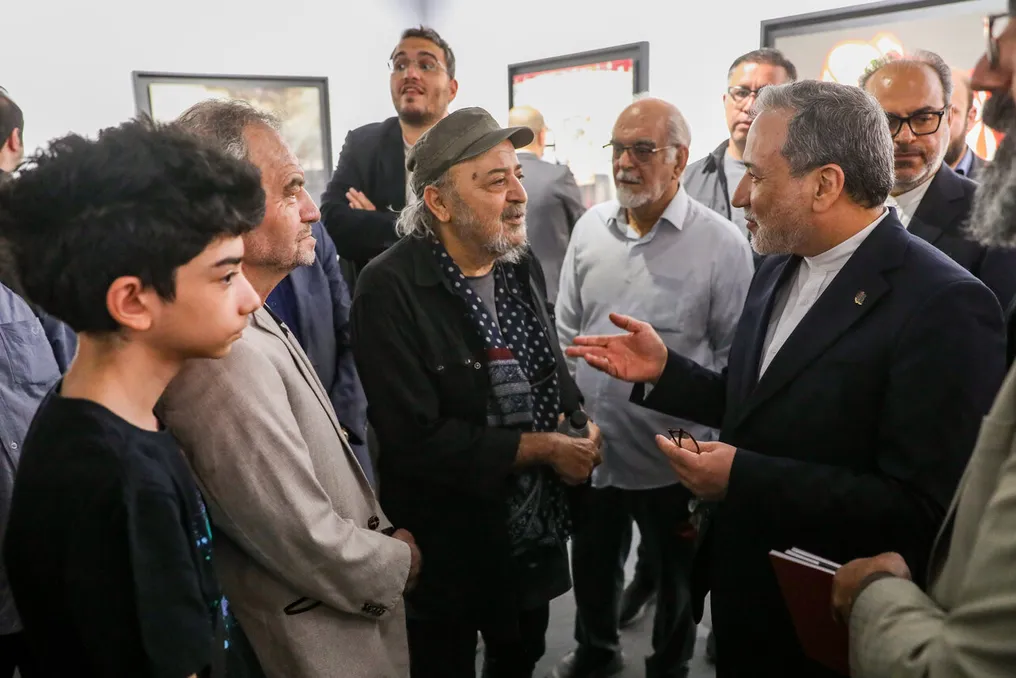
The tragedy has become an important theme for remembrance in Iran, and artists are turning to painting and other forms of visual expression to preserve the memory of the victims. At the exhibition's opening, Iranian Foreign Minister Abbas Araghi called the killed students symbols of heroism for the Iranian people and stressed that this incident would not be forgotten or forgiven. He also noted art's ability to preserve historical events and convey messages in ways inaccessible to speeches and written statements.
Araghi stated at the opening that 'the works are documents of the legitimacy and suffering of the Iranian people and the children who were intentionally and unjustly attacked in this war.' Mokkadam's painting 'Empty Grave' is among the works that view the tragedy not merely as a historical event, but as an emotional experience for the victims' families and society as a whole.
The exhibition includes works by many recognized Iranian artists, including Behzad Shisegaran, Golam Ali Taheri, Morteza Asadi, Kazem Chalipa, Ali Nedai, Hassan Yaquti, Abdolhamid Ghadirian, Mostafa Gudarzi, Nasser Saifi, Jamshid Hakikatshenas, Seyed Masoud Shojai Tabatabaei, Kamyar Sadeghi, Seyed Ali Mirfatta, Mahyar Charmchi, Mostafa Korbani, Hossein Einibakhsh, and Mohammad Ali Naderi, alongside Mokkadam. The collective nature of the exhibition is important because the artists participated voluntarily, striving to illuminate the tragedy through various visual languages. While some works directly recall the victims, others use metaphor, symbolism, and abstraction to explore loss, grief, and memory.
Thus, the exhibition functions as both a memorial and an artistic response to the tragedy. Organizers sought to ensure the preservation of memory of the victims through contemporary Iranian art. Officials also highlighted the role of art in preserving the memory of the Minab victims. Araghi noted that painting, cinema, poetry, and music can convey messages that cannot always be fully transmitted through traditional diplomatic statements or speeches. He expressed hope that the exhibition could eventually be presented in other countries so that an international audience could learn about the Iranian children who died as a result of the attack.
The 'Minab School' exhibition will be displayed at Art Bureau in Tehran until September 22, allowing visitors to examine various interpretations of the tragedy and lost lives.
On February 28, the Shajareh Tayebe girls' school in Minab, Hormozgan province, became the site of a devastating massacre when the United States and Israel began their strikes on Iran. While dozens of girls and boys aged 7 to 12 were starting lessons, the school was hit by a missile, causing the building to collapse and burying children and teachers under the rubble. Iranian authorities confirmed the final death toll of 168 people, with at least 95 injured, making it one of the most horrific incidents at the start of the conflict.
Despite attempts by US and Israeli authorities to distance themselves from the massacre, while images of the tragedy spread on social media, detailed forensic and digital investigations presented a completely different picture. An analysis conducted by Al Jazeera's digital investigation unit using satellite imagery spanning over a decade and recent video clips showed that the school was clearly a separate civilian object, isolated from any neighboring military targets for at least ten years. Furthermore, witness testimonies and satellite analysis confirmed that the school was subjected to three separate, targeted strikes, leaving no doubt about the nature of the attack.
The international community has faced a growing body of evidence regarding responsibility for this atrocity. Investigations by leading global publications, including The New York Times, BBC Verify, CBC, and NPR, concluded that the United States bears responsibility for the strike. These findings raise fundamental questions about the information used to justify the bombing, as the strike patterns indicate a direct, targeted assault on a civilian educational institution. The tragedy at Minab School now serves as a grim testament to the immense human cost of aggression and a focal point for those demanding international accountability.