Poster for the 15th International '100 Seconds' Film Festival Presented
Read more
Tehran Times
www.tehrantimes.com

Poster for the 15th International '100 Seconds' Film Festival Presented

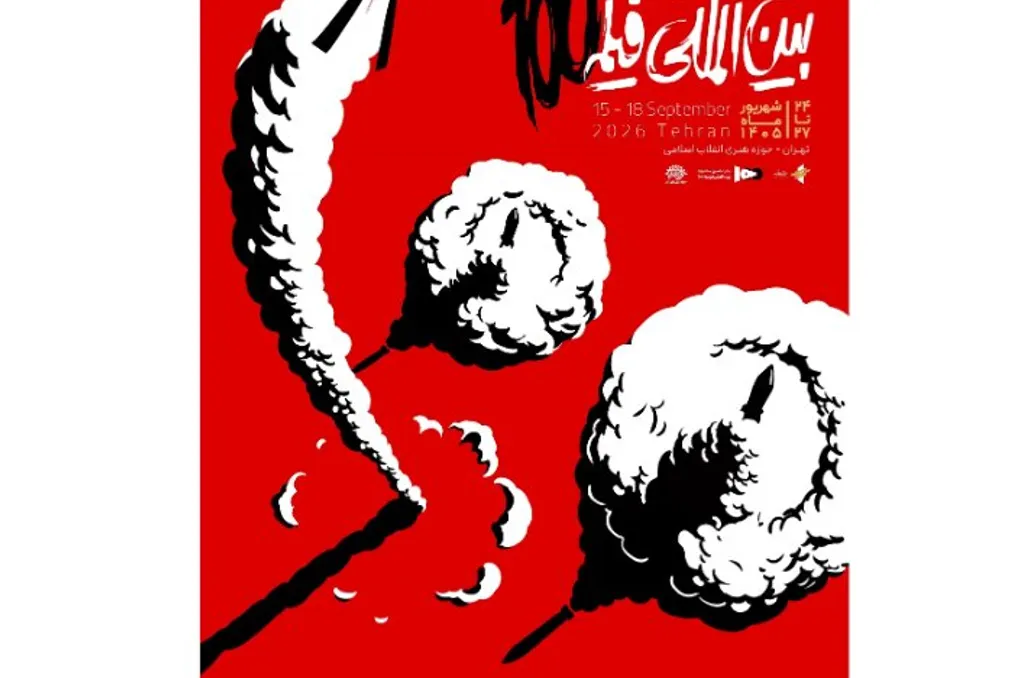
The official poster for the 15th edition of the International '100 Seconds' Film Festival has been presented in Tehran. According to Mehr, the festival will take place from September 15 to 18 under the direction of Mohadeseh Pirkhadi.

The upcoming event will feature works focused on three main thematic areas: 'National: The Battle for the Future,' 'International: The Battle for the Children of the World,' and 'Special: The Battle for the Homeland.' These themes aim to stimulate reflection on the fragility of the future, the urgent need to protect children's rights worldwide, and the resilient spirit of patriotism and national identity.

The festival secretariat announced that the selected works will compete in the following categories: 'Fiction,' 'Animation,' 'Artificial Intelligence,' and 'Documentary.' Additionally, a series of specialized international seminars is planned across nine countries, aimed at enhancing media literacy, developing film production, and mastering new narrative forms.

These cinematography and media seminars are organized to expand the capabilities of creative individuals and build international connections. This educational initiative, based on the transfer of technical experience and theoretical foundations of modern storytelling, has created a platform for synergy between filmmakers and art-oriented bloggers.

Forty filmmakers and bloggers of various nationalities will participate in the intensive part of the project. The curriculum, developed under the guidance of Mohsen Saberi, Sajad Soleymannajad, and Hossein Naghavi, focuses on contemporary documentary filmmaking, generating ideas for short films, and applying artificial intelligence in cinema to impart new content creation standards to participants.

These intensive courses, designed to form a cohesive body of artistic works, go beyond traditional classroom learning and contribute to building a global network for expressing new media narratives. Thorough documentation of the processes, recording of instructors' experience, and collection of seminar results, in addition to increasing participants' technical knowledge, will provide a sustainable foundation for future joint media projects.

The festival is known for its strict time constraints, which challenge authors to present a complete and meaningful narrative within a very short timeframe. Since its inception, the festival has served as a prestigious platform for discovering new talents and experimenting with short film art, expanding the boundaries of how much emotion and information can be conveyed in a few fleeting seconds. The upcoming edition promises to be a diverse collection of international perspectives, reflecting humanity's common challenges and hopes through the lens of the camera.
Similar stories

Ipiranga Museum offers special free programming for the September 7th holiday
Read more
viagemeturismo.abril.com.br

Ipiranga Museum offers special free programming for the September 7th holiday

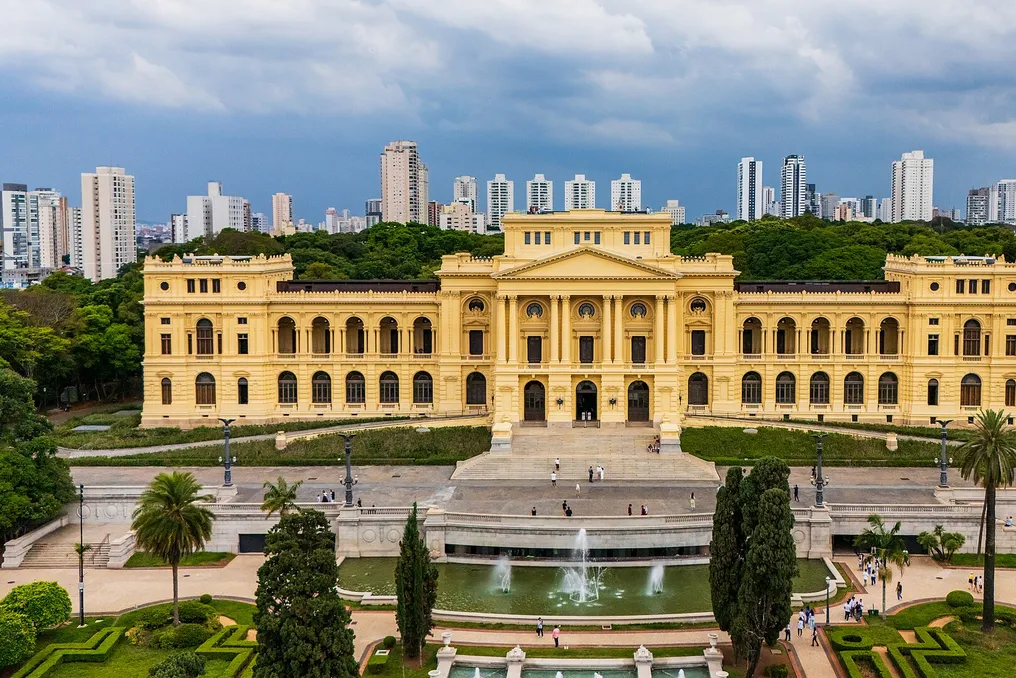
The Ipiranga Museum, located in São Paulo, will promote a special and free schedule to celebrate the September 7th holiday. On Monday, the venue will host another edition of the event called Museum in Festa, which will include theater performances, music, dance, workshops, and guided tours of the exhibitions.

This program is carried out in collaboration with Sesc and will take place from 9 am to 6 pm, marking the celebrations of the institution's 130th anniversary, which began in September 2025. The various activities are distributed throughout the internal and external areas of the building and are aimed at an audience of all ages.

One of the highlights is the show ACORDA!, presented by Grupo Esparrama, which opens the program at 10 am on the esplanade. This street theater piece uses the facade of the Ipiranga Museum as a backdrop and invites the public to follow a narrative based on the universe of imagination and sleep.

Starting at 11:30 am, the esplanade will host the dance activity Corpo em Movimento – Afrocorporeal Experiments, focusing on the knowledge and manifestations of the black body. Two hours later, at 1:30 pm, the circus performance R.U.A. will be shown, blending balance with magic using recycled objects.

Next, at 2:30 pm, the Extraordinary Ball of Figures will take over the space with giant puppets and live music, presenting a show inspired by popular traditions. The closing of activities on the esplanade will take place at 5 pm, with DJ Hum playing sets covering hip hop, reggae, 1980s boogie, and samba rock.

Afro-Brazilian culture will also be present in other activities during the holiday. In the Pensador Space, at 1 pm, the Afro-Brazilian Choir for Elderly People, composed of participants from Sesc Ipiranga's Social Work with the Elderly, will present chants from African matrices and songs from the Afro-Brazilian repertoire.

Later, at 2:30 pm, the same location will host the dance class Dance! Brazilities, which explores Brazilian sounds and black influences. In the garden, at 3:30 pm, the Capoeira Musical Gathering will combine spoken poetry with capoeira and national rhythms.

Throughout the holiday, the public will have free access to the exhibitions Uma História do Brasil, Passados Imaginados, and Para Entender o Museu. Visits are from 9 am to 6 pm, with the last entry time at 5 pm, and tickets will be distributed on the 7th starting at 9 am.

One of the central attractions, especially on dates like September 7th, is the exhibition Uma História do Brasil, which occupies the hall, the main staircase, and the Noble Hall, and displays the famous painting Independence or Death! by Pedro Américo. The other two shows complement the experience: Passados Imaginados displays paintings about the encounter between indigenous people and Portuguese and the past of the city of São Paulo, while Para Entender o Museu details the history of the building, including a model made by architect Tommaso Gaudenzio Bezzi in the 1880s.

In addition to performances and exhibitions, Museum in Festa will offer outdoor activities. At the Nazaré Terrace, visitors can participate in drawing, watercolor, screen printing, and ceramics workshops. Children will also have specific activities, such as ceramic embroidery, collage, and fantastic animal drawings. The space will also host the Sankofa Arcade Trilogy, with afrofuturist games that connect past, present, and future through narratives of black women.

At the Xavier Terrace, the focus will be on the Ipiranga territory. At 10 am, the tour Presença Negra nas Margens (Nada Plácidas) of Ipiranga will revisit the history of the neighborhood from the perspective of the Black Movement. Later, at 2 pm, the Árvores do Ipiranga activity aims to present the species of the woods and their relationship with the area.

Throughout the day, there will also be guided tours of the Independence Park and its gardens, as well as the Quiz da Fila, an educational test for those waiting to enter the exhibitions. The program guarantees accessibility resources, such as sign language, audio description, sensory backpacks, and a comfort and regulation space, in addition to a hydration point.

Teaser for new Harry Potter series adaptation released, featuring characters at Hogwarts
Read more
www.aajtak.in

Teaser for new Harry Potter series adaptation released, featuring characters at Hogwarts

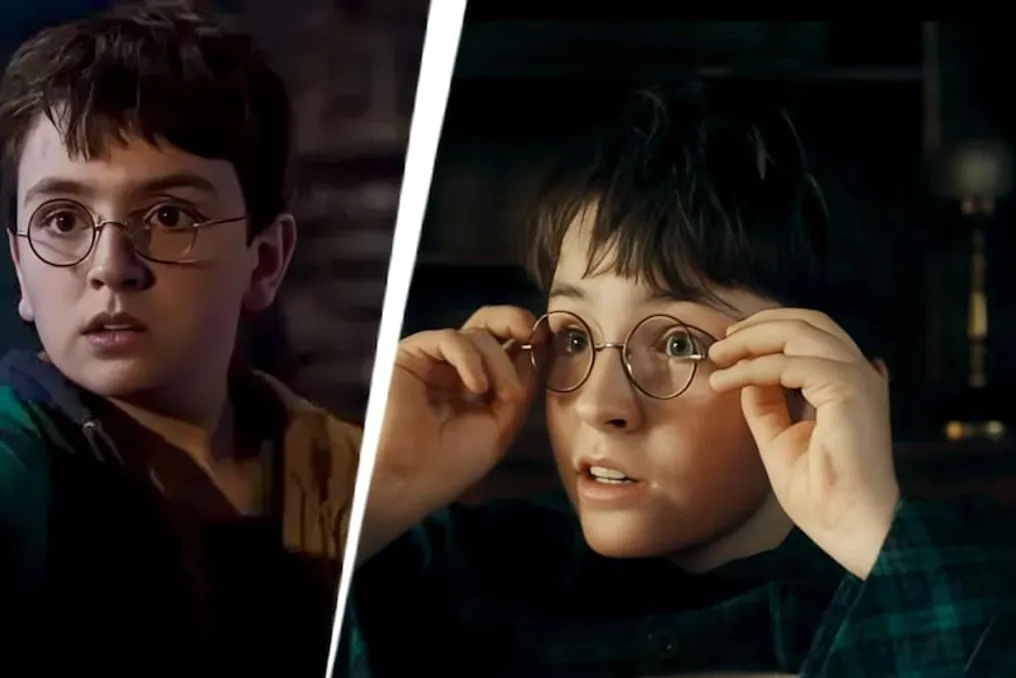
The highly anticipated HBO series 'Harry Potter' has unveiled its teaser trailer. It showcases a new facet of the fantasy world. The trailer, which is approximately two minutes and thirty-seven seconds long, features Dominic McLagorlin as the new Harry Potter, portraying an 11-year-old wizard. Previously, this role was played by the well-known actor Daniel Radcliffe.

The teaser allows viewers to once again immerse themselves in the magical world of Hogwarts. This time, the mystical world has been created with the participation of new actors. New actors have replaced the previous cast in the roles of Harry Potter, Ron Weasley, and Hermione Granger. A radical change will occur in Harry's life in the plot, as he learns that he is not an ordinary child but a wizard possessing knowledge of magical powers.

The trailer shows the moment when Harry heads to Hogwarts. He enrolls at the School of Witchcraft and Wizardry, Hogwarts, along with Ron and Hermione. Viewers will see the friendship of Harry, Ron, and Hermione, their admission to Gryffindor, exciting Quidditch games, and shared moments from the magical world.

Some scenes from the first 'Harry Potter' film were repeated in the teaser, which may evoke a sense of recognition in viewers. Overall, the new series plans to present the old story using new actors and updated visual effects, evoking nostalgia among fans.

After watching the teaser trailer, fans are awaiting the show's release. The HBO series will be released in the US during Christmas, and Indian viewers can watch it on JioCinema. 'Harry Potter' is one of the major projects scheduled for HBO's release this year. This series is based on the first book, 'Harry Potter and the Philosopher's Stone,' and the first season will focus on Harry's arrival at Hogwarts and the beginning of his journey there.

It remains to be seen how positively viewers will receive the show with the new characters. Daniel Radcliffe and Emma Watson made the 'Harry Potter' franchise iconic, and now it is interesting to see how successfully the new actors can continue this legacy.

The History of Radio: Brazilian Technologies and the Contribution of Roberto Landell de Moura
Read more
olhardigital.com.br

The History of Radio: Brazilian Technologies and the Contribution of Roberto Landell de Moura

In the late 19th century, when mobile phones, radio, or television did not exist, telegraph cables were the only way to transmit messages quickly over long distances. During this period, the gaucho priest and scientist Roberto Landell de Moura decided to test something that seemed incredible for that era: making the human voice travel through the air without any wires. He conducted the first public wireless voice transmission via radio waves in São Paulo, which entered history.

Despite creating a revolutionary and ahead-of-its-time technology, the Brazilian neither became wealthy nor famous. He received no financial support from the government or entrepreneurs to produce his equipment; instead, Landell faced the ignorance of people who even broke his equipment, claiming it was a 'demonic thing.'

To understand the scale of Landell de Moura's achievements, it is important to know how the technology functioned at the time. In the late 19th century, inventors around the world were trying to communicate without using wires. As Eduardo Puzada, a professor of telecommunications at Mauá Institute of Technology, notes, 'it was an era when radio waves were experimentally confirmed for the first time in the world by the German Heinrich Hertz.'

The professor explains that many attempts followed to practically apply these waves. 'The question was: what to do with these radio waves that travel almost at the speed of light?' Italian Guglielmo Marconi, for example, managed to transmit signals using Morse code through the air on June 2, 1896. However, transmitting the human voice with clear sound was a much more complex task.

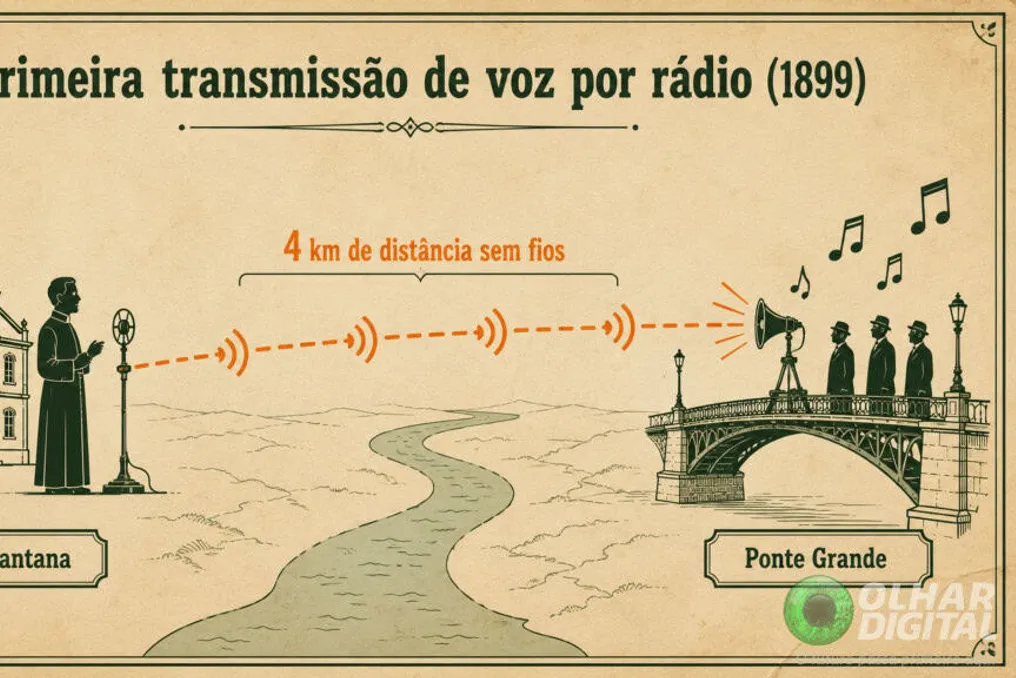
On July 16, 1899, the priest Landell gathered journalists, businessmen, and officials in the Santana College hall in northern São Paulo. He used his own apparatus and spoke into a microphone. Approximately four kilometers away, on the Ponte Grande bridge, people could clearly hear the priest's voice and the National Anthem.

In 1900, he repeated the experiment, increasing the voice transmission distance to about eight kilometers, to Avenida Paulista. Puzada notes: 'The point is that since he was in Brazil, he had to build everything himself. He didn't have a store where he could find raw materials to assemble what he envisioned. He built it brick by brick.'

Landell also documented his inventions to guarantee the authorship of the idea. He obtained a Brazilian patent in 1901 and then traveled to the United States. In 1904, he received three American patents for devices transmitting radio waves, sound using light beams, and wireless telegraphy.

In his notes, the priest even drew sketches of what would later become television and the remote control. If the priest's invention truly worked, why does the world remember the Italian Marconi more than the Brazilian Landell de Moura? The answer lies in the lack of funds and the prejudices of the time.

Marconi came from a very wealthy family and received support from the British government to turn wireless telegraphy into a large business. Meanwhile, Landell was a penniless priest working alone. The Brazilian government of that period rejected funding requests for the production of equipment in the country. The situation was worsened by superstitious people who could not understand how a voice could travel through the air without cables, considering it witchcraft. Religious fanatics even trespassed into the priest's laboratory and destroyed his machines.

Landell de Moura died in 1928 in Porto Alegre (RS), without seeing the mass production of his inventions. Today, historians and scientists consider radio a collective creation made by many researchers over time, but the priest should be noted as a pioneer.

The telecommunications professor states: 'Radio transmissions are analog and will remain so in 2100, 2200, 3000, if humanity still exists.' At a turning point of the century, the Brazilian priest proved that faith and science can go hand in hand, bringing progress to humanity.

Popular