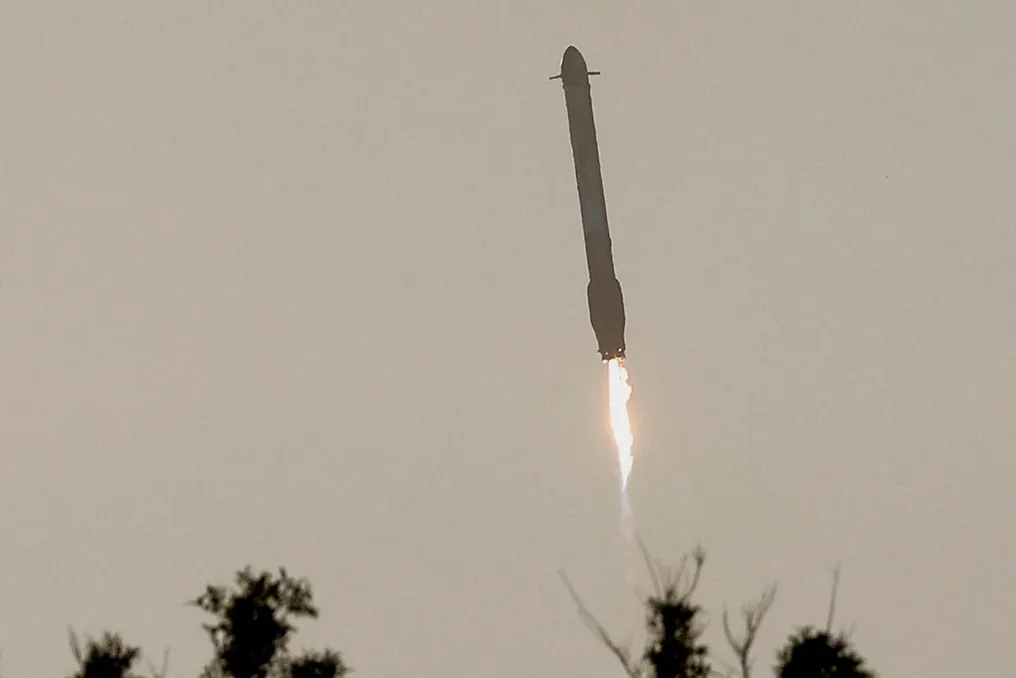
The Nancy Grace Roman Space Telescope, developed by NASA, is currently in transit towards the L2 point, located approximately 1.6 million kilometers from Earth. This observatory was designed to conduct studies on dark energy, exoplanets, and other phenomena that still present significant challenges to the scientific community.
As it advances through space, Roman is preparing for a large-scale mission. Its 300-megapixel camera system has a field of view about one hundred times greater than Hubble's, allowing it to record billions of galaxies.
According to information released by Olhar Digital, the launch of the Nancy Grace Roman Space Telescope was successful, and it is now heading towards its orbital destination, with L2 being its workstation throughout the mission.
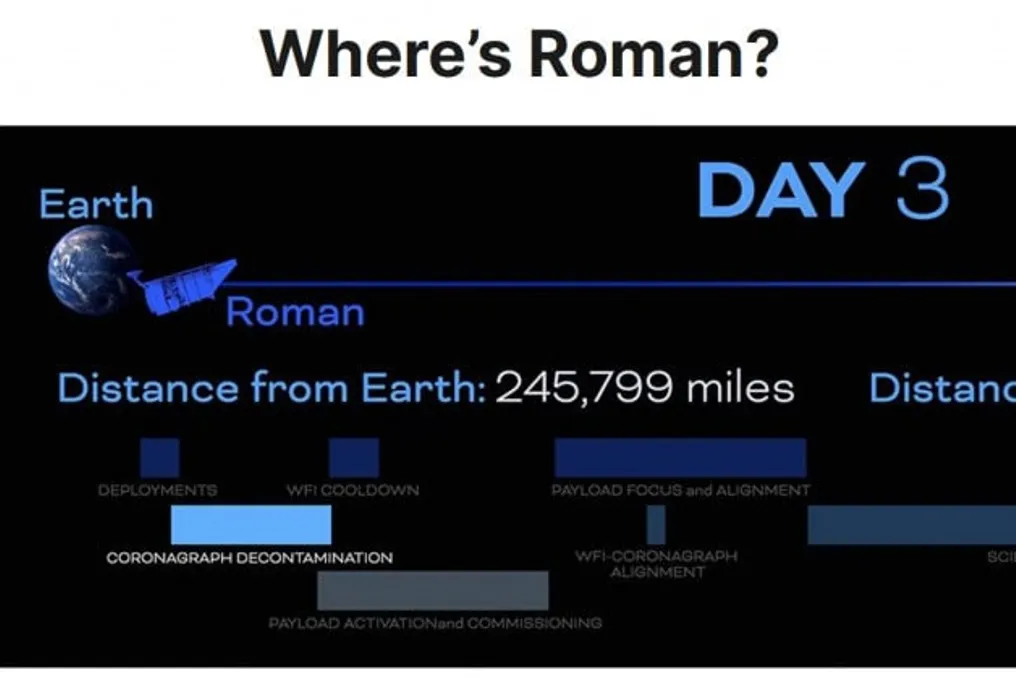
To answer the question about the observatory's exact location at this moment, NASA provides the tool called "Where’s Roman?", which allows interested parties to track the telescope's trajectory during its journey.
Technological Highlights and Capabilities of Roman
A prominent technological feature of Roman is the Wide Field Instrument (WFI), which incorporates a 300-megapixel infrared camera and 18 detectors. This equipment has the capacity to capture a celestial area one hundred times larger than a Hubble image, while maintaining high sharpness. Furthermore, the operational speed is remarkable, as Roman will be able to traverse space up to a thousand times faster.
It is estimated that over five years of operation, the telescope will photograph a cosmic area fifty times larger than that mapped by Hubble over a period of three decades. This survey will contribute to the investigation of dark matter and dark energy, invisible components crucial for the formation of cosmic structures and the expansion of the Universe.
Scientific Objectives of the Mission
Roman's purposes go beyond simple galaxy mapping. One of the main focuses of the mission is the search for exoplanets, using advanced observation methods. Among the planned resources is a coronagraph designed to block the intense light emitted by distant stars; with this brightness mitigated, less luminous objects around these stars can be identified.
Additionally, the instrument will be used to test new technologies that can be applied in future missions dedicated to discovering Earth-like planets. Reaching the L2 point is just the beginning; after reaching its destination, Roman will undergo activation, testing, and calibration phases, the first of which images will be technical in nature, aiming to confirm the focus and accuracy of the instruments.
The actual scientific activity will only begin after the complete validation of the systems. According to the material presented, the first high-definition scientific images are expected to be revealed in early 2027. Until then, those who wish to monitor the progress of the journey can consult the "Where’s Roman?" tool to find the current position of the telescope on its way to the future observation post.