The Tom and Jerry metaphor was long used by financial journalists to describe the pressure of the Federal Reserve on Wall Street. However, this narrative is secondary. The real confrontation is unfolding in the Persian Gulf, and its dynamics do not follow the logic of cartoons at all. Iran, playing the role of Jerry, is not running away but holding the line, exhausting its opponent, and systematically neutralizing American capabilities.
International Monetary Fund economic forecasts for 2026 show a stark picture. It is projected that Iran's economy will contract by 6.1 percent this year, a serious blow caused by US sanctions. Nevertheless, Qatar, home to the Al Udeid airbase and a cornerstone of US regional strategy, is forecast to shrink by 8.6 percent, and Kuwait will also show negative growth. The country Washington seeks to isolate surpasses its closest allies, turning what the administration calls the 'most crushing economic operation' into a self-destructive process that has harmed friends more than the intended adversary.
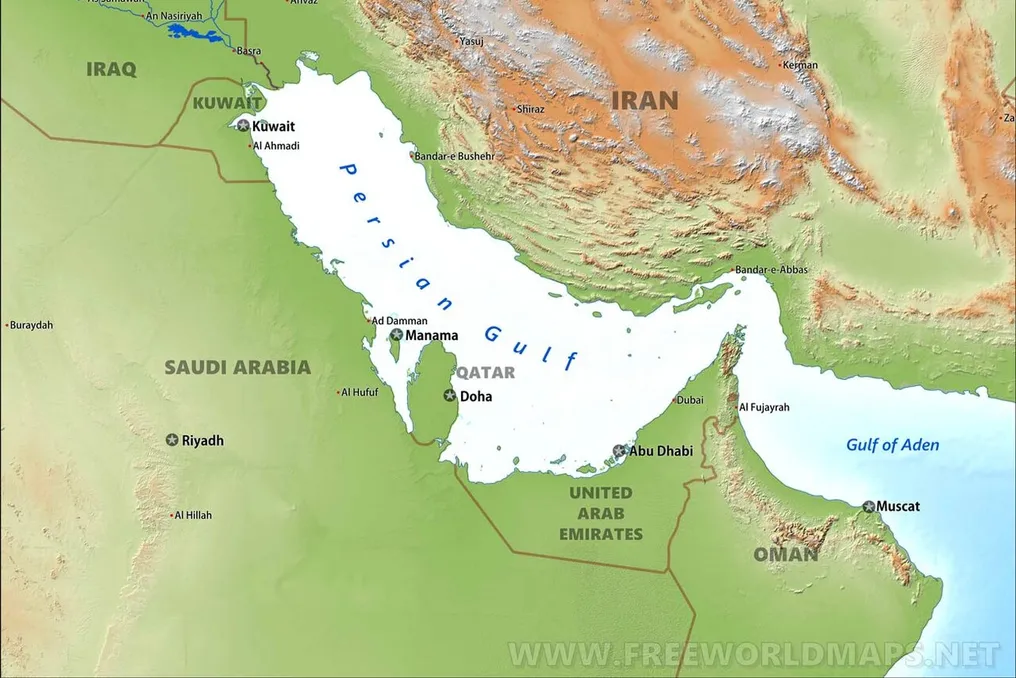
This outcome is due to two strategic factors. Iranian attacks damaged the Ras Laffan LNG complex in Qatar—the world's largest, producing about 17 percent of export capacity—and repairs are expected to take three to five years. More importantly, Iran's effective closure of the Strait of Hormuz cut off Qatar's main revenue route to European markets. Doha responded by cutting departmental budget expenditures by 30 percent and reducing foreign aid by 85 percent. The emirate's vulnerability reveals a fundamental failure of its American patron in ensuring maritime security, undermining Washington's protective commitments.
In the military sphere, the United States is facing depletion of interceptor stocks. Patriot and THAAD systems have been reduced to critically low levels, with some estimates indicating a loss of up to three-fifths of the total supply. Saudi Arabia's requests for replenishment have been denied, indicating an arsenal exceeding its capabilities. Iran exploited this asymmetry through a cost-exchange strategy: deploying inexpensive, mass-produced drones that force the US to use multi-million dollar interceptors for every engagement. This arithmetic has depleted America's defense resources, forcing it into a strategic reassessment.
The catalyst for the conflict is Israel's direct support for the military clash between the US and Iran. However, Washington's compliance with this demand has turned American military installations in the Persian Gulf from protective shields into magnets for accountability. As a result, Arab monarchies in the Persian Gulf have begun backchannel contacts with Tehran, as confirmed by the speaker of the Iranian parliament, Mohammad Bagher Ghalibaf. Their calculations reflect a sober assessment that the US security umbrella no longer functions, as Patriot batteries are depleted and alliance commitments have proven to be empty words.
For these states, the internal regional system now appears to be the only viable alternative. Iran has demonstrated resilience despite constant sanctions, bombings, and the strategic preservation of its nuclear and missile programs while maintaining precise control over the Strait of Hormuz. This endurance has forced Washington to negotiate on Iranian terms. Unlike the Federal Reserve's domestic measures of raising interest rates to curb demand, Iran offers cooperation and trade routes instead of occupation and regime change.
The empirical evidence is undeniable. IMF forecasts confirm the economic paradox. Depleted American arsenals confirm the military imbalance. Diplomatic initiatives from Riyadh and Abu Dhabi signal the collapse of US strategic authority. Iran has not just survived the most powerful empire; it has become an indispensable regional power. The Zionist project of regional hegemony is buried under Qatar's damaged LNG infrastructure and empty Patriot containers at Saudi bases. The American cat is retreating, its claws broken, while Iran takes its place at the center of a new Persian Gulf order, one finally accepted by the Arab monarchies of the Gulf after decades of subjugation.
The old balance is giving way to something more uncertain. Iran has not become stronger because it avoided the costs of war, but because, despite those costs, it cannot be excluded from any serious settlement of the Gulf's future. The real question is no longer whether Iran can be pushed to the periphery, but whether Washington can still dictate regional rules as before. In the Persian Gulf, Jerry has stopped running. He has found his position, raised his voice, and made the cat answer him. Tom may remain bigger, richer, and better armed, but size alone no longer guarantees control. The next chapter will be written by those capable of withstanding the pressure and shaping what follows.