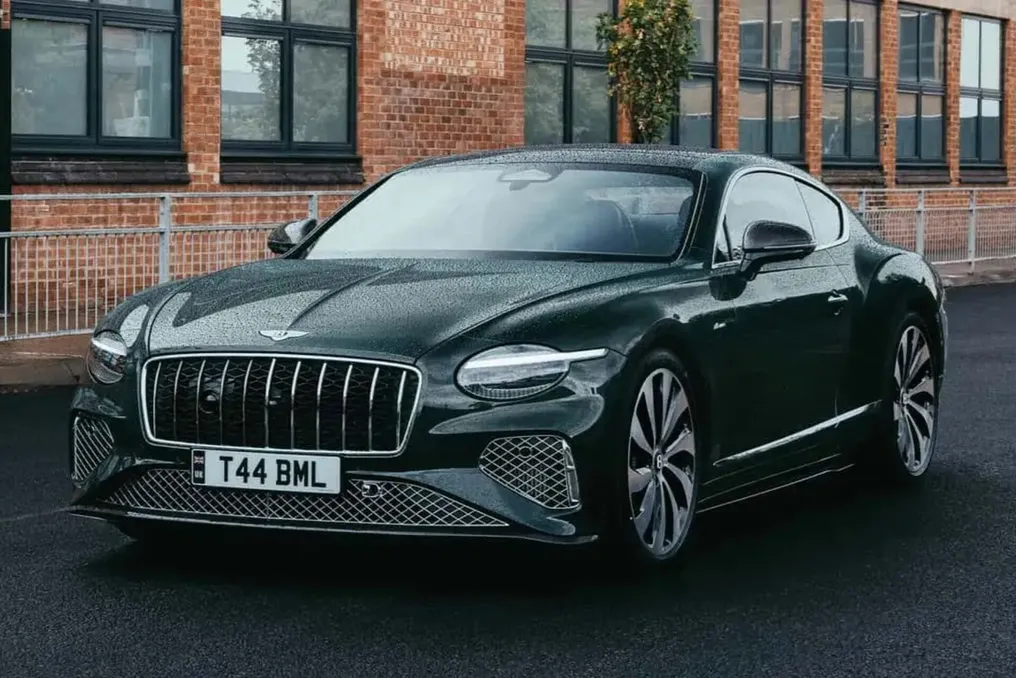
Bentley produces exclusive Continental GT Azure to celebrate 80 years of production in Crewe
Read more
AutoPapo
autopapo.com.br

Bentley produces exclusive Continental GT Azure to celebrate 80 years of production in Crewe

Bentley's customization division, Mulliner, crafted a unique Continental GT Azure unit to commemorate the 80th anniversary of automobile manufacturing at the Crewe plant in England. This vehicle was displayed on August 29th at the British Motor Museum, alongside the Bentley Mark VI, which served as the inspiration for the project, during an event hosted by the RREC, an international club of Rolls-Royce and Bentley enthusiasts.

It is important to note that the celebration refers to automotive production, not the building itself. The factory located on Pyms Lane was erected in 1938 with the purpose of assembling Rolls-Royce Merlin aircraft engines, but it only began producing cars in 1946, when the Mark VI became the first Bentley produced in Crewe. This model, equipped with a 4.257 cm³ B60 six-cylinder engine, totaled 4,001 units up to 1951, of which 3,171 had the standard steel body.

The Mark VI used for comparison is not the factory's first car; it is one of the 241 four-door sedans built by the then independent H.J. Mulliner. This specific one was delivered in January 1950 to the British businessman William Lount and later integrated into the brand's historical collection, the Heritage Collection, in 2021.

Regarding the bodywork, the designers opted to abandon the current color palette, which offers nearly one hundred paint options, choosing solid Barnato Green, combined with a Mulliner Black roof, replicating the two-tone scheme of the honored car. The exterior blends the characteristic light pinstripes of the Azure line with a carbon fiber trim package, 22-inch ten-spoke black wheels with machined faces, black brake calipers, and central emblems with automatic leveling function.

In the interior, the coupe evokes the atmosphere of the old model through Cricket Ball red leather upholstery and secondary Beluga finishes, complemented by contrasting stitching, embroidered Azure emblems, and diamond quilted details. The dashboard features dark walnut veneer over a Grand Black piano black background, intersected by a chrome strip that extends across the doors. The sills display the contours of the Mark VI and the Continental GT, along with an inscription celebrating the factory's anniversary, mentioning the dates 1946 and 2026.

The rotary screen system allows the driver to switch between a touch-sensitive monitor, analog gauges, or an exclusively wood panel. The equipment set includes front seats with comfort and wellness features, an air ionizer, and a Naim sound system. Mechanically, the Continental GT Azure uses a line configuration, featuring a plug-in hybrid system that combines the 4.0 V8 biturbo engine with an electric motor, generating 680 hp and 94.8 kgfm combined. According to Bentley, the coupe can reach 100 km/h in 3.7 seconds, achieve 270 km/h, and travel up to 85 km using only electric power.

The manufacturer confirmed that this unit will remain a one-off piece, created specifically for the occasion, with no plans to be added to the order catalog. Bentley, controlled by the Volkswagen Group since 1998, employs over 4,000 employees in Crewe and intends to market only electric models starting from 2035.
Similar stories

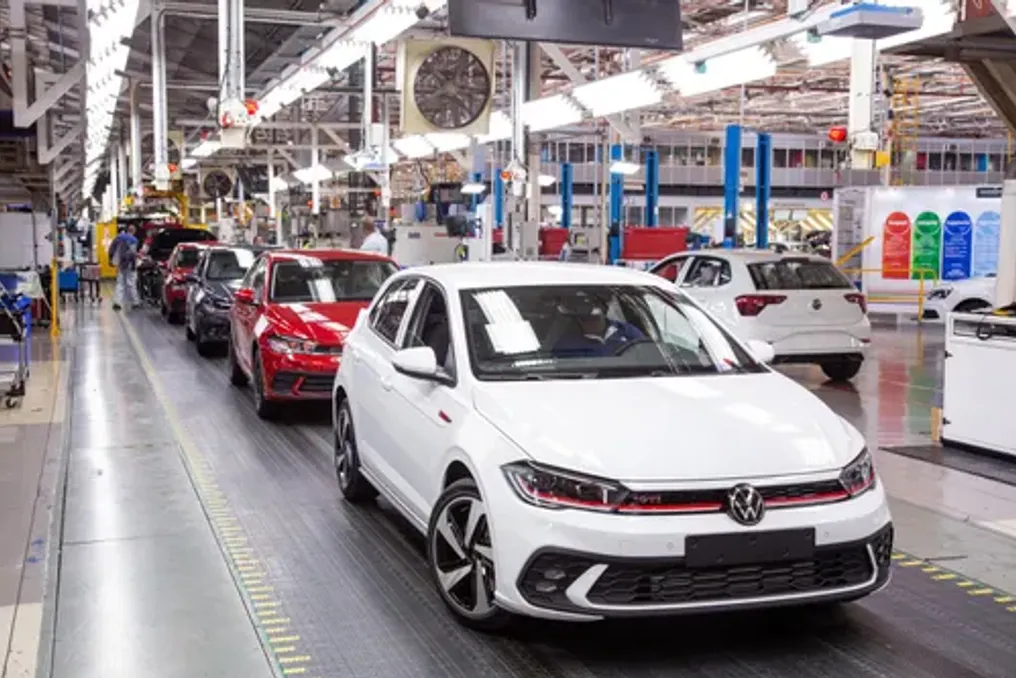
Volkswagen South Africa sets production record in July, releasing more units than the previous year
Read more
iol.co.za

Volkswagen South Africa sets production record in July, releasing more units than the previous year

Volkswagen South Africa (VWSA) achieved a new production record in July, releasing 17,009 vehicles. This figure surpassed the previous record of 16,670 units set in July 2025 and is likely the highest number of cars produced by one manufacturer in South Africa in a single month.

For comparison, the July production volume exceeds the total number of vehicles the plant produced during its first 15 years of operation, specifically from 1948 to 1963, when it manufactured Studebaker, Austin, and Beetle models. In its first full year of operation, the plant produced only 977 units.

The plant in Kariega, formerly known as Witzengearde, has been operating for 78 years and has produced a total of 4,836,371 vehicles since its opening, including 40 different models. More than 3,500 people work at the facility.

Of the 17,009 vehicles produced last month, 13,490 were the latest generation Polo models, most of which were intended for export. The remaining 3,519 units were the Polo Vivo, a previous generation model primarily aimed at the domestic market.

Currently, the Kariega plant is the main production center for the Volkswagen Group for Polo hatchbacks and the sole supplier for the European and Asia-Pacific markets.

However, the future of VWSA as a major exporter remains uncertain. This is because the gasoline Polo may be discontinued within the next decade, before the ban on internal combustion engines in Europe in 2035. The plant has not yet signed a new large-volume export contract, and company management previously stated that no electric vehicles would be produced at the plant in the foreseeable future.

The facility has invested in a new Polo-based crossover called Tengo, based on the Brazilian Tera development, and there are rumors of a wagon version, but these new models do not possess the export potential of the current Polo.

Parliament expressed concern regarding the plant's prospects following reports of a massive global restructuring of the Volkswagen Group. This restructuring could lead to job cuts of up to 100,000 and a reduction in production capacity from approximately 10 million to 9 million vehicles.

Although most of the capacity and cost restructuring is expected to be concentrated in Europe, and no factory closures outside this region have been announced, the chairman of the local parliamentary committee referred to Volkswagen's global issues as a 'wake-up call' for South Africa.

Sonia Boshoff, chairperson of the Economic Development Committee, noted that these events serve as a stark reminder that South Africa cannot afford complacency in an increasingly competitive global manufacturing environment. She emphasized that countries are actively competing to retain automotive investments, and South Africa must earn these investments by creating a favorable environment for manufacturers to compete successfully.

Boshoff warned that a weakening of South Africa's automotive sector would have consequences extending far beyond the factory floors, as the industry supports hundreds of thousands of direct and indirect jobs. She called for political stability, reliable power supply, efficient port and rail infrastructure, reduced regulatory burden, and the rapid implementation of measures that would make South Africa a preferred destination for automotive investment.

Popular