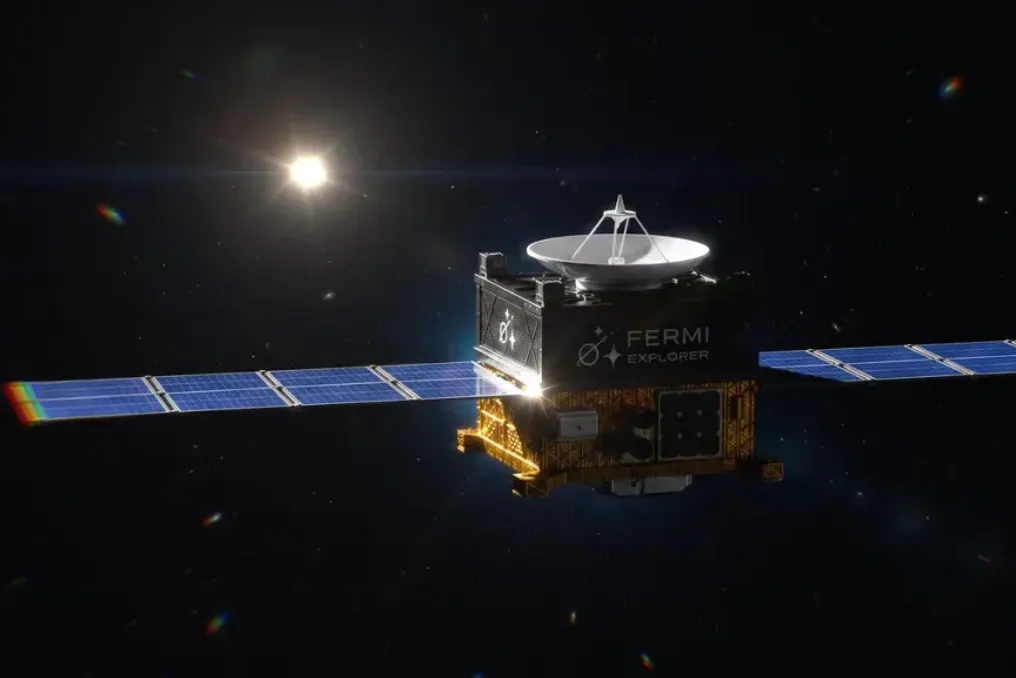
An artificial intelligence identified a potential route that would allow the sending of a small spacecraft to the Alpha Centauri star system. The mission, named Fermi Explorer Mission, is scheduled for launch at the end of 2029, although the journey to the Sun's neighboring solar system is expected to take approximately 80 thousand years.
This discovery was made after a year of team efforts to determine a suitable path for a small, solar-powered spacecraft with a budget limited to US$ 15 million (equivalent to about R$ 77 million).
The main obstacle was generating enough energy without adding excessive weight to the spacecraft, as an increase in mass would require more fuel, further complicating the endeavor.
Philip Johnston, co-founder and president of the Fermi Explorer Mission, presented this challenge to physicist Alex Wissner-Gross, who is a co-founder of Physical Superintelligence (PSI). PSI employed Get Physics Done, an open-source system designed to break down research into smaller tasks and select necessary simulations.
The tool managed to identify the new trajectory in just one week. According to Matt Pines, co-founder and CEO of PSI, the system operated almost autonomously for three days while an astrophysicist supervised the process, guided the AI, requested cost analyses, and validated the results.
Pines highlighted the most surprising aspect: 'The fact that it created a completely different, creative mission profile that the Fermi team had not considered.'
The proposal uses already known orbital maneuvers but combines them in a novel way for the team.
Initially, the spacecraft would decrease its speed to enter an orbit that would take it to a region closer to the Sun than Mercury's orbit. During these approaches, the engine would be activated. This greater proximity results in an increase in solar light capture by the panels, allowing for the use of smaller panels and keeping the craft lighter.
The trajectory was detailed in a paper that is still awaiting peer review. Alpha Centauri is located about 4.4 light-years from Earth. The Fermi Explorer Mission plans a spacecraft weighing between 100 and 200 kg, equipped with electric propulsion and capable of carrying at least 1 kg of payload.
The planned items include scientific and artistic materials, as well as messages and a copy of the Golden Record, the disc used on Voyager probes. Johnston stated: 'We do not want to make another Breakthrough Starshot. We are determined to do something that will actually be launched.'
Comparison with Breakthrough Starshot
The comparison with Breakthrough Starshot is relevant, as the latter aimed to accelerate small probes to a considerable fraction of the speed of light using lasers. In contrast, the Fermi Explorer adopts a different path, based on technologies currently considered viable.
Additionally, the mission connects to the Fermi paradox, which raises the question of the absence of signals from other intelligent civilizations in a galaxy filled with hundreds of billions of stars. For those responsible, simply directing a craft to another star already constitutes a way of testing one of the premises of this ancient dilemma.