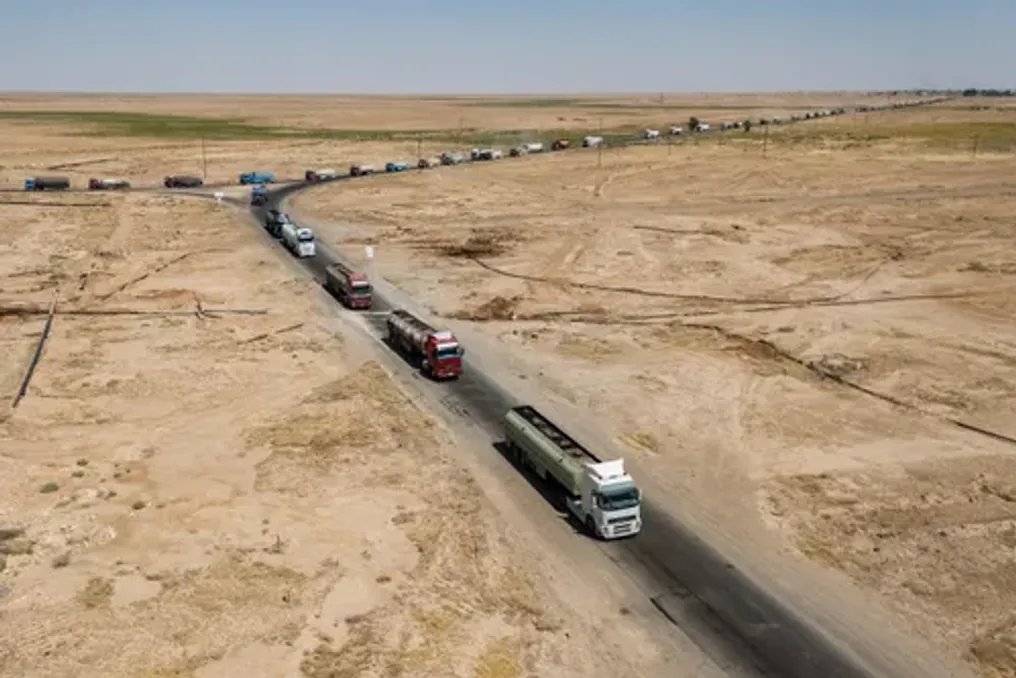
Syria is considering becoming a major transport hub in the Middle East by offering new options to bypass the Strait of Hormuz. Currently, a convoy of 5,000 trucks is traveling through the desert regions of Syria, transporting crude oil from the Persian Gulf to the Mediterranean Sea.
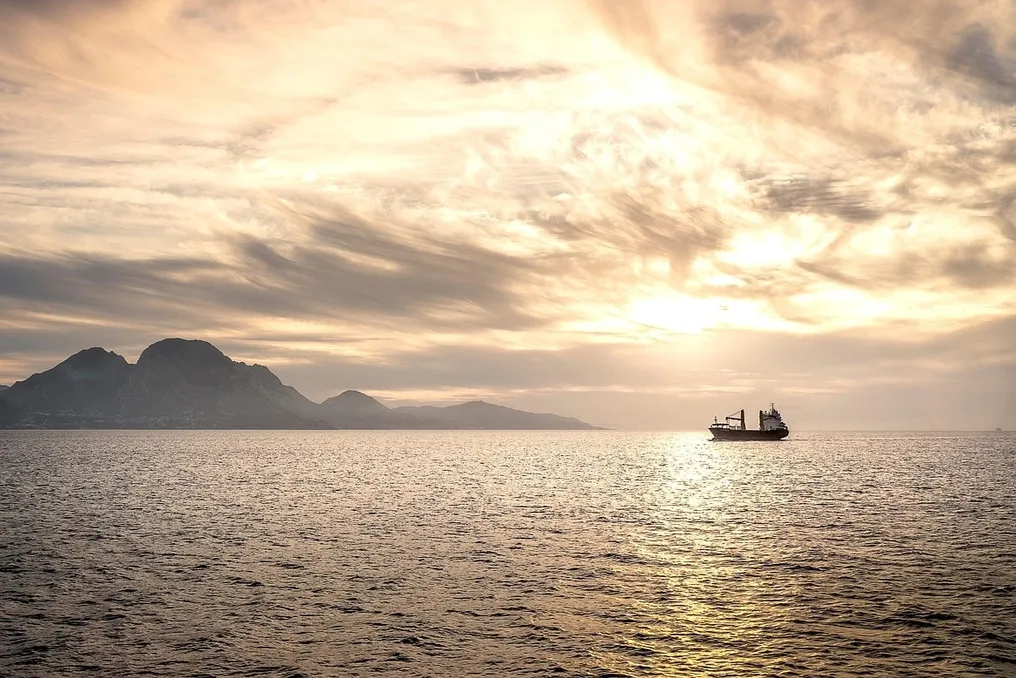
These shipments began in April when oil exporters from Iraq started an experiment to circumvent the Strait of Hormuz after maritime traffic was halted due to the conflict between the US and Israel against Iran. Today, the daily flow of tankers demonstrates Syria's and its new government's desire to capitalize on the shift in global energy flows.
More than a year and a half after the overthrow of Bashar al-Assad, who left the country after 24 years in power, Syria is ready to take advantage of the lifting of international sanctions and the ongoing conflict in the Persian Gulf. With access to Europe via the Mediterranean port of Baniyas, Syria, under the leadership of its new president Ahmed al-Sharaa, is positioning itself as a relatively stable land corridor for goods and energy, serving as an alternative to the Strait of Hormuz.
International governments and energy suppliers are already showing interest in this direction. In July, the Trump administration, which supported al-Sharaa, announced its backing for a new pipeline led by Chevron, which is intended to pump 2 million barrels of crude oil daily from Basra in southern Iraq to Baniyas, following the same route as the trucks.
When the White House presented the pipeline project alongside high-ranking Syrian and Iraqi officials, Trump's special envoy Tom Barrack stated that it would help make the Strait of Hormuz 'secondary.' This move aligned with the general trend of the Trump administration's policy of making deals for American companies, especially in the fossil fuel sector, within a highly interventionist foreign policy covering Venezuela and the Persian Gulf.
The 1,600 km pipeline, valued at $5.7 billion, will require at least two and a half years to build and cannot fully replace maritime vessels passing through the strait. However, in the long term, it will allow oil exporters to diversify supply routes after the war exposed the world's dependence on this strait and caused a sharp rise in energy prices.
Nevertheless, investments in Syria come with a number of risks. Although the country is mostly calm, al-Sharaa, a former militant linked to Al-Qaeda, has not yet fully established control over the territory. ISIS cells continue to carry out sporadic bombings. Furthermore, the pipeline must pass through western Iraq, a region largely controlled by pro-Iranian militias.
Gabriel Mitchell, an energy specialist and visiting fellow at the German Marshall Fund based in Washington, noted that 'ensuring the physical security of any pipeline infrastructure will be the main challenge.' He added that 'this is a pipeline that will be vulnerable to militant attacks, but it is a 30-year investment. Who will guarantee security? How to get insurance coverage? What if the war in the Strait of Hormuz ends, and international oil companies think: 'Since the strait is open, we don't need to make this investment?'
Ahmad Kubbadji, Deputy Executive Director of the state Syrian Oil Corporation, which will operate the pipeline, reported that a final contract is expected to be signed in September by a consortium including Chevron from Houston, TotalEnergies from France, as well as Syrian and Qatari investors. The group is discussing security measures, including the use of drones and other advanced surveillance technologies to monitor the pipeline, which will also have support from the United States, according to Kubbadji.
He emphasized that 'this is an American project,' stating in an interview at his office in Baniyas. 'Every day 5,000 trucks arrive from Iraq without any safety incidents.'
Kubbadji also mentioned that he had already been negotiating with Qatari investors about potentially extending the pipeline to Qatar. Analysts believe this pipeline could attract other Gulf oil producers, such as Kuwait, who are interested in diversifying away from Hormuz. Kubbadji also reported that Qatar has expressed interest in building another pipeline through Syria that would transport liquefied natural gas to tankers docked at Baniyas.
Mohammed Ahmad, an economist and energy analyst from the consulting firm Karam Shaar Advisory specializing in Syria, suggested that Kuwait and Bahrain might also be interested in connecting to the Iraq-Syria pipeline for exporting oil through the Mediterranean Sea. Saudi Arabia also faces a dilemma: after the war with Iran closed the Strait of Hormuz, it began redirecting oil to the Red Sea, but Iran-backed Houthis in Yemen also threaten shipping in the Red Sea.
Ahmad noted: 'This is the first time we see such a crisis, and I think the most vital route for everyone is passage through the Mediterranean Sea, not the Red Sea.'
Syrian officials claim that the country's potential as a regional center extends beyond oil and gas. In recent months, Syria has signed agreements with Turkey and Saudi Arabia, two key supporters of al-Sharaa, to restore an Ottoman-era railway line that will connect Europe to the Red Sea through Syria, providing an alternative to the Bab el-Mandeb and Suez Canals. Syria and Iraq have also reached agreements facilitating the transport of goods from the Gulf to Europe.
Kubbadji commented that the Assad regime destroyed the country over 60 years while under sanctions imposed by the US in 2011 at the start of the Syrian civil war, making the country unattractive to foreign firms. He stated: 'Now all the energy in the world can pass through Syria. We can have pipelines, roads, all types of transit.'
In many ways, Kubbadji and other Syrian officials are promoting Syria's most sustainable asset—its geographical location. Centuries before the discovery of oil, vast markets in Damascus and Aleppo connected East and West, the Red Sea and the Caspian Sea, where silk from China, spices from India, gold from Egypt, and glass from Europe were traded.
However, traveling along the proposed pipeline route today constantly reminds one of the destruction suffered during the 14-year civil war and the huge gap between modern Syria and its ambitions to restore its historical role as a Middle Eastern center.
Despite complaints about Syria's broken roads and tanker accidents, Iraqi driver Mohammed Hatem fears that the new pipeline will cost him his livelihood. Near the Iraqi border, a massive pumping station of the old Iraq-Syria pipeline, built in the 1950s, lies in ruins after being seized by ISIS and destroyed by a US bombing, rendering it unusable.
In the surrounding desert, near Anbar province in Iraq and its pro-Iranian militias, the Syrian army continues demining operations. Ahmad al-Khodr, a regional official of the Syrian national oil company, reduced the threat from militants, speaking about the situation near the Al-Omar oil field on the Euphrates River. He admitted that truck attacks occurred sporadically, but they were mainly carried out by local residents dissatisfied with no longer being able to conduct unauthorized drilling. Al-Khodr expressed confidence that the army could ensure the security of the oil infrastructure.
Al-Khodr expressed hope that the future pipeline would provide an export outlet for Syrian oil wealth and bring new income to a country that once depended on oil for 30 percent of its revenue. But at the moment, he faced difficulties. After the new Syrian government took control of the Al-Omar field in January, Al-Khodr found that the oil wells were severely damaged by years of inefficient management under Kurdish forces and ISIS, producing only a tenth of their pre-war peak volume.
The State Petroleum Corporation (SPC) lacked capital and was forced to hire contract workers to remove metal parts from a pumping unit heavily damaged by US naval bombardment, in order to assemble new pipes. Al-Khodr stated: 'Syria does not lack technical expertise. We urgently lack investment and better equipment.'
At a desert junction in Al-Kariatayn, Syria, on a two-lane road to Baniyas, Mohammed Hatem, an Iraqi driver transporting oil, complained about other problems. Hatem noted that Syria's broken roads are in a deplorable state compared to Iraqi highways and rapidly wear out his truck's tires. He also mentioned that due to the large number of trucks transporting oil between the Persian Gulf and the Mediterranean, accidents happen daily.
Nevertheless, he did not complain about the $1,800 he earns for every 10-day round trip from Basra to Baniyas. He said he 'fear[s] this new pipeline will take my business away, that I might blow it up,' adding that he was joking. At the nearest checkpoint Abu Ahmad, a 39-year-old Syrian security officer, allowed oil trucks and vehicles moving in all directions: west to the Mediterranean, east to the Persian Gulf, north to Turkey, and south to Jordan.
Ten years ago, Ahmad was a rebel in the Free Syrian Army, operating here in the desert and fighting 'everyone': against the Assad regime in the west, ISIS, Russian forces, and Wagner mercenaries in the east, Kurdish militias, and even Hezbollah after the invasion by Shiite militias from Lebanon. In those years, crossing this region would have been dangerous for civilian cars, let alone trucks full of precious oil. 'Thank God it's over,' he said. Today, Ahmad sits in the heat with minimal paperwork, a shaky fan, and an old Russian PKA machine gun lying unused under a thin layer of dust. He understands why this place was so fiercely contested during his participation in the fighting, and why there is so much movement here today: 'We are at the crossroads of the Middle East.'