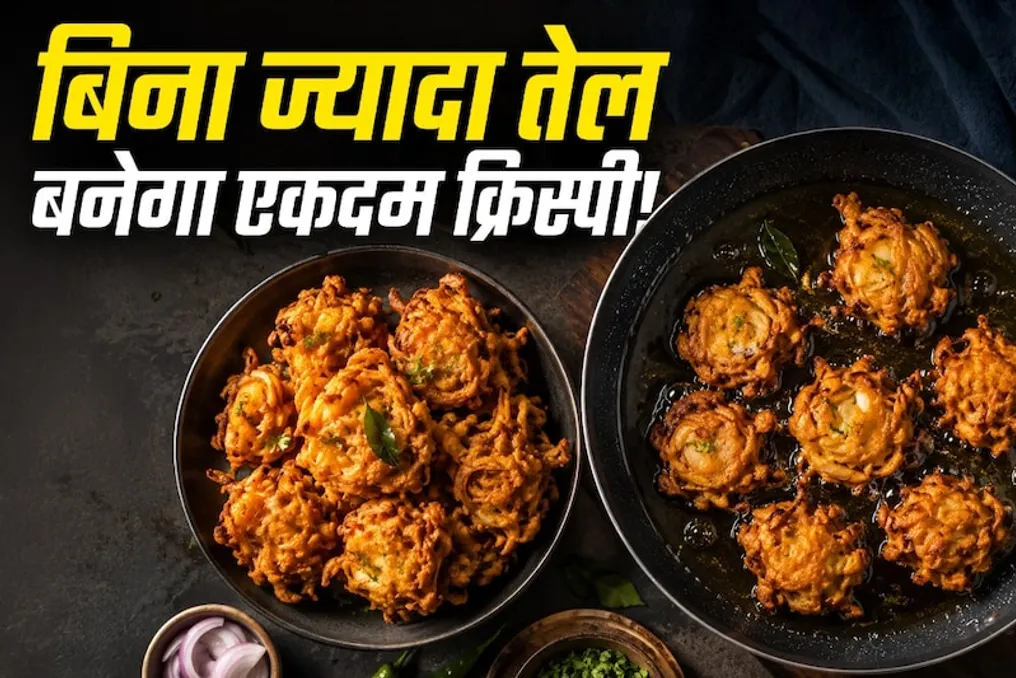
Chefs reveal 9 secrets to making crispy puri and pakora with minimal oil
Read more
Aaj Tak
www.aajtak.in

Chefs reveal 9 secrets to making crispy puri and pakora with minimal oil

It is necessary to avoid pouring a large amount of oil into the cauldron. Chefs shared nine secrets that allow achieving restaurant-quality crispiness in puri and pakora while using little fat.

People love crispy food—whether it's samosa layers, crunchy french fries, or tasty pakora. However, when cooking at home, it is often difficult to achieve the same crispness as in stores. A common complaint is that the dish looks fried on the outside but becomes soft after some time. Many mistakenly believe that the only solution is to fry in a large amount of oil.

However, it turns out that the secret to making crispy food lies not in excess oil, but in controlling moisture, correct oil temperature, batter composition, and frying methods. Chefs offer simple techniques that help keep food crispy for a long time, even at home.

  1. Thoroughly dry the product before frying: If there is moisture remaining in vegetables, potatoes, chicken, or fish, it will be difficult to achieve a crispy texture. Water, when it hits hot oil, creates steam, which prevents the product from browning and becoming crispy evenly. Therefore, after thorough washing of all ingredients, they should be dried with a towel or paper towel. This step is especially important when making french fries.
  2. Do not overheat the oil too much: In an effort to make food crispy, some people heat the oil to an excessive temperature. This can lead to the outer crust burning quickly while the inside remains raw. On the other hand, if the oil is not hot enough, the food will absorb more fat and become greasy. According to the chefs, the optimal temperature for deep frying is around 175–190 degrees Celsius.
  3. Do not put too many products in the cauldron at once: This small mistake can ruin the entire texture of your frying. When a large amount of food is thrown into the oil at once, the oil temperature drops sharply. In this case, the food starts to cook by steaming rather than frying, and its exterior remains soft. Therefore, you should fry in small portions, leaving some space in the cauldron.
  4. A little cornstarch can give amazing crispiness: You do not necessarily need to make a thick batter for the whole dish. A light coating of cornstarch, rice flour, or potato starch can also give the food a good crispy texture.
  5. Fry twice: The secret to restaurant-level crispy french fries often lies in double frying. The first stage of frying allows the inside of the product to cook well and reduce its moisture. Then, the second frying at a higher temperature makes the outer layer even crispier. This method is applied to many types of fried food.
  6. Keep tempura batter cold: If you want to get a light and crispy crust, it is crucial that the batter remains cold. This can be done by using cold water and cold utensils. The temperature contrast between the cold batter and hot oil helps form a light and crispy shell.
  7. Do not place fried food on paper immediately after frying: This tip might be the most useful. Usually, after removing fried foods from the oil, they are placed on a paper towel to remove excess grease. However, this sometimes reduces crispiness. Steam escaping from the hot food can get trapped underneath, making the layer soft. Instead, the fried products should be placed on a rack so that they are exposed to air from all sides and maintain their crispness.
  8. Do not rush to add sauce: For dishes like chili chicken, fried cabbage, or chicken wings, if the sauce is added too early, its crispiness will disappear within minutes. Therefore, the sauce should be added just before serving. If possible, it is better to serve the sauce separately so that the consumer can add it to their taste.
  9. Crispy food can also be made in an air fryer: To make crispy food, it is not always necessary to use a large amount of oil in the cauldron. With proper preparation, you can achieve a good crispy texture in the oven or air fryer. To make potatoes crispy, it is necessary to thoroughly remove moisture from them and coat them with a thin layer of oil. Thus, the true essence lies not in excess oil, but in moisture, temperature, time, and proper coating.
Similar stories

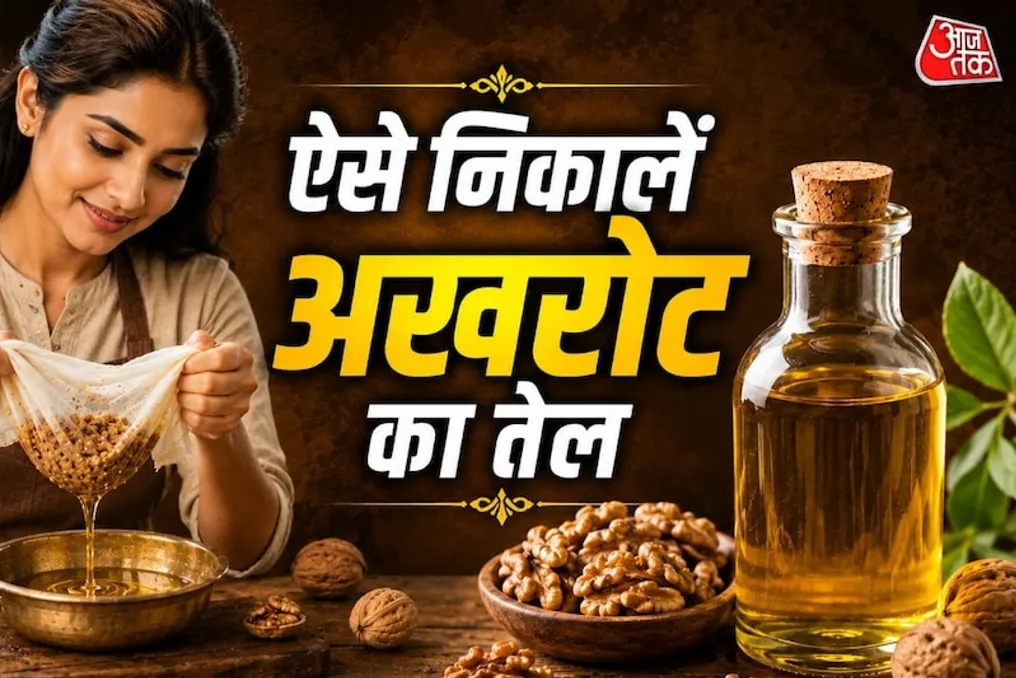
How to make walnut oil at home: A recipe for pure oil from fresh walnuts
Read more
www.aajtak.in

How to make walnut oil at home: A recipe for pure oil from fresh walnuts

Walnuts are a dry fruit rich in nutrients such as omega-3 fatty acids, protein, antioxidants, and vitamin E. Walnuts are indispensable for both health and beauty. Walnut oil is considered a very effective remedy for eliminating stubborn dark circles under the eyes, reducing facial wrinkles, and strengthening and adding shine to brittle hair. Furthermore, it is used in food, for example, as a dressing for salads.

However, pure walnut oil available in stores is often expensive, and there is a risk that it may contain mineral oil or preservatives. If you want to obtain 100% natural, pure, and chemical-free walnut oil for the health and beauty of your family, it is very easy to prepare at home. You can make it yourself using only a blender and a cotton cloth, without the need to purchase expensive equipment. Below is the simplest way to prepare it.

How to make walnut oil:

First, you need to thoroughly clean the walnuts. Then, lightly dry them in a pan over low heat for 1-2 minutes or leave them in the sun. Light heating helps release the natural oil of the nut, making it more pliable. After the nuts cool down, place them in a dry blender jar. Instead of running the blender continuously, operate it intermittently (in pulse mode) until a thick, coarse paste is formed.

Next, add 2 tablespoons of warm boiled water to this paste. The steam and moisture will help release the natural oil from the nuts. Turn on the blender again for 1 minute until the mixture turns into a smooth, creamy paste. Transfer the finished paste to a bowl or dish. Mash this paste with your palms for 3-4 minutes. You will notice the color of the nuts changing, and an oily residue will appear on your hands.

Now take a clean cotton or muslin cloth. Place the walnut paste in the center of the cloth and tightly wrap it around all sides. By pressing hard, you will collect 100% pure and slightly golden oil drop by drop into a bowl. This is your homemade walnut oil, prepared without chemicals or additives. Store it in a clean, dry glass bottle.

Benefits of homemade walnut oil:

Massaging the area around the eyes and face with two drops before bedtime helps eliminate dark circles and reduce fine wrinkles. Applying slightly warmed oil to the hair roots helps eliminate dandruff and makes hair thicker and longer. Massaging with this oil when caring for children or feet brings peace of mind and improves sleep quality.

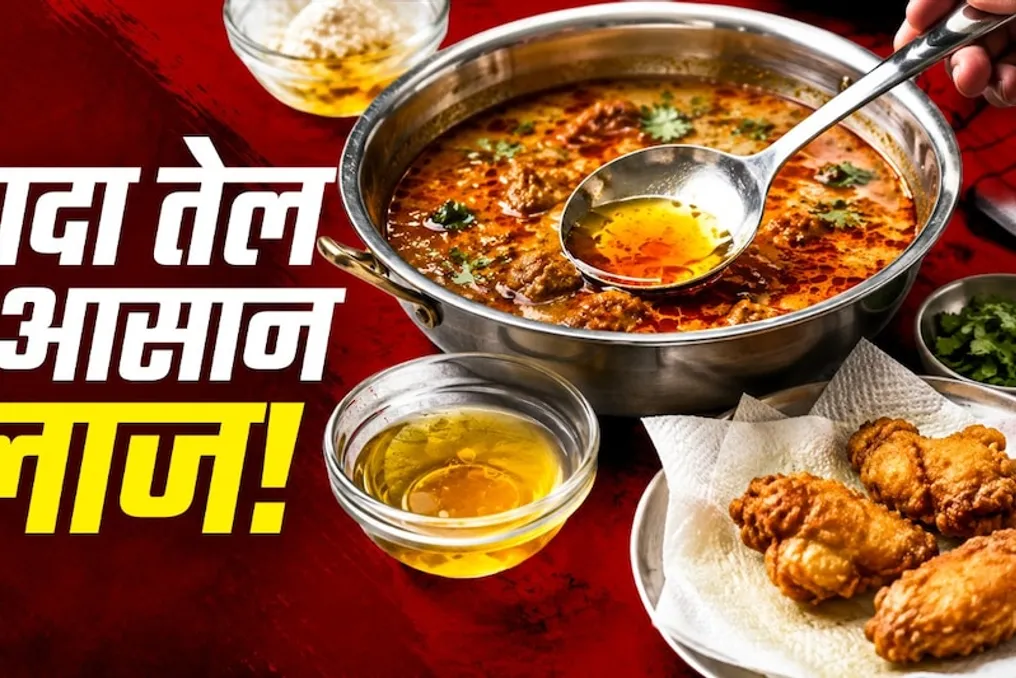
How to remove excess oil from a dish with seven simple methods without losing flavor
Read more
www.aajtak.in

How to remove excess oil from a dish with seven simple methods without losing flavor

A small mistake during cooking can ruin the entire taste of a dish. Often people prepare vegetable dishes carefully, but sometimes there are shortcomings, such as too much salt or a little extra oil. If too much oil is used when preparing vegetables, the entire dressing or thick sauce becomes too greasy. The sight of floating oil not only spoils the taste but also makes the food heavy. This is often observed in curries, dals, thick sauces, or fried foods.

In such cases, many either cook the dish again or try to reduce the amount of oil by adding more water. However, this can worsen both the taste and the texture. If you find yourself in such a situation, do not worry. With several simple kitchen tricks, you can significantly separate excess oil without changing the taste. Below are seven easy ways to reduce excess oil in a vegetable dish while preserving its flavor.

How to remove excess oil

1. Removing floating oil with a spoon: If there is a thick layer of oil visible on curry, dal, or a thick sauce, the simplest way to reduce it is to gently scoop it off with a spoon. To allow the oil to rise to the surface, leave the dish for a few minutes without stirring. Then, using a wide and light spoon, slowly remove the top layer. It is important not to push the spoon too deep, otherwise, the sauce may come out along with the oil.

2. Using ice: This method is different, but it can be very useful for removing oil that has accumulated on top. Place several ice cubes in a clean spoon and slowly rotate it over the surface of the food. The ice will cool the spoon, and oil may stick to it, which can then be wiped off. However, ice should not be left in the food for long; as it melts, the water can change the taste and consistency of the dish.

3. Cooling the dish to remove oil: If there is too much oil in a curry or sauce, let it cool down slightly, and then place it in the refrigerator. As it cools, the oil and fat gather on top, forming a separate layer. This solidified layer can then be easily removed with a spoon. This method is especially effective for sauces where a significant layer of oil has formed. After removing the oil, the dish can be reheated and eaten.

4. Using paper towels for fried foods: Even after frying, foods such as samosas, pakoras, puri, or other fried items contain a lot of oil. To reduce the amount, lay out food paper or paper towels on a plate and place the fried items on it for some time. If necessary, you can lightly blot them, but pressing too hard may damage the crispy texture of the product.

5. Extracting only the vegetables, leaving the oil: Sometimes the spices and oil in the dish appear separated. Instead of serving the whole dish with the oil, you can use a spoon to transfer the pieces of vegetables, cheese, or meat to another plate. Try to keep the excess oil in the pan. This will reduce the amount of excess oil in the food without changing its taste.

6. Oil separator for soups and sauces: If you often cook soups, broths, sauces, or stews at home, an oil separator can be a useful kitchen tool. When adding liquid to it and leaving it for a while, the oil and fat collect on top, while the liquid remains at the bottom. Then, the bottom liquid can be separated, leaving the fat on top.

7. Increasing the amount of ingredients: If there is so much oil in the food that it is difficult to separate from the top, you can apply another trick. It involves slightly increasing the amount of vegetables, dal, or other ingredients. For example, if a vegetable dish has too much oil, you can add some other cooked vegetable. This will help distribute the oil over a larger volume of food. However, after this, you must check the taste of the salt and spices, as increasing the ingredients can reduce the perceived intensity of the seasoning.

Popular