According to the latest sustainability report from data center operator Teraco, the company's electricity consumption has tripled over four years. In 2025, Teraco used 399.3 GWh of electricity, more than three times the volume consumed in 2021. The company's ability to prevent increased strain on South Africa's energy system, which is heavily reliant on coal, now almost entirely depends on a single solar farm in the Free State province.
These consumption figures demonstrate that business growth rates are outpacing the development rate of clean energy sources. In 2021, Teraco consumed 130 GWh, 231.6 GWh in 2023, and 399.3 GWh last year, corresponding to an aggregate annual growth of approximately 32%. On average per year, this equates to a consumption of about 46 MW, compared to less than 15 MW four years ago.
The share of energy from renewable sources has decreased. In 2023, renewables provided 15.77% of consumption, while in 2025 it was 14.04%. Using a broader definition of clean energy, which includes nuclear and imported hydropower alongside renewables, the figure peaked at 19.83% in 2023 and stood at 18.87% last year. Rooftop solar panels generated 5.25 GWh, accounting for 1.3% of the company's total consumption.
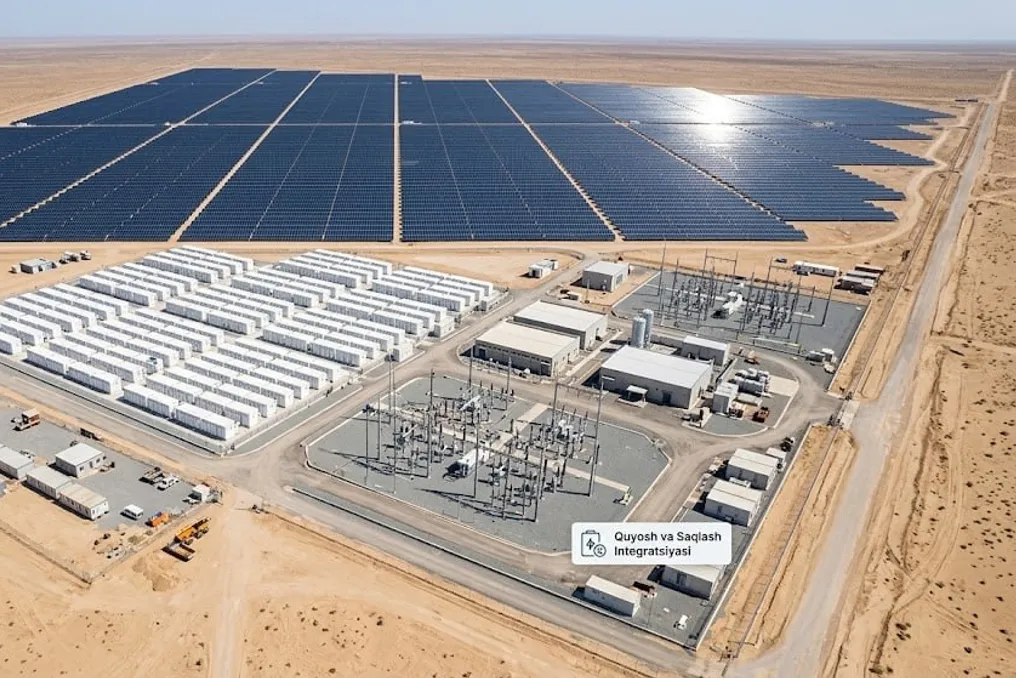
The project designed to bridge this gap is called Sediba—a large-scale 120 MW solar power plant in the Free State, costing 2.25 billion rand and with a nominal capacity reaching 354 GWh annually. Teraco received grid capacity allocation from Eskom in February 2024 and began construction in November, stating then that the plant would be operational by the end of 2026. The new report indicates completion of work in the first quarter of 2027.
Teraco claims it remains on track to source half of its energy from clean sources by 2027, up from the current 18.87%. Sediba's 354 GWh capacity is equivalent to 89% of the company's 2025 consumption, although consumption is a dynamic metric. At the current growth rate, Teraco will consume about 700 GWh by 2027, of which Sediba will cover approximately half.
Four wind projects that have signed Power Purchase Agreements (PPAs) with NOA have begun construction, with the first expected to be commercially operational in the third quarter of this year. The report does not specify the megawatt ratings or annual output of these projects, making external assessment of their contribution impossible.
The Process Is Not Yet Complete
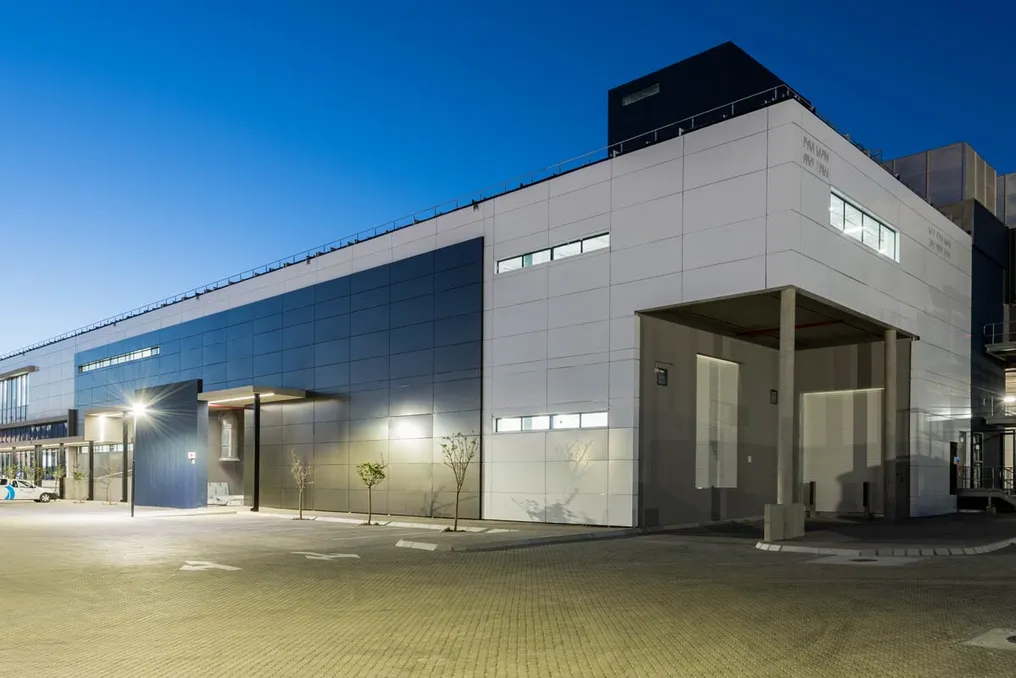
Growth continues. Teraco's installed capacity platform in South Africa reached 189 MW after the commissioning of CT2 in Brackenfell at the end of 2025, including facilities in Isando, Bredelle, Cape Town, and Durban.
Emissions matched consumption. Scope 2 emissions rose from 121,640 tonnes of CO2 equivalent in 2021 to 388,184 tonnes in 2025. Adding Scope 1 and Scope 3 results in a total carbon footprint of 519,594 tonnes in 2025. There are two important caveats: the grid emission factor used in calculations changed from 949.1 g to 985 g/kWh mid-period, so the years are not strictly comparable, and these figures are location-based rather than market-based, which will ultimately improve renewable energy contracts.
The parent company, Digital Realty, has an approved commitment under the Science Based Targets initiative to reduce absolute Scope 1 and 2 emissions by 42% by 2030 relative to the 2023 baseline. Teraco's own Scope 1 and 2 emissions were 237,873 tonnes in 2023 and 392,172 tonnes in 2025, indicating movement away from this line, not towards it. The report states that a significant reduction in market-based Scope 2 emissions is expected from 2027 as renewable projects come online. The difference between the two accounting methods is where the target lies.
Teraco has been publishing this data since 2022, more than most of its competitors. The South African Human Rights Commission is currently investigating the impact of data center construction on human rights, and complaints filed with it allege that no regulator can see the full energy and water footprint in the sector because operators do not disclose this information. Teraco is among the few publishing this level of detail.