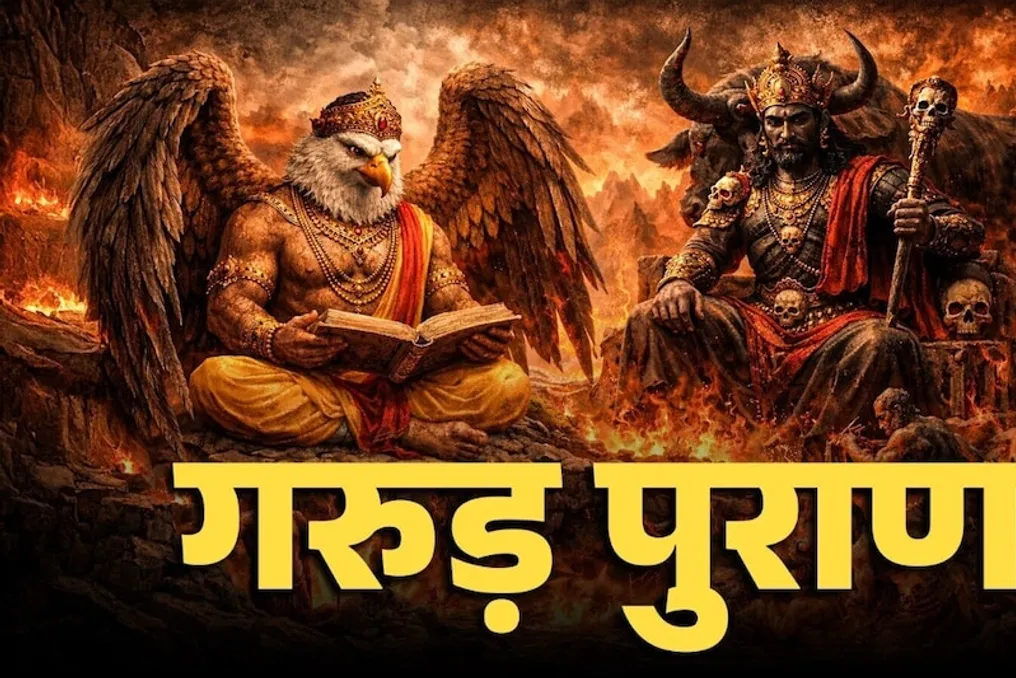
In Hindu families, there is an ancient tradition where, after a person's death, their body is often removed from the bed and placed on the ground. This raises the question of whether this is merely an old custom or if deep religious, cultural, and symbolic meanings lie behind this practice.
Most people follow this custom, but few know the beliefs that underpin it. It becomes clear why the body is placed specifically on the ground, what the connection is to the five elements (Panchamahabhuta), and why the ground is chosen over the bed for funeral rites.
Garuda Purana:
Death is the inevitable truth of life. When a person breathes their last breath, the family follows a series of traditions related to burial. One such tradition is moving the deceased's body from the bed to the ground. Although funeral rites may vary depending on the states, communities, and families in India, the practice of laying the body on the ground is observed in many Hindu families. Behind this lies not only religious faith but also a symbolic message about the transience of life and the connection between humans and nature.
Beliefs Associated with Panchamahabhuta
In Hindu philosophy, the human body is considered composed of five elements: Earth, Water, Fire, Air, and Ether (Akasha). According to religious beliefs, the body that was born will eventually dissolve into these five elements. The funeral rite after death is also viewed as part of this natural cycle. Therefore, the tradition of placing the body on the ground is linked to the element of Earth. This symbolically indicates that the body has entered its final journey and must ultimately return to nature.
Symbolic Meaning of Laying on the Ground
In ancient times, most houses had earthen floors. Thus, placing the deceased on the ground held cultural and symbolic significance. This tradition reminds people of the ultimate truth of life: regardless of how much wealth, status, prestige, or honor a person achieved during life, their body is mortal. All earthly achievements are left behind after death.
Placing the body on the ground also symbolizes humility and the impermanence of life. It serves as a reminder to the living that life is not eternal, and eventually, everyone must submit to the laws of nature.
Why is the body not left on the bed?
Many wonder why the body is not left where it died if death occurred in bed. According to traditional beliefs, the bed is associated with daily life and worldly activities. However, the process of burial begins after death. Therefore, laying the body on the ground symbolizes the completion of one chapter of life and the beginning of preparations for the final farewell. Nevertheless, there are various traditions and beliefs in different regions and families.
Why is a mat or white cloth spread under the body?
In many families, instead of placing the body directly on the ground, a mat, cushion, mat, or white cloth is placed underneath it. This is part of traditional notions of reverence and purity. After this, family members sit next to the deceased, praying and asking God for peace for their soul. During this time, the atmosphere of the house is filled with grief, reverence, and memories.
Funerals in Religious Texts and Traditions
Hindu sacred scriptures and traditions contain descriptions of rites performed after death. However, the forms of these rituals may differ across various texts, regions, and communities. Therefore, it is incorrect to state that there is only one specific reason for laying the body on the ground; rather, this tradition represents a combination of religious beliefs, local customs, and cultural perceptions.
What is the true message of this tradition?
The tradition of laying the body on the ground after death is seen not just as a ritual. It also contains a message about the transience of life, the connection to nature, and humility. This custom reminds the living people of the mortality of the body and that the true value of life lies in our actions and behavior.