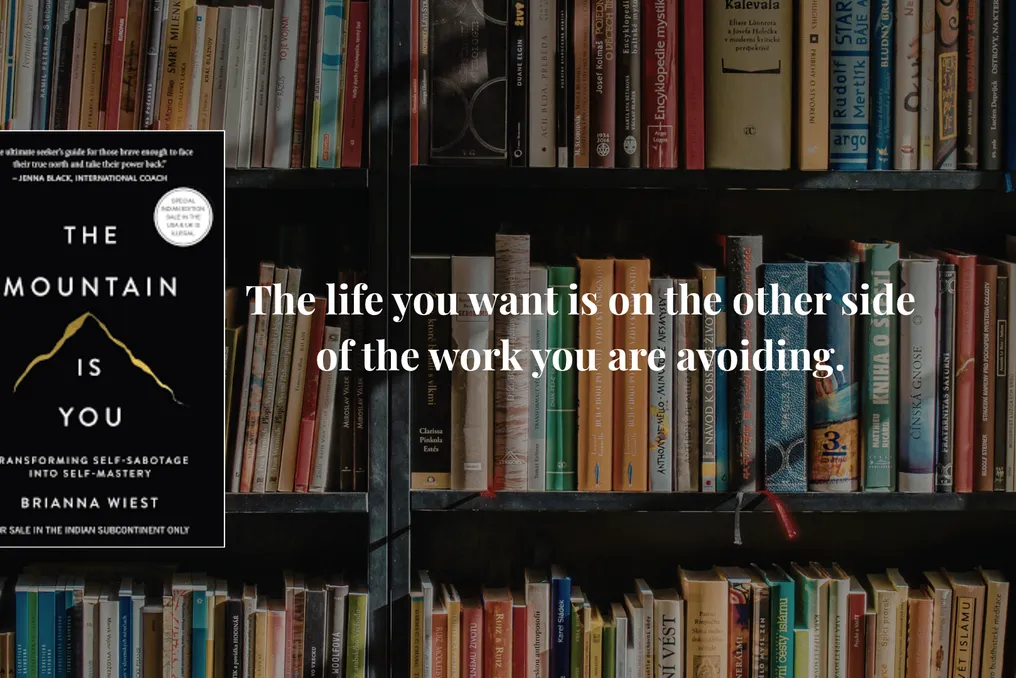
Brianna Wiest's book 'The Mountain Is You' is dedicated to the complex process of becoming the person you can be. It examines themes such as self-sabotage, emotional patterns, fears, limiting beliefs, and the internal resistance that keeps us in a life that is too small for us.
Transformation rarely happens simply because we decide to change. First and foremost, it is necessary to understand why some part of us resists these changes. Sometimes habits we call self-sabotage are actually attempts to protect us from discomfort, uncertainty, or rejection.
The book's title conveys the main idea: the greatest obstacle between the desired life and you may not be circumstances, but ununderstood internal models. Self-transformation begins when a person stops feeling powerless against external conditions and starts analyzing the fears, beliefs, and habits that constantly prevent progress.
A feeling of stagnation can create the impression that current circumstances are immutable. However, realizing that our patterns can change is the first step toward changing our lives. Even if a person has made the same mistakes for years, repetition does not imply permanence. Transformation begins when a person becomes aware of their automatic actions.
Growth requires allowing oneself to become different from what one was before. The person you were several years ago is not obligated to define who you will become next. Your priorities, boundaries, and even your definition of happiness can transform. Self-transformation implies accepting that moving beyond the old version of yourself is not betrayal, but development.
Transformation often sounds inspiring until it requires a person to confront the things they prefer to ignore. This may require having an uncomfortable conversation, developing discipline, confronting insecurity, or finally acknowledging a painful pattern. The life a person strives for cannot always be built in a comfort zone; sometimes the first step is doing the difficult thing that has been postponed.
One of the most difficult parts of transformation is understanding that you cannot carry all old habits, beliefs, and identities into the future. To become healthier, you may have to give up unhealthy routines. To gain confidence, you may need to let go of the constant need for approval. To become emotionally stronger, you may need to distance yourself from once familiar patterns. Changes come with a price, but staying in the previous state also has its cost.
When a person constantly hinders themselves, it is easy to label them as lazy, weak, or undisciplined. However, understanding the reasons for one's behavior can be more productive than self-criticism. Sometimes behavior that appears destructive on the surface is linked to a deeper need for safety, confidence, or emotional protection. Once this need is understood, healthier ways to satisfy it can be found.
The desire for a different life is only the beginning. It is also necessary to develop the mindset, habits, and emotional resilience required to sustain that life. If a person desires peace, they may need to stop fueling unnecessary chaos. If the goal is success, they must become more disciplined. If healthier relationships are needed, stronger boundaries should be developed. The goal of transformation is not just to get a new life, but to become someone capable of truly living it.
Self-transformation is not about achieving perfection overnight, but about gaining awareness. A person begins to notice recurring patterns, avoided emotions, and beliefs that influence decisions. Instead of reacting automatically to life, they begin to choose their response. This is where significant change begins. The mountain symbolizes everything within us that requires confrontation, understanding, and ultimately, transformation. After all, the goal is not to destroy the mountain, but to climb it and become stronger in the process.