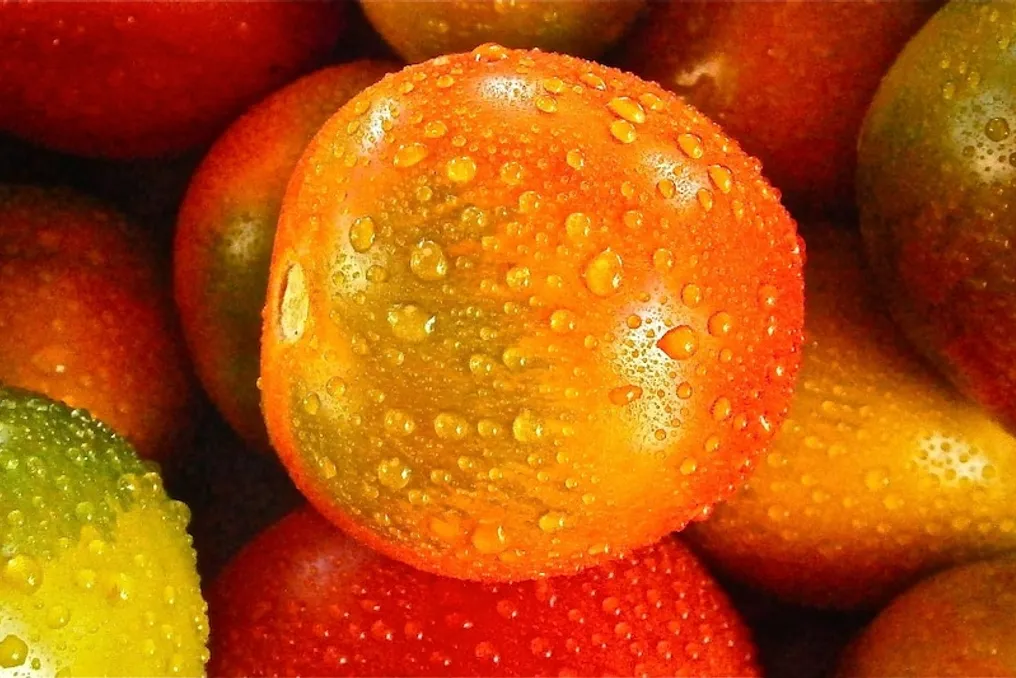
Tomatoes are one of the most common products in Indian cuisine, used in various dishes such as sauces, chutneys, soups, and salads. Although people usually do not pay attention to their cost or significance, public attention sharply increases when tomato prices suddenly rise.
However, behind this ordinary red fruit lies a story of harvests suffering from weather changes. Rising temperatures, changing precipitation patterns, and water scarcity make it difficult to grow tomatoes in many regions of India. The problem is not only global warming; the main difficulty is that tomatoes require specific conditions of temperature, rain, and humidity at different growth stages.
As a result of climate change, these crops face heat or rain precisely when they need stable conditions the most.
High temperature has the greatest impact on tomatoes during flowering and fruiting. At excessively high temperatures, the development of tomato flowers can be disrupted, and pollen quality may deteriorate. This directly affects fruit formation and ultimately leads to reduced yields. A study conducted by ICAR-Indian Institute of Vegetable Research showed that prolonged high temperatures negatively affect many characteristics related to tomato flowers and fruits.
One field study noted that tomato varieties grown at an average daily temperature of 38.4 degrees Celsius showed clear changes in flowering and yield-related characteristics.
A recent study conducted in India reinforced this concern. In a study conducted in Punjab in 2026, 76 tomato varieties were examined during the summer period. It was found that temperatures above 35 degrees Celsius can be harmful to tomato yield and affect plant growth before fruit formation. Under changing climate conditions, this problem is exacerbated because for a farmer growing tomatoes, a heatwave is not just a number on a meteorological chart.
If severe heat occurs during flowering, it can mean fewer fruits and lower yields.
The problem is not limited to heat; excess water in the field can also damage tomatoes. Excessive or improperly placed rains can harm plants, increase the risk of diseases, and create difficulties in harvesting. According to an ICAR report from Mizoram, intense rains and temperature fluctuations negatively affect open-field tomato cultivation during the pre-Kharif and Kharif seasons.
Under such conditions, tomato yield can decrease by up to 70 percent. In contrast, significantly higher yields are achieved in controlled or protected environments. This is why the issue of climate change for tomatoes is so complex: the threat comes not from a single weather event, but from a combination of intense heat, excessive rain, field over-humidity, or water scarcity at different times.
A study conducted in Central India in 2025 examined tomato cultivation considering future weather. It showed that rising temperatures can accelerate flowering and fruiting processes, but this may be accompanied by reduced yields. The study also found that changes in precipitation patterns can affect tomato production differently in various regions.
Indian farmers growing tomatoes have long faced challenges related to weather and temperature changes. In some plains areas of the country, high summer temperatures already make tomato cultivation difficult, forcing farmers to shift planting to other regions or seasons. Climate change has not eliminated these long-standing difficulties but has added additional pressure to them.
A 2025 study investigated the impact of heat on various tomato varieties. It was found that high temperatures can lead to a significant reduction in yield, as well as a decrease in the ability of roots and plants to photosynthesize. However, the effect was not uniform across all varieties; some varieties proved more resistant to severe heat. Therefore, scientists are now focusing more on developing tomato varieties capable of providing a good harvest even under severe heat conditions.
Scientists are also working in this direction. In a study published in August 2026, researchers from ICAR-Indian Institute of Vegetable Research and other scientists identified certain tomato varieties with improved heat tolerance properties. These properties can be used to develop new, heat-resistant varieties in the future.
When weather damages the harvest, the consequences are not limited to the fields. Tomatoes are a perishable product, and they are grown in different regions and at different times of the year. If the harvest in a major tomato-producing region is lost due to weather conditions, it can lead to a decrease in tomato supply in the market and increased pressure on prices. However, caution is needed here: not every increase in tomato prices can be solely attributed to climate change. Factors such as crop cycle, planted area, pests, and diseases also play a role.