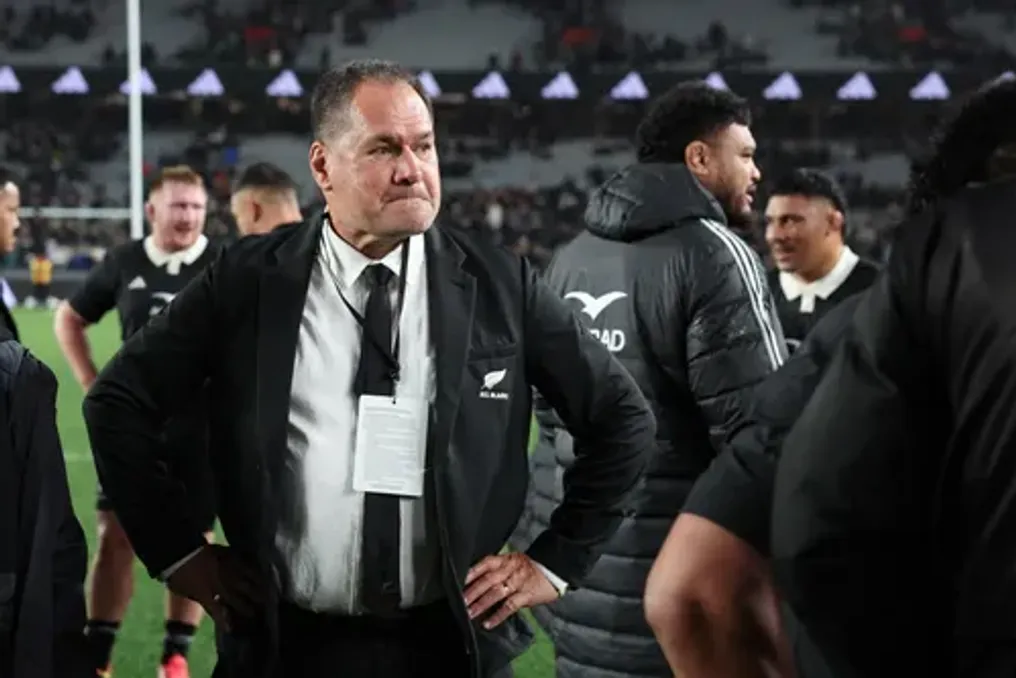
During the series of matches between the All Blacks and the Springboks, a noticeable shift in the behavior of the All Blacks has been observed, who, according to the author, have replaced the traditional authority of rugby with a culture of constant complaining and cynicism.
This transition is particularly evident in the All Blacks' reaction to the Springboks' dominance in the scrum battle. Unable to counter South Africa's powerful attacking play, the All Blacks began complaining about alleged illegal scrummaging techniques by the Springboks, which, however, was not noticed by any referee or coach from other countries over the past seven years.
Instead of correcting their own technical deficiencies, their camp used the aftermath of the first two test matches to conduct a targeted media campaign aimed at influencing the official referees. At the head of this movement is head coach Dave Rennie, whose post-match statements have turned into a public campaign to discredit opponents.
The situation escalated even before the first test when Rennie accused the Springboks of trying to slow down the game before the tackle in Ellis Park. Accusing Rasisi Erasmus's team of illegally 'circumventing' the mark to gain a penalty, Rennie attempted to create a predetermined narrative for the referees. This was apparent when Australian referee Angus Gardner spent considerable time controlling the Springboks during scrums in the second test, while missing how the All Blacks repeatedly collapsed scrums that evening.
The author views this tactic as a desperate attempt to win the series by avoiding direct confrontation. When analysts and media fans tried to closely examine the head position of Ox Nche in one of the scrums in Cape Town, former England player Joe Maller summarized the disappointment of the rest of the world regarding Rennie and his followers on social media, saying just four words: 'Not a clue x.'
Furthermore, the All Blacks resorted to minor infringements, attempting to throw the Springboks off balance and force them to play against a player rather than the ball. While Gardner was focused on Rennie's theories about scrums, he missed numerous high tackles on Springboks players, including a shoulder charge to Damian de Allende's face. However, according to New Zealand podcasters and media, De Allende himself accepted such a stance.
In Cape Town, when rugby failed them, the All Blacks turned to cynicism. Under the leadership of players like Fabian Holland and Luke Jakobson, the New Zealand approach became noticeably dirty. Late tackles after the ball and cynical flank pulls and minor offside trips were used to disrupt the Springboks' tempo.
The ruthless, clinical precision of the old All Blacks has disappeared; it has been replaced by a team resorting to cheap tactics when the situation heats up. This mentality of 'cheap shots' is a clear sign of a team feeling pressure. Before the start of the series, they knew they had to win the first two matches because the Springboks' depth advantage would begin to show in the third and fourth tests.
For half a decade, South Africa has held the top spot in world rugby, winning World Cups consecutively and establishing itself as the benchmark for physical rugby in test matches. Previously, the All Blacks managed this challenge through skill and iron discipline. Now, they are reacting to it with complaints to referees and off-field antics.
Rasisi tried to shield his team from Rennie's antics, although he himself was sometimes involved in this contest of dirtiness with his New Zealand counterpart. As the series approaches the FNB Stadium in Soweto for the decisive third test, the talk must stop. Rennie and his team have created excuses for themselves. Now it is time for Siya Kolisi and the Erasmus Springboks to do what they do best: inflict such a crushing physical defeat that no post-match whining can hide it.