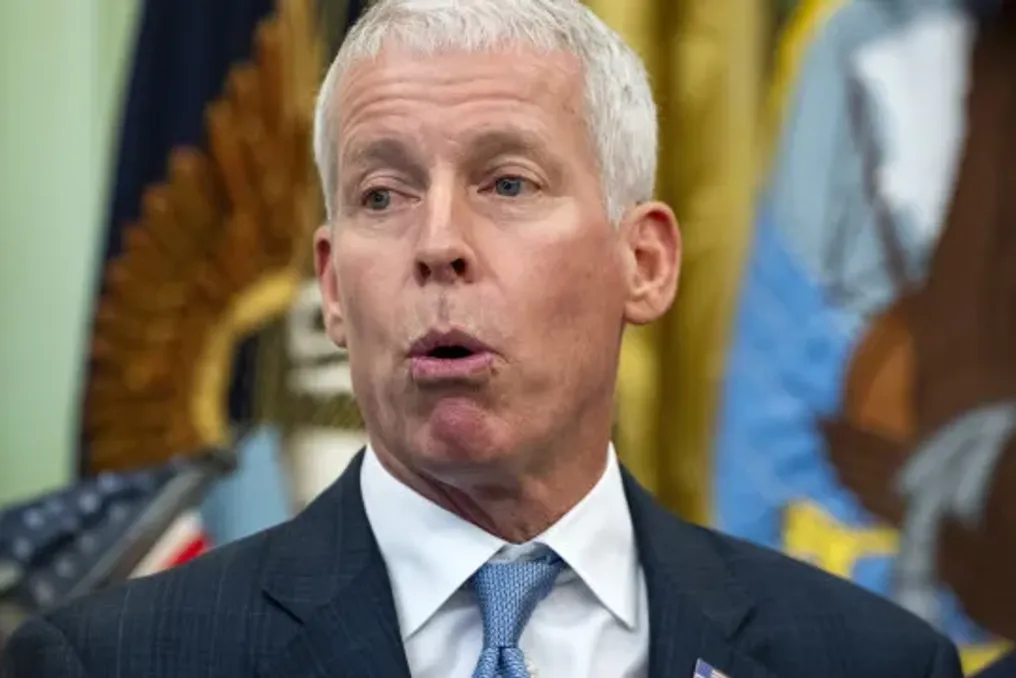
The United States declared that Washington aims to attract a significant volume of investments to Caracas, with the goal of raising the chances of prosperity for both Venezuelan citizens and Americans, as well as energy consumers.
During his second visit to the country, at Maiquetia International Airport near Caracas, a representative told journalists that the objective is to intensify the inflow of private capital from various American corporations.
This same official disclosed on the social network X that the energy policy led by President Donald Trump is yielding good results, facilitating new energy agreements, paving the way for North American companies, and strengthening energy security across the region.
Wright and his delegation were received shortly after 8:30 PM by the Venezuelan Minister of Hydrocarbons, Paula Henao, and the US business representative in Venezuela, John Barrett.
The trip aims to formalize a new agreement with Chevron in the Orinoco area, which is considered the world's largest crude oil reserve. An American official informed journalists that the oil company is expected to announce the expansion of its activities in the country, which will also increase Venezuela's production capacity.
On a previous occasion, Caracas and Washington signed a notable oil agreement, which, according to the interim Venezuelan President, Delcy Rodríguez, has a validity of 25 years and a production target exceeding 1.5 million barrels per day.
The White House also confirmed the granting of a one-hundred-year concession to the private company North American Blue Energy Partners, owned by businessman Alejandro Betancourt, for the exploration of part of Venezuela's oil.
Wright had previously visited Venezuela in February to establish a long-term energy partnership, previously agreed upon with Rodríguez. At that time, both focused on overcoming the differences between the two nations, whose diplomatic relations had been interrupted in 2019 and resumed in March, two months after the detention of President Nicolás Maduro and his wife, Cilia Flores, by American forces in Caracas.
This year, Venezuela transferred state control over petroleum activity to allow the entry of private and foreign capital through a substantial reform of the organic law of hydrocarbons. Analysts interpret this change as the dismantling of the legacy of the late President Hugo Chávez (1999-2013).
On July 23, the US President praised Wright, saying that he was 'leading Venezuela' and congratulating him on the 'excellent work' done 'better than anyone ever has'.