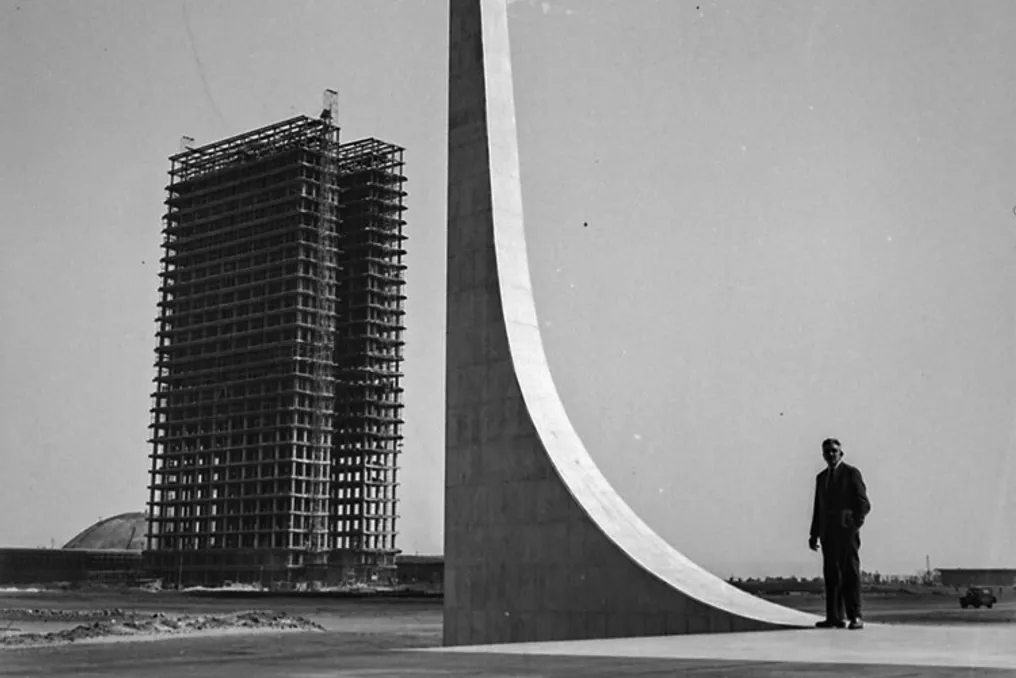
Building a city from the start is a complex undertaking, requiring resources, organization, and fundamentally, labor. A notable example occurred in 1958 when the Central Plateau of Brazil became one of the largest construction sites of the 20th century for the construction of Brasília. Thousands of workers, mostly migrants from the Northeast and without prior technical training, came to build the capital in just over three years, following Juscelino Kubitschek's motto of achieving 'fifty years of progress in five.' The architectural conception by Oscar Niemeyer and the planning by Lúcio Costa were only viable under the assumption that there would be enough labor, willing to accept low wages and extremely harsh working conditions to transform concrete and curves into a national icon.
About seven decades later, Brazil faces the opposite reality. Despite government incentives and the expansion of real estate credit, the civil construction sector has struggled to fill its vacancies. Data from the Brazilian Chamber of Construction Industry (CBIC) indicates that 94% of construction companies deal with staff shortages, and more than three in four need to adjust project deadlines due to the scarcity of specialized workers, such as bricklayers, helpers, electricians, rebar fixers, and welders. SENAI's Industrial Labor Map predicts that the sector will require 4.4 million professionals by 2027.
However, this professional shortage problem is not exclusive to Brazil; it is a global phenomenon. In the United States, the Associated Builders and Contractors (ABC) estimates that the sector will need to recruit approximately 450,000 professionals in 2027. The ABC itself points out that much of this immediate demand is due to the replacement of workers leaving the sector, mainly through retirement. Although youth interest in construction trades has doubled in the last decade in the country, a NAHB survey released in 2026 showed that only 6% of American young people between 18 and 25 who have already defined a professional area express a desire to pursue a career in the field.
This pattern repeats in almost all major construction markets, with regional variations. A global investigation by Turner & Townsend reveals that about 71% of the 112 markets analyzed in 44 countries suffer from labor shortages—a rate that exceeds 93% in the European Union and reaches 100% in the Australian and New Zealand markets. The underlying factors for these figures include the aging workforce, the difficulty in attracting new generations to construction trades, and limitations in the supply of migrant labor in certain locations.
The paradigm of abundance
Returning to the Brazilian context, 20th-century civil construction was based on the premise that the country had a virtually unlimited source of rural labor willing to migrate to urban centers. Rural exodus, intensified starting in the 1950s, drove both the creation of Brasília and the vertical real estate growth in Brazilian cities, resulting in works today considered part of the country's modernist architectural heritage.
Architect and critic Sérgio Ferro argues that much of the formal freedom of modern architecture—such as cantilever slabs, free curves, and sculptural forms in exposed concrete—depended directly on the existence of an intense, low-skilled, and poorly paid manual workforce capable of physically executing what the designs required. He emphasizes that this was not traditional craftsmanship, but rather a superabundance of hands that dispensed with the need to rethink the construction process, as there were always people available to handle forms, install reinforcement, and pour concrete.
Currently, Brazil is predominantly urban, as is much of the planet. The construction workforce is aging faster than it can be replaced, leading many to characterize the scenario as a labor crisis. This situation is aggravated by the fact that young people tend to associate construction sites with physically exhausting and unattractive work, preferring careers perceived as more technological or comfortable, such as freelance work via applications.
The architectural implication
At this point, the shortage transcends the sphere of engineering and construction, becoming a design challenge. Historically, construction has been a sector resistant to procedural changes. While other industries have been progressively altered by automation, mechanization, and digitalization, many construction sites maintained a similar logic for decades: materials delivered in parts, large teams performing tasks manually, and buildings being assembled slowly on site. An image of a car factory from fifty years ago would show a production system distinct from the current one, but a photo of a construction site from that era might seem less unusual.
This persistence is not due only to conservatism or technological lag. For a long time, there were few economic reasons to drastically modify a system sustained by the vast availability of low-skilled labor. In Brazil, specifically, rapid urbanization, internal migration, and the abundant supply of low-skilled workers facilitated this model.
This condition is disappearing, forcing construction companies to accelerate the industrialization of processes: use of prefabricated systems, off-site manufactured components, modular solutions, mechanization, and AI-assisted site management. To industrialize, in this context, does not just mean building faster or more precisely; it also implies designing buildings that require fewer personnel to be erected.
There is a notable irony in this landscape. While sectors of contemporary architectural culture celebrate the return of exposed brick, rammed earth, dressed stone, or woven bamboo as symbols of material authenticity, local knowledge, and environmental responsibility, the production system of most buildings is moving in the opposite direction: fewer artisanal activities on site, more industrialized components, greater assembly, and more automation. This occurs not due to an aesthetic or ideological choice, but because the social conditions that previously supported certain forms of construction are changing.
This does not imply the end of artisanal work. On the contrary, it may indicate a change in its economic relevance. Artisanal work survives primarily where its cultural, material, or architectural value justifies the time and cost of its execution, and where budgets, schedules, and clients can absorb these costs. It is a situation analogous to that observed in India: preserving ancient techniques today requires not only protecting knowledge but also establishing new economic models capable of sustaining them.
However, Brasília already signaled a different path. João Filgueiras Lima, known as Lelé, arrived in the capital during its construction and, through experiments at the University of Brasília in the 1960s, began investigating prefabrication and the rationalization of construction processes. These principles guided his career and reached their most refined expression decades later, in the hospitals of the Sarah Network.
Lelé's work makes this narrative less linear: the industrialization of Brazilian construction did not begin with the current labor shortage. It already existed as a project focused on rationalization, agility, and architectural quality. What changed was the urgency. What was a conscious decision about how to build for Lelé is now, in many cases, an economic necessity. Thus, precast concrete, algorithm-assisted site management, and buildings designed to reduce labor demand can be seen not only as technology's victory over manual labor, but as part of a broader response to changes in the labor market, suggesting what could be called an architecture of scarcity.
However, an interesting reversal is underway. As artificial intelligence advances in cognitive and administrative tasks—precisely the type of work that seemed to offer greater stability for decades—many specialized manual functions remain difficult to fully automate. The construction site requires the ability to interpret irregular situations, adapt to unforeseen events, coordinate complex physical movements, and make real-time decisions. The scarcity of these professionals is already increasing their economic valuation and, in certain contexts, their cultural visibility.
This does not presuppose an idealized return to craftsmanship. Higher wages caused by scarcity do not mean the appreciation of artisanal work as tradition, slowness, or inherited knowledge. The most likely scenario is a division: automation and robotics take over repetitive and physically taxing tasks, while human work focuses on what remains difficult to standardize, such as finishes, adjustments, and personalized solutions. The artisanal craft, therefore, may survive not as the norm on the construction site, but as an increasingly rare, specialized, and costly skill.