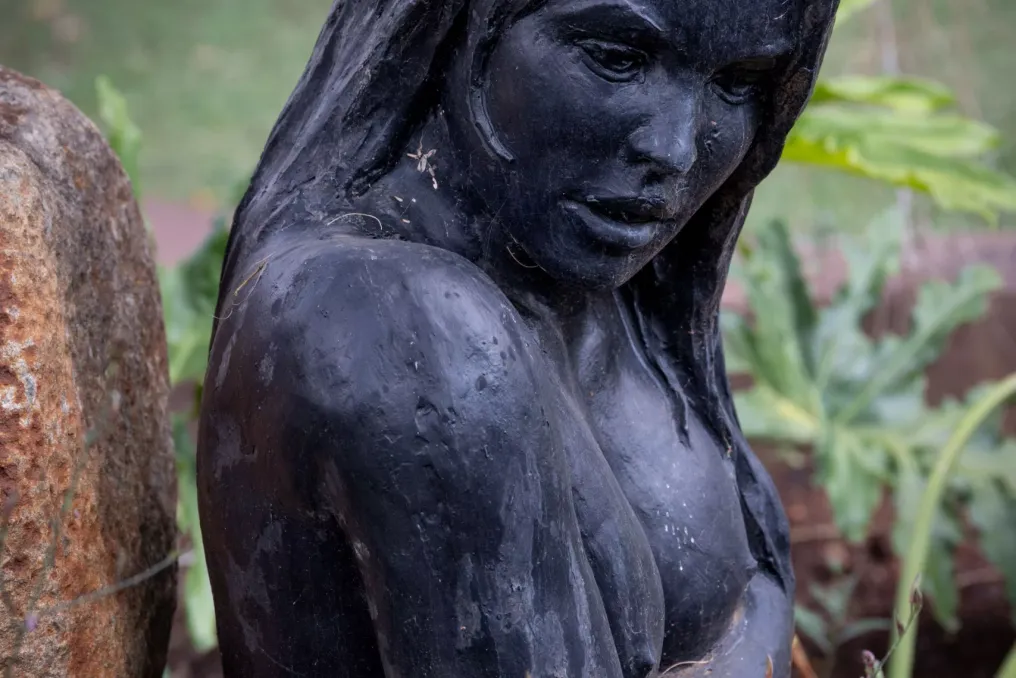
Review of Iconic Sculpture Gardens in South Africa
Read more
Getaway
getaway.co.za

Review of Iconic Sculpture Gardens in South Africa

South Africa is renowned for its picturesque landscapes, but some of the country's most impressive open spaces offer visitors something more—art. Sculptures scattered across the grasslands of Highveld, or monumental bronze figures framed by vineyards and mountains, allow one to view art and the environment in an entirely different way.

Unlike traditional galleries, these open collections integrate the landscape into the artwork itself. Light, weather, vegetation, and seasonal changes can alter the perception of the sculpture. Some of these locations are meticulously designed gardens, while others occupy vast estates and natural territories.

Whether you are a passionate art lover or simply looking for an unusual place to relax, below is a list of the best sculpture gardens and parks in South Africa worth adding to your itinerary.

NIROX Park, located in the Cradle of Humankind landscape near Johannesburg, is one of the most important centers for contemporary outdoor art in South Africa. This 30-hectare park includes lawns, fields, water bodies, wetlands, and paths where over 60 permanent and long-term installations by artists from South Africa and around the world are displayed.

At NIROX, the landscape is considered an integral part of the work, and the installations are situated among the natural features of the terrain. Furthermore, the park regularly hosts major curated exhibitions, performances, and artist programs, ensuring the continuous development of the collection.

The park's location near the private nature reserve of Kgalagadi, surrounded by Highveld grasslands, riverine zones, and local wildlife, adds another layer of experience. The park is open on weekends and public holidays from 10:00 to 16:00, unless there are special events. Entrance is 150 Rand for adults and 80 Rand for children aged two to twelve; restaurant patrons receive a reduced entrance fee. It is ideal for lovers of contemporary art, nature, and day trips from Johannesburg or Pretoria.

Few places demonstrate the connection between sculpture and landscape as beautifully as the Dylan Lewis Sculpture Garden in Stellenbosch. This seven-hectare garden, created by South African sculptor Dylan Lewis, is situated between the developed landscape of Stellenbosch and the harsh mountain desert behind it.

Over 60 of Lewis's sculptures are located along approximately four kilometers of paths, and the garden itself was carefully shaped to accommodate the topography. The creation of the garden began in 2009 when Lewis started renovating a neglected area behind his home, giving the landscape a monumental character and turning it into part of the sculpture.

Although Lewis is known for his animal sculptures, the garden also reflects his transition to the human figure and more abstract forms. The works are distributed throughout the landscape rather than gathered as in a typical museum exhibition, making the walk itself part of the experience. Local vegetation, including fynbos species, further connects the sculptures to the Cape landscape.

Visiting this garden requires prior booking. Self-guided entry costs 260 Rand per person, while South African seniors and students pay 160 Rand upon presentation of a valid SA ID; children under 18 enter free. It is perfect for a leisurely morning or day combining art, gardens, and Stellenbosch views.

In the Tokai wetlands under the Constantiaberg Mountains, the Norval Foundation unites African art, architecture, gardens, and nature in one place. The sculpture garden is part of the foundation's larger museum complex and is located next to a protected freshwater wetland in Cape Town.

The local flora serves as a backdrop for a constantly changing collection of long-term and permanent outdoor works, covering themes such as figuration, mythology, abstraction, and craft. The garden is particularly interesting to visitors who want to see more than just sculpture, as one can move between outdoor pieces and the foundation's indoor exhibitions, then stop for lunch, turning the visit into a full day out.

The architecture also deserves attention. The building, designed by DHK Architects, was conceived with its relationship to the surrounding wetland in mind, featuring views and paths connecting the indoor galleries to the sculpture garden. Norval's commitment to nature goes beyond aesthetics: the wetland is home to species such as the endangered Western Leopard Toad, which the foundation supports.

This complex is excellent for combining outdoor sculpture with contemporary African art, architecture, and dining.

To experience truly monumental scale, one should visit Anton Smith Sculpture Park, which overlooks the Bronkhorstspruit dam in Gauteng. This three-hectare open exhibition was founded by South African sculptor Anton Smith in 2003. It is situated on a plateau above the reservoir, where lawns, succulent gardens, and natural rock formations serve as a backdrop for Smith's large-scale works.

Smith is known for his monumental sculptures, particularly his recognizable heads and simplified human forms. His works often possess a strong emotional and spiritual quality, and viewing them outdoors, rather than within gallery walls, lends them an imposing presence. The park also includes an art gallery and a café, making it a convenient stop for relaxation. Entry to the park is currently free. Located about 40 minutes from Pretoria and an hour from Johannesburg, it is also one of the most accessible sculpture parks for Gauteng residents planning a day trip.

Although Franschhoek is known for wine and gastronomy, art has long been part of the valley's appeal. At the sculpture garden on the grounds of Grande Provence Estate, which is part of the Historical Wine Estate Gallery, the focus is on contemporary South African sculpture. Works are displayed throughout the garden, allowing visitors to view them against the backdrop of vineyards, mountains, and mature trees.

The collection is not static, featuring both established and emerging artists, which gives the garden a gallery feel while maintaining the freedom of an open space. It is also an ideal spot for a relaxed day in Franschhoek, as the estate combines a sculpture garden with a gallery, wine, restaurant, and heritage, offering seasonal picnics in the gardens from October to April.

Tokara Wine Estate combines art, wine, and food, where sculptures are scattered among the vineyards and olive groves in the Stellenbosch wine region. The sculpture garden features works of various sizes—from small to monumental forms—by artists including Wilma Kruis, Guy du Toit, Egon Tania, and Rohan Jansen van Vuuren. The sculptures are placed along paths between the winery and the delicatessen, allowing guests to encounter them during a tour of the estate.

This easily fits into a Wine Route itinerary, as the sculpture garden can be combined with Tokara's wine and food offerings without requiring a separate visit to the art installation.
Similar stories

A Review of South Africa's Historical Sites Worth Visiting During a Trip
Read more
getaway.co.za

A Review of South Africa's Historical Sites Worth Visiting During a Trip

South Africa's historical attractions tell stories that go far beyond well-known monuments, battlefields, and museums. Some are ancient landscapes, others preserve the history of communities, and some reveal how deep the country's history is.

These places may not always be on the initial tourist itinerary, but they reward those willing to look more closely. These heritage sites offer a different view of South Africa—from ancient kingdoms and geological wonders to living cultural landscapes.

At first glance, Mpungubwe might seem like just another picturesque corner of Limpopo. Baobabs, sandstone formations, wildlife, and vast views of the Limpopo River meet here. However, a closer look reveals a much grander history.

The cultural landscape of Mpungubwe was once home to one of the most influential indigenous kingdoms in Southern Africa. From approximately 900 to 1300 AD, Mpungubwe developed into the largest kingdom on the subcontinent, whose wealth partly depended on long-distance trade reaching the Indian Ocean, India, and China.

Remains of settlements, including the royal center on Mpungubwe Mountain, testify to the existence of a complex society with a clear social hierarchy. Archaeological finds such as gold, ivory, glass beads, and imported pottery demonstrate the close ties of this region of Southern Africa to wider trade networks. In 2003, UNESCO inscribed this cultural landscape on the World Heritage List.

Mpungubwe's particular appeal lies in the combination of history and landscape. The ruins are not isolated behind museum glass; they are situated within an expansive landscape still traversed by wildlife. Visitors are advised to spend time exploring the archaeological sites and Mpungubwe Mountain, visiting the information center, and allocating time for the surrounding national park to enjoy watching animals, birds, and dramatic sunsets. This place is worth visiting to understand that South Africa's history did not begin with colonization; complex societies traded, built, and shaped the region long before the arrival of Europeans.

Cederberg is a place that makes you ponder what a heritage site should look like. There are no majestic buildings or imposing monuments here. Instead, there are rugged mountains, vast desert plains, resilient succulents, and traditional settlements of the Nama people scattered across an extraordinary landscape.

The cultural and botanical landscape of Cederberg is a 160,000-hectare World Heritage Site located in the northwestern corner of South Africa. It is jointly owned and managed and preserves the semi-nomadic pastoral lifestyle practiced by the Nama for the last two thousand years.

This landscape is particularly important because the Nama continue to seasonally migrate between pastures and livestock points. Traditional portable reed dwellings, known as 'haru oms', remain part of this way of life. UNESCO describes Cederberg as one of the few places in South Africa where this form of transhumant pastoralism continues to exist.

For travelers, the appeal of this place lies in the journey itself, not just the destination. One can explore the mountain desert, get acquainted with the unusual Karoo vegetation, and, if possible, utilize the services of local guides who can help interpret the landscape and its cultural significance. The Cultural and Botanical Landscape of Cederberg encourages slowing down, as the landscape itself is part of the history.

One might expect a heritage site to tell stories about people, but the Barberton Makhonjwa Mountains tell something much older—very old. These mountains contain some of the best-preserved volcanic and sedimentary rocks on Earth, dating back 3.6 to 3.25 billion years. This area is part of the Barberton Greenstone Belt and holds evidence of early Earth conditions, including ancient oceans, volcanic activity, meteorite impacts, and continental formation. In 2018, UNESCO declared the Barberton Makhonjwa Mountains a World Heritage Site.

It is difficult to grasp such age. Standing among these rocks, one looks at a landscape that existed billions of years before humans appeared. This area is also quite accessible. Scenic routes around Barberton offer opportunities to see geological features and viewpoints, and the town itself serves as a convenient base for exploring the surrounding mountains. This heritage is for travelers who love road trips with a touch of perspective; they leave thinking not so much about events from a few hundred years ago, but about the incredibly ancient age of the earth beneath their feet.

Not all heritage sites need to be solemn. In the tiny village of Karoo, New Beetseda, the Oulu House is one of the most unusual examples of outsider art in the country. Helen Martins spent the last years of her life transforming her house and garden into a strange, colorful world of sculptures made from cement, glass, and other materials. The result is the famous Camel Court and an interior filled with reflective surfaces, colored glass, and unusual figures.

Oulu House has become closely associated with South African outsider art and inspired Athol Fugard's play 'The Road to Mecca,' which introduced Martins' story to a wider audience. It is hard to predict what to expect before entering the house, and that is part of its appeal. Visitors can tour the museum and the Camel Court, and then take time to explore New Beetseda itself. The village has galleries, museums, hiking opportunities, Karoo food, and a famously slow pace of life. The Oulu House website recommends staying overnight rather than treating the village as a quick stop. Perhaps the best part is that one does not need to be an expert to appreciate this art; curiosity is enough.

In the Kalahari, heritage is woven into the landscape itself. The ǂKhomani Cultural Landscape is situated around the Kalahari Gemsbok National Park and is part of the broader Kgalahadi landscape. It contains evidence of human presence stretching from the Stone Age to the present day and is closely linked to the history, knowledge, and cultural practices of the ǂKhomani San people.

The significance of this landscape goes beyond archaeology. It reflects the relationship between the ǂKhomani San and the Kalahari, including knowledge of plants, animals, water, and survival in an extremely arid environment. These relationships were severely disrupted after the forced removal of the ǂKhomani San from the land following the creation of the national park in 1930. Therefore, the World Heritage recognition is also linked to efforts to restore cultural connections between people and place.

Travelers visiting Kgalahadi can visit the ǂKhomani San Cultural Landscape Centre in Twee Rivieren and, if possible, join tours led by ǂKhomani San guides. These activities provide an opportunity to learn about local customs, knowledge, and stories instead of just observing the landscape from a car. It is a reminder that heritage does not always belong to the past; sometimes it is what communities actively keep alive.

South Africa has eight UNESCO World Heritage Sites, including Mpungubwe, Cederberg, Cradle of Humankind, Robben Island, and iSimangaliso Wetland Park. Nevertheless, even within this list, some places attract significantly less tourist attention than their significance warrants. Perhaps that is the point. The most valuable heritage experience is not always found in the places you have seen a hundred times on postcards. It is the places that make you stop, ask questions, and reconsider the history you thought you knew. So, next time you plan a trip to South Africa, allow room for deviation from the route. Follow the road to Karoo, north to Limpopo, into the Mpumalanga mountains, or through the dry landscapes of the Northern Cape. Because sometimes heritage is not a point on a list; sometimes it requires a second look.

Natural Wonders of South Africa: From Ancient Mountains to Wild Coasts
Read more
getaway.co.za

Natural Wonders of South Africa: From Ancient Mountains to Wild Coasts

South Africa is a country where one can observe an incredible diversity of landscapes: standing over a canyon in the morning, walking through an ancient forest during the day, and swimming over a coral reef a few days later. These landscapes are not only picturesque but also hold some of the oldest stories on Earth.

From mountains formed billions of years ago to wetlands where whales, turtles, and hippos inhabit one coast, South Africa offers numerous outstanding natural wonders.

Cape Town cannot be imagined without Table Mountain. This flat-topped mountain rises above the city and the Cape Peninsula, being much more than just a famous backdrop. It is part of the Cape Floral Region protected areas, which is recognized as a UNESCO World Heritage site due to the exceptional concentration of endemic plant species.

Table Mountain has been part of the human landscape for millennia. Archaeological findings indicate human presence dating back 30,000 years, and the name Khoi Khoeriekaggo translates to 'Mountain in the Sea'. Table Mountain was declared a national monument in 1958, then a nature reserve in 1964, and the Cape Peninsula National Park was established in 1998, after which it was renamed Table Mountain National Park in 2003.

Why Visit Table Mountain

Visitors can hike up the mountain, explore the fynbos, enjoy views from the summit, or travel further south through the national park to the Cape Point. The park also offers opportunities for cycling, rock climbing, paragliding, bird watching, snorkeling, and whale watching.

Blyde River Canyon is one of those landscapes that makes you stop and think. It is carved into the Drakensberg plateau and stretches across a dramatic landscape composed of cliffs, forested slopes, and the Blyde Dam. The Blyde River Canyon Nature Reserve is part of the Route Panorama and covers about 29,000 hectares. The tourism company South African Tourism calls it the third largest canyon in the world, and the combination of lush vegetation and open red sandstone makes it one of the most characteristic geological landscapes in the country.

The wider Route Panorama connects several famous tourist and geological sites in the Mpumalanga province, including God's Window, Bourke's Luck Potholes, and Three Rondavels.

Tips for Visiting Blyde River Canyon

It is recommended to move slowly along the scenic route, stopping at viewpoints, studying the geological formations, and hiking in the reserve if the trails are open. This landscape is particularly attractive to photographers, especially when fog descends over the plateau.

Few places demonstrate the ecological diversity of South Africa as vividly as iSimangaliso. Located along the KwaZulu-Natal coast, this World Heritage site combines beaches, coral reefs, coastal dunes, freshwater lakes, wetlands, mangrove swamps, grasslands, and savannas.

The park was included in the UNESCO World Heritage list in 1999, and in 2025, its World Heritage boundaries were significantly expanded within the iSimangaliso Wetland Park – Maputo National Park transnational park.

The importance of this place is not limited to its beauty. iSimangaliso hosts over 6,500 species of plants and animals, including nesting loggerhead and leatherback turtles, dolphins, migrating whales, and whale sharks.

How Best to Explore iSimangaliso

This destination allows visitors to see several ecosystems in one trip. One can go on safari, explore the wetlands, spend time at Lake St Lucia, or head to the coast for marine activities. Depending on the season and location, one might encounter hippos, crocodiles, turtles, whales, and a huge variety of birds.

The Drakensberg impresses with its grandeur, which is difficult to capture in photographs. Its basalt cliffs, golden sandstone formations, high-altitude grasslands, and deep river valleys are part of the transboundary Maloti-Drakensberg World Heritage Site, which extends into Lesotho. However, the mountains also carry a historical layer. San communities lived here for over 4,000 years, leaving thousands of images of rock art in caves and rock shelters. UNESCO recognizes this area as containing the largest and most concentrated group of rock paintings in Southern Africa.

The mountains are also important for biodiversity, as they host many endemic plant species and endangered birds such as the Cape and Bearded Vultures.

Recommendations for Visiting the Drakensberg

The Drakensberg is best experienced on foot, whether you are looking for a short mountain hike, a multi-day trek, or a tour to rock art sites. It is also worth taking time just to sit and observe the landscape, as the scale of the landscape is part of the experience.

In the dry landscape of the Northern Cape, the Orange River suddenly plunges into a granite canyon near the Augrabies Falls. The main waterfall drops 56 meters into the canyon, and the surrounding national park protects the stunning landscape of granite formations, arid vegetation, and quiver trees.

The park was created in 1966 initially to preserve the geological landscape around the waterfall. The name Augrabies comes from the Nama word 'Aukoerebis', meaning 'place of great noise', which fits the description of the Orange River flowing strongly.

There is also a complex history associated with the surrounding area. In 1973, communities living in Riemvasmaak were forcibly relocated under apartheid, and parts of this territory were later incorporated into the national park.

How to Explore Augrabies Falls

One can start the tour from the waterfall viewpoints and then delve deeper into the park. Scenic roads lead to places like Moon Rock and Ararat, while hiking options include short routes and the multi-day Klipspringer trek. Stargazing is also one reason to stay overnight due to the clear sky and limited light pollution in the area.

Where local forest meets rugged coast, Tsitsikamma feels almost prehistoric. The name comes from the Khoisan word meaning 'place of much water', and the landscape justifies this name, offering forests, fynbos, deep river gorges, and open coastline.

The Tsitsikamma Coastal and Forest National Parks were established in 1964, creating what SANParks describes as Africa's first marine national park. Today, the Tsitsikamma section is part of Garden Route National Park and protects about 80 km of rocky coastline, as well as important marine and forest habitats.

This area also has a deep human history, including Khoisan cultural sites, caves, shell middens, rock art, and later evidence of forestry and fishing industries.

What to Do in Tsitsikamma

One can walk the famous Mouth Trail to the Storms River suspension bridge, take a boat trip through the gorge, or complete the five-day Otter Trail trek of 42 km along the coast. Kayaking, wild swimming, snorkeling, and other water adventures are also available.

Some natural wonders impress with what they allow you to see, while others impress with what they tell us. The Barberton Makhonjwa Mountains belong to the latter category. These mountains contain some of the oldest and best-preserved volcanic and sedimentary rocks on Earth, dating back 3.6 to 3.25 billion years. These rocks provide evidence of early Earth conditions, including ancient oceans, volcanism, meteorite impacts, and continental formation processes.

The site was added to the UNESCO World Heritage List in 2018. Its geological record spans approximately 340 million years of early Earth history, allowing visitors to glimpse times long before dinosaurs, forests, or even complex life.

How to Explore the Barberton Makhonjwa Mountains

Visitors can follow the Barberton Makhonjwa Geotrail through the mountains, stopping at geological viewpoints. This is a particularly good place for those who prefer landscapes with additional context, as the stones underfoot tell a story.

The history of South Africa becomes even grander at Cradle of Humankind, where a meteorite impact over two billion years ago left behind the oldest, largest, and most deeply eroded known complex structure of a meteorite impact in the world. The impact occurred about 2.023 billion years ago. The resulting structure originally extended much further than the landscape visible today, but erosion over billions of years has exposed the geological layers beneath the original crater. UNESCO describes Cradle of Humankind as the only known example providing a complete geological profile of an astrobleme beneath the crater floor.

Exploring Cradle of Humankind

It is best to explore the Cradle of Humankind area at a slow pace, utilizing geological sites, scenic drives, outdoor activities, and the surrounding Vaal River landscape. The focus here is less on finding one dramatic view and more on understanding the extraordinary scale of what happened in this place.

The charm of South Africa's natural wonders is that there is no single definition of what makes a place exceptional. A mountain can be wonderful because it supports an entire floral kingdom. A wetland can be valuable because whales, turtles, birds, and freshwater ecosystems coexist. A waterfall can carry geological and cultural history, and a simple rock formation can preserve evidence from billions of years ago. This is what makes traveling through South Africa such a rewarding experience. You need to look beyond the photograph, and a much larger story usually awaits.

Popular