In the Jizzakh region of Uzbekistan, a massive solar power plant is transforming the landscape of the Gobi desert. Thousands of photovoltaic panels cover barren lands, collecting sunlight to produce clean energy. Commercial operations for the first phase of this project, which is built and operated by a Chinese company, began in March. Upon full completion, the project is expected to generate 1.1 billion kilowatt-hours of clean electricity annually, sufficient for the needs of about 400,000 residents.
The solar power plant is one of the latest examples of how cooperation between China and SCO leads to tangible development results. Over the past 25 years, the Shanghai Cooperation Organisation (SCO) has transformed from a mechanism for regional security into a broad platform for interaction, where development has become an increasingly significant focus.
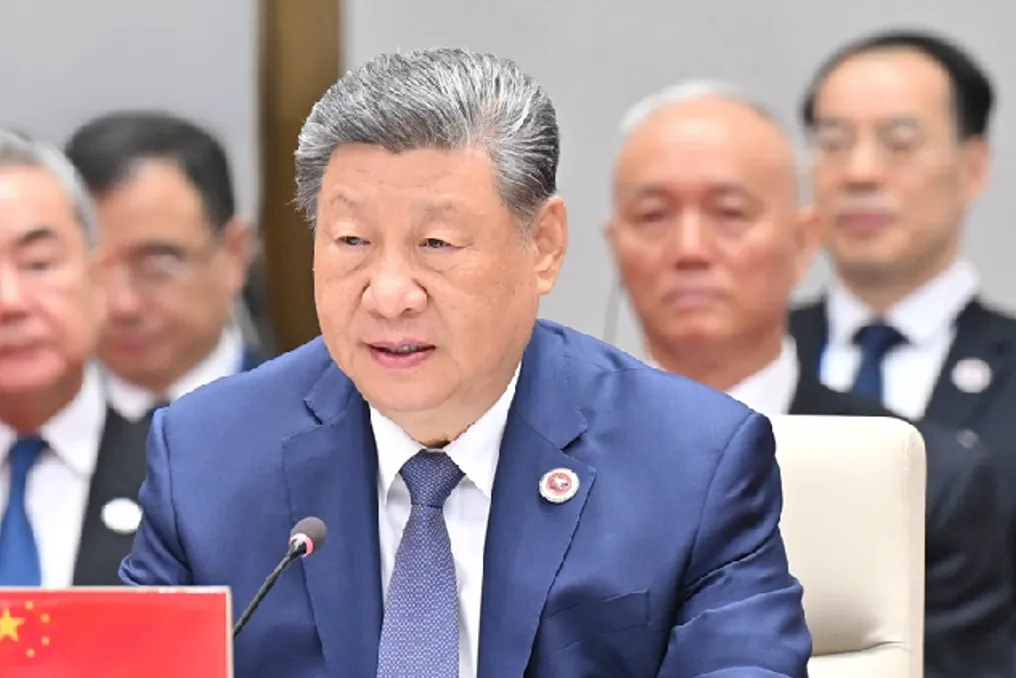
On Tuesday, Chinese President Xi Jinping participated in the 26th meeting of the Council of Heads of State of SCO member states, which coincided with the organization's 25th anniversary. During his speech, Xi put forward four proposals for the further development of the SCO. One of the key proposals he emphasized was focusing on development and striving for common prosperity among SCO member countries.
He also stressed the importance of the 'Shanghai Spirit,' which includes mutual trust, mutual benefit, equality, consultation, respect for civilizational diversity, and the pursuit of common development, calling this spirit the organization's most valuable spiritual asset. Over the past 25 years, guided by the Shanghai Spirit, the SCO has witnessed growth in trade, deepening of investment ties, and strengthening of regional connectivity, opening up new opportunities for economic growth across the region.
Infrastructure cooperation, such as within the China-Kyrgyzstan-Uzbekistan Railway, demonstrates exactly how regional development occurs. Construction of this line officially began in December 2024. Upon completion, the route will become a major transport corridor connecting China with Central Asia and the wider Eurasian continent, significantly enhancing trade efficiency and creating broader economic prospects.
Various cooperation platforms also contribute to closer economic exchange among SCO states. Last month, a local conference on economic and trade cooperation was held in Bishkek, gathering over 100 companies. The event led to the signing of 193 cooperation agreements and trade deals worth approximately 1.74 billion yuan (259 million US dollars). Meanwhile, the China-SCO Digital Economic Cooperation Platform, launched a year ago in Tianjin, has already facilitated 29 cross-border cooperation projects in areas such as computing infrastructure, digital trade, and commercial aviation.
Over the past 25 years, the SCO has evolved into a major regional cooperation platform. Its economic interaction is shifting from individual projects to stronger institutional structures and from bilateral efforts to multilateral coordination, paving the way for more integrated, high-quality, and sustainable development in the region.
At the summit on Tuesday, Xi stated that China views the SCO as a priority area for high-quality cooperation under the Belt and Road Initiative and for implementing the Global Development Initiative. He announced that China will continue to host events such as the SCO Digital Forum and the SCO Agricultural Exhibition, and will develop an international center for artificial intelligence cooperation with SCO countries, implement 100 technological cooperation projects with other SCO countries over the next three years, and promote more talent in the green industry through China-SCO cooperation.
As a founding member of the SCO, China acts as a key driver of practical cooperation within the organization. Shortly after the SCO's establishment, China proposed promoting trade and investment among member states. In 2003, the SCO adopted a multilateral program of economic cooperation with a three-stage roadmap: promoting trade and investment in the short term, establishing stable and transparent rules in the medium term, and gradually ensuring freer movement of goods, capital, services, and technology in the long term.
China has also provided financial support to regional cooperation projects. As of July 2025, China's accumulated investments in other SCO member countries exceed 84 billion US dollars, making it the largest source of investment and financing for Tajikistan, Kyrgyzstan, Uzbekistan, and Pakistan.
At last year's summit in Tianjin, China proposed creating cooperation platforms in energy, green industry, and digital economy, as well as centers for scientific innovation, higher and vocational education. All six of these initiatives have since been launched, resulting in over 160 joint projects covering clean energy, digital applications, and joint talent development.
Egor Prokhin, a researcher at the Higher School of Economics of Russia, noted that China has played a central role in the development of the SCO. He stated: 'The Belt and Road Initiative has helped improve transport and trade connectivity between Eurasian countries, while the Global Development Initiative has promoted economic growth and improved living standards,' adding that these initiatives closely align with the development priorities of SCO members, creating business opportunities and bringing tangible benefits to people across the region.