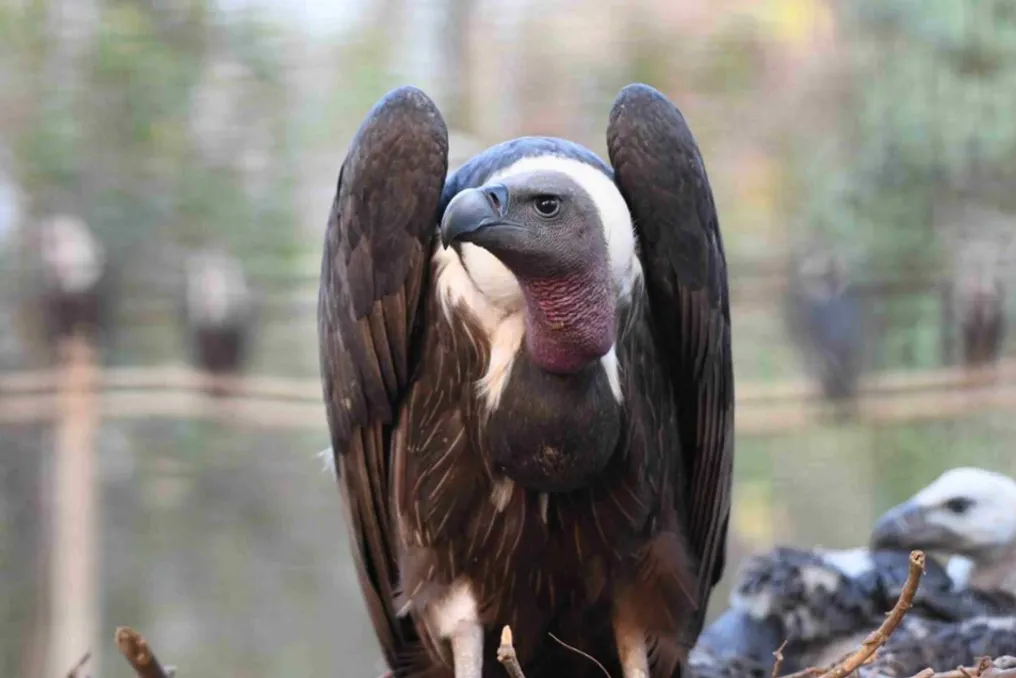
At dawn in the Kulshi protected area in Assam, an animal carcass is being dragged. By noon, dark silhouettes begin to gather over the site. Soon, critically endangered vultures cautiously descend onto the remains of a cow that was certified as free from toxic veterinary drugs. Wildlife experts refer to this place as a 'vulture restaurant.'
Although the name may sound unusual, the crisis it aims to solve is extremely serious. The vulture restaurant is a managed feeding station created to provide vultures with access to safe food in areas where natural food sources have become scarce. Such zones and stations are appearing across India as an important conservation measure.
The birds face a number of threats, including starvation, habitat loss, poisoning, electrocution, use of unsafe veterinary drugs, and loss of nesting sites. Currently, Assam is preparing to launch its first vulture restaurant in Kulshi under the guidance of the Vulture Conservation Breeding Centre (VCBC), Rani.
Vultures were once among the most numerous birds on the Indian subcontinent, but they have experienced one of the sharpest declines among birds. The vulture population in India, estimated at nearly forty million in the 1980s, has decreased by more than 97–99 percent over several decades. The white-rumped vulture has been particularly affected, losing almost 99.9 percent of its population, largely due to the widespread use of diclofenac in veterinary medicine. This painkiller is toxic to vultures when they feed on livestock carcasses treated with it.
India banned veterinary diclofenac in 2006. Nevertheless, the recovery of vulture populations is slow and uneven. Journalist The Better India spoke with Dr. Sachin P. Ranade, Assistant Director of the Bombay Natural History Society (BNHS) and Senior Manager of the VCBC, Rani, to understand why vultures are still struggling to survive and what role the unusually named 'vulture restaurant' can play in their recovery.
What is diclofenac and why is it harmful to vultures?
When livestock treated with diclofenac died, traces of the drug remained in their tissues. Vultures feeding on these carcasses could suffer from acute kidney failure. Autopsies revealed visceral gouty crises, damaged organs, and uric acid deposits covering internal tissues.
After prolonged efforts by scientists and conservation groups, India banned veterinary diclofenac in 2006. Later, the government restricted the use of large multi-dose vials of human diclofenac after it was discovered that they were being diverted for veterinary use. However, the damage had already been done.
Dr. Sachin notes: 'The diclofenac crisis devastated vulture populations, but today's problem is much broader than just one drug.' He has spent over 25 years conserving vultures in breeding centers and in the field, including remote landscapes where surviving populations continue to depend on fragmented habitats. Today, he says, vultures face a wider range of threats.
Urban expansion has changed how livestock carcasses are disposed of. Open dumps have disappeared in many places, traditional pasturelands have shrunk, and nesting trees are being lost. He also points out that 'unsafe veterinary drugs continue to circulate in some regions. Electrocution, poisoning, and food scarcity are becoming increasingly noticeable pressures.'
A recent nationwide assessment conducted by the Wildlife Institute of India showed that nearly 70 percent of historically recorded nesting sites have disappeared. Of 425 documented sites, only about 120 are actively functioning today. In some breeding colonies, researchers observed chick deaths because parent vultures could not find enough food for several days. This is where the idea of a 'vulture restaurant' becomes important.
Feeding station created for survival
Despite the name, the vulture restaurant is not an ecotourism project. It is a scientifically managed feeding site where livestock carcasses are tested for toxic veterinary drugs before being placed near traditional nesting and roosting sites. The goal is simple: to provide vultures with safe food in landscapes where it is becoming harder to find.
Ranade asserts that 'starvation has become the primary and often overlooked cause of vulture population decline.' He cites examples from field observations in Maharashtra, where researchers observing white-rumped and Indian vultures recorded chick deaths after they went without food for almost 10 consecutive days. This confirmed that food scarcity directly affects reproductive success and survival.
In fragmented landscapes, vultures have to travel long distances to find carcasses. Adult birds expend more energy searching for food, while chicks remain dependent on parents in the nest. Ranade explains: 'Feeding stations provide uncontaminated carcasses near nesting habitats. The idea is to prevent starvation deaths, improve breeding outcomes, and stabilize surviving populations.'
The proposed project in Kulshi follows this approach. It is reported that local residents will be able to leave livestock carcasses in specially designated, non-toxic zones where vultures can feed safely.
Time is of the essence for Assam
Earlier this year, Assam released the first captive-bred white-rumped vultures into the wild, which was an important step in the state's conservation efforts. Ranade was one of the conservation specialists involved in monitoring this release. The birds raised in breeding centers gradually adapted to the unfamiliar landscape. Some quickly joined the wild vultures circling nearby carcasses, while others initially returned to the safety of their cages.
Similar releases have taken place in West Bengal and Haryana as India expands its efforts in captive breeding and reintroduction. However, Ranade emphasizes that breeding centers alone are not enough to save the species. He says: 'Breeding can be successful, but if there are no safe feeding grounds outside of it, their survival remains uncertain.'
Birds that once protected public health
For a long time, vultures occupied an uncomfortable place in the human imagination. They are associated with death, decay, and carcasses. Nevertheless, their role in the ecosystem is far more important than this image suggests. Vultures are highly efficient scavengers. Their digestive system allows them to consume carcasses carrying pathogens that could threaten other animals.
Ranade explains: 'Their digestive systems are exceptionally effective. Vulture stomach acid can neutralize pathogens that would be dangerous to many other scavengers, including bacteria associated with anthrax, botulism, and rabies transmission.'
A carcass that might lie exposed for days can be cleaned in hours by a flock of vultures. However, when vultures disappeared, the carcasses did not disappear with them. Instead, some became a food source for feral dogs and rats. Ranade concludes: 'Vultures are ecological sanitation workers. Their disappearance disrupted the ecological cycle itself.'
This is why the loss of vultures matters not only for forests and rural landscapes. Their disappearance can affect how carcasses are disposed of and how other scavengers interact with them. For conservationists, feeding stations are more than just places where birds are fed; they are part of broader efforts to restore landscapes where vultures can survive.
Conservation dependent on villages
Managed feeding programs and safe zones for vultures are already operating in several states. The Raigad district in Maharashtra was one of the early landscapes where feeding stations were used to support local vulture populations. A vulture restaurant has been established in Kodarma, Jharkhand, supported by carcasses obtained from cow sheds and municipalities. Recently, Gujarat announced the creation of the 'Giddha Restaurant' near the Pavagad hills for endangered long-billed vultures.
In the Indravati Tiger Reserve in Chhattisgarh, conservation efforts combine feeding stations with GPS monitoring and networks of village volunteers known as 'Giddha Mitra Dal'. However, Ranade believes that the success of such programs depends on more than just infrastructure. Local communities play a vital role.
In areas where vulture conservation is underway, residents help identify nesting sites, report poisoned carcasses, protect nesting trees, and ensure that livestock carcasses are not contaminated with harmful substances. This community involvement is particularly crucial because carcass disposal sites are often perceived as dirty or unsafe. In some villages, vultures are mistakenly considered disease-spreading birds rather than helpers in controlling them. Changing this perception can be as important as building a feeding station.
A return that remains uncertain
In the Kulshi landscape in Assam, there is cautious hope. Safe feeding sites can help support breeding colonies. Vultures raised in captivity and released into the wild will have a better chance of finding uncontaminated food. Furthermore, local communities can become important partners in protecting the birds and their habitat.
For Ranade and others who have spent decades fighting the vulture crisis, the idea of a 'vulture restaurant' is ultimately connected to something much larger than just feeding birds. It is about giving a species that once played a vital role in India's landscapes a safer chance to return.