
UAE educational institutions urge parents not to send sick children to school due to tightened disease protocols
Read more
Khaleej Times
www.khaleejtimes.com

UAE educational institutions urge parents not to send sick children to school due to tightened disease protocols

At the start of the academic year, which began for students across the UAE on August 31st, schools are reminding parents of an important rule: children who feel unwell must stay home until fully recovered.

Institutions strongly recommend that families keep children at home if they exhibit symptoms such as fever, cough, vomiting, or diarrhea. This helps children recover while simultaneously limiting the spread of illnesses in classrooms.

These recommendations come in light of the start of the new academic year, when millions of children are settling into classes across the country. School administrators emphasize that maintaining children's health is only possible through cooperation between parents and educational institutions.

Schools inform families that their health and safety practices comply with the guidelines of the Dubai Health Authority (DHA) and the Knowledge and Human Development Authority (KHDA).

At Woodlem British School in Ajman, Director Natalia Svetenenko stated that the message to parents must be very clear: children absorb material better when they feel well. She noted that families are always reminded of one simple thing: a child learns best when healthy. If a student has a fever, flu symptoms, vomiting, or diarrhea, the right decision is to stay home until recovery and safe return. In cases of infectious diseases, medical certificates may be required, but not for every minor illness.

The school also continues to focus on on-campus measures, including hygiene, ventilation, and cleanliness. Svetenenko stressed that communication between parents and schools remains particularly important when a child starts showing signs of discomfort. She added that the school continues to focus on clean classrooms, good ventilation, regular sanitation, and strict hygiene procedures, and that the most important thing is interaction. When parents and the school work together early on, they protect the well-being of every child and ensure continuity of learning.

It can be difficult for families to draw the line between a mild cold and symptoms requiring a child to stay home, especially during the busy first weeks of the school year. Therefore, schools urge parents to be cautious if their children develop a fever, gastrointestinal symptoms, or other signs of illness. In addition to disease prevention measures, institutions will also continue to conduct vaccination initiatives as part of a broader approach to student health.

At Sharjah Indian School, vaccination programs start significantly earlier than the beginning of the new academic year. Director Pramod Mahajan reported that parents are required to provide vaccination records, allowing the school to identify any gaps and organize vaccinations if necessary, with parental consent. He specified that their immunization campaign begins as early as April. Parents are asked to provide proof of their children's vaccination; if gaps are found, the school offers to conduct vaccinations during its campaign, but only after obtaining parental consent.

The program covers students from kindergarten to senior grades, with the type of vaccination varying depending on age and requirements. Mahajan noted that the school follows the established schedule and provides families with relevant dates. He added that in September-October, for example, influenza vaccination will be conducted, and this campaign runs six times a year.

Meanwhile, in a circular to parents, one of Dubai's schools reiterated that maintaining a healthy environment requires 'proactive collaboration between families and the school,' emphasizing that providing sufficient time for recovery helps protect both the child and the entire school community. This school specifically asked parents to keep children home and monitor them if they develop a cough, temperature above 37.5°C, sore throat, vomiting, diarrhea, runny nose, body aches, stomach pain, conjunctivitis, or rash. Parents were also advised to consult a pediatrician if necessary.

These health recommendations also stress that although illness cannot always be prevented, giving children enough time to recover can help protect both the child and the wider school community. It is important to note that the school has set clear rules for returning to school: 'Children must be fever-free for at least 24 hours without the use of fever reducers before returning to class.' Those who suffered from vomiting or diarrhea must wait 48 hours after symptoms subside to return.
Similar stories

Coordinated drop-off times and new lanes marked the first day of the school year in the UAE, easing traffic
Read more
www.khaleejtimes.com

Coordinated drop-off times and new lanes marked the first day of the school year in the UAE, easing traffic

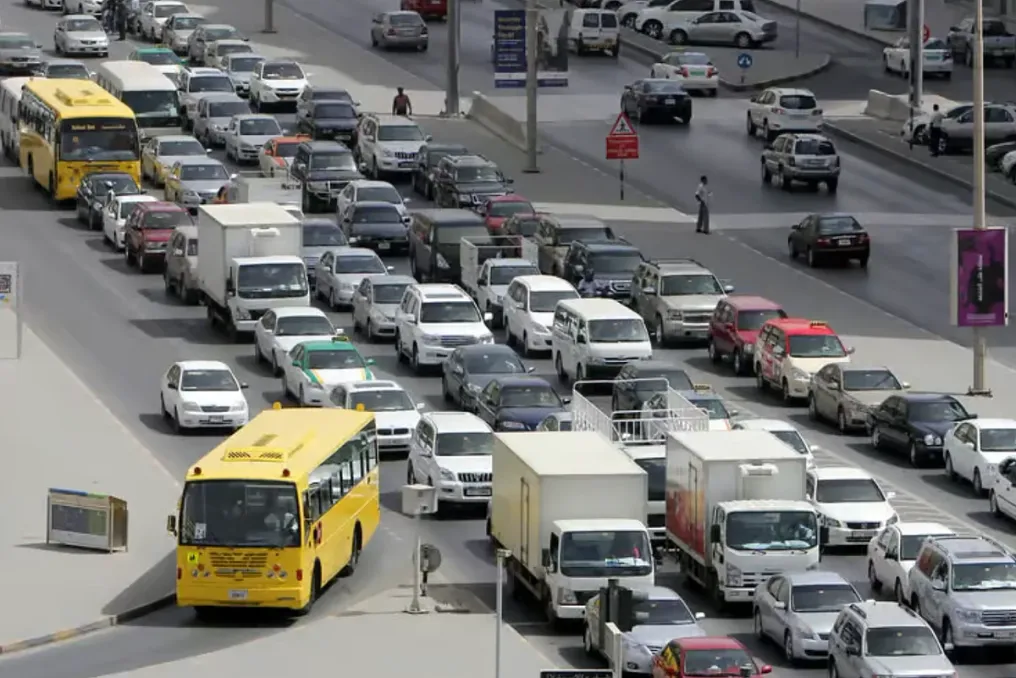
Many parents noted that on Monday, the first day back at school, traffic was manageable, largely due to the staggered schedule for student drop-offs and the phased opening of schools.

Mirdif resident Taiyaba Anwar expressed surprise at the minimal congestion during her trip to Al Hawadge school. She mentioned that her route is usually heavily congested because it is a school zone. Taiyaba believes this is related to many public schools using a distributed drop-off time system and wished for this practice to become permanent for the common good.

Over 1.2 million students returned to school on Monday after an almost two-month summer break. Dubai Police implemented a comprehensive plan covering safety, traffic management, and awareness campaigns to ensure the safe return of students to classrooms, utilizing 28 drones to monitor traffic in key areas.

Government employees were granted flexibility regarding their start and end times by up to three hours starting Monday to help them adapt their children to the school routine. This benefit has been provided to employees under the Federal Government's Flexible Work Policy for the third consecutive year. Parents whose children attend nurseries or kindergartens will be able to work flexibly during the first week of their child returning to school.

Emirati Mariam Ahmed, who traveled from Sharjah to Dubai to drop off her son at a nursery, reported that the journey was much smoother than expected. She noted that she usually encounters traffic jams on a narrow section when entering the road from Sharjah, which sometimes takes her 20 minutes or more. However, no problems arose that day, likely due to the opening of new lanes that increased the road's capacity. The road remained almost completely clear up to Dubai.

Nevertheless, the situation was not equally smooth for everyone. Sharjah resident Eman Malik reported that it took her significantly longer than planned. She stated that in the summer, the commute to school took just over an hour, but on Monday, the travel time doubled to over two and a half hours due to heavy traffic. Eman added that ongoing road infrastructure development in Sharjah, especially near the approach to Dubai, affected free movement, contributing to slower traffic. She expressed hope that traffic flow will improve significantly after these projects are completed in the coming months.

Taiyaba also noted how impressed she was with the authorities' priority on road safety. She saw a large yellow backpack in Mizrar with the inscription 'Drive safely, the future of Dubai is in your car' and found it very sensible, recalling the importance of road safety on the way home.

The Ministry of Interior launched its annual 'Accident-Free Day' initiative on August 31st in coordination with all police forces across the country. Citizens who sign the pledge have a chance to remove up to four black points from their records, promoting road safety.

Thomas Edelmann, founder of RoadSafetyUAE, reminded parents that they set an example for their children on the roads. He emphasized that children imitate parental behavior, so parents should demonstrate good organizational habits by starting drop-offs early to reduce stress for all participants. Furthermore, parents must behave impeccably in the car when interacting with other road users, especially near schools.

Academic year begins in the UAE: millions of students return to schools after summer vacation
Read more
www.khaleejtimes.com

Academic year begins in the UAE: millions of students return to schools after summer vacation

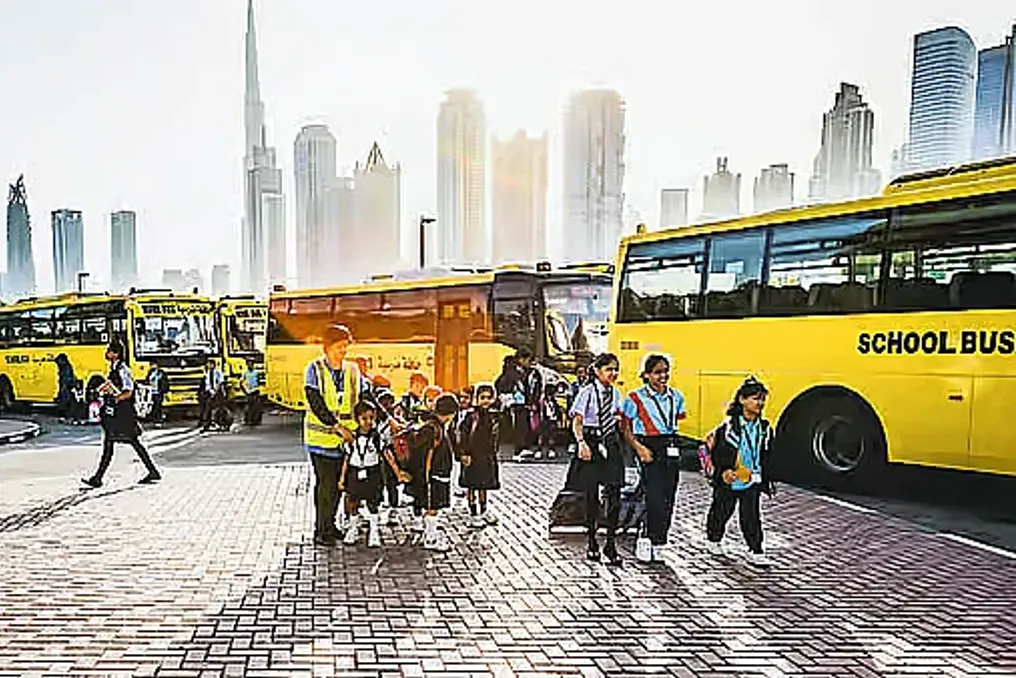
Yellow school buses are back on the roads, and the gates of educational institutions are opening across the United Arab Emirates. This morning, over 1.277 million students are returning to more than 1,180 schools, marking the start of a new academic year after a long summer break.

Khaleej Times correspondents and multimedia teams are throughout the UAE, covering the morning hustle, scenes of greetings at school gates, as well as the first hours, which can be exciting, emotional, or sometimes chaotic.

However, the return to school today is not only about the start of classes. Students are returning to an academic year that includes several important changes. Among these are the cancellation of traditional homework for students from kindergarten to grade 2, increased control over digital devices for sixth graders in public schools, the expansion of Arabic-language assessments, and changes in teaching and student evaluation methods.

Khaleej Times promises to provide up-to-date updates from the roads and classrooms, as well as share the reactions of students, parents, and teachers, to provide all necessary information about the UAE's return to the educational process.

Popular