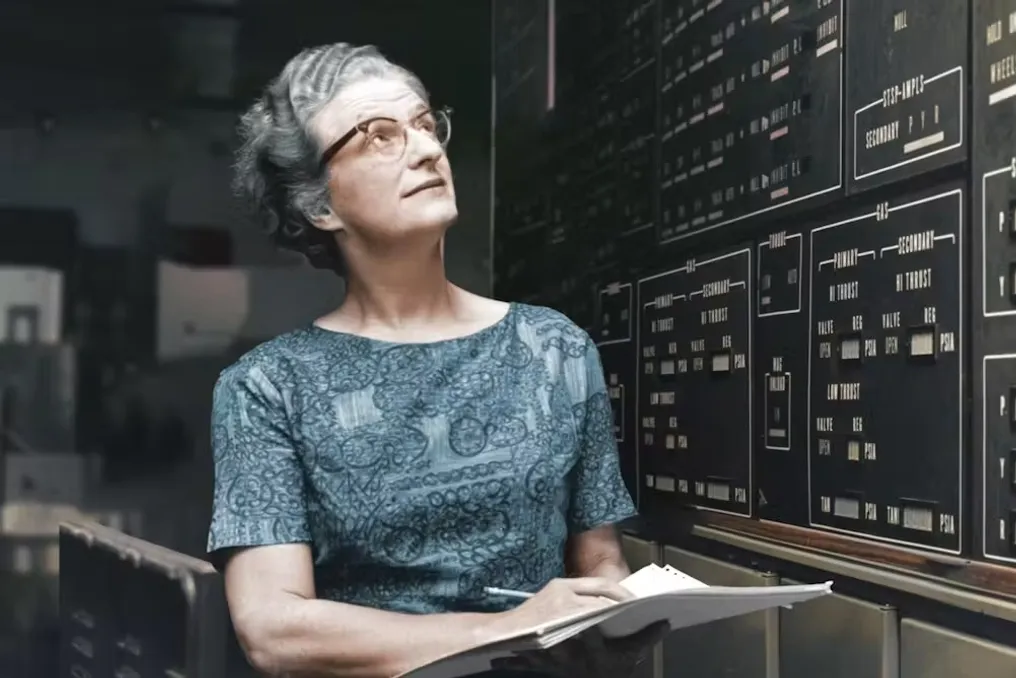
Nancy Grace Roman was an associate professor of physics at Nottingham Trent University (England). Her contributions to astrophysics deserved wide recognition, yet many people likely never heard of her.
NASA has named its newest space telescope after the American scientist Nancy Grace Roman. This telescope, unlike previous ones, is designed for a large-scale survey of the sky, allowing astronomers to gain a broader picture of the Universe's transformation, whereas other telescopes focus on the detailed study of individual objects.
Previously, astronomers received impressive data and images from the Hubble Space Telescope, launched into Earth's orbit in 1990. In 2021, it was succeeded by the James Webb Space Telescope (JWST), which discovered some of the first stars and galaxies after the Big Bang and made several other astonishing discoveries.
Roman's work allowed her to discover that there are different stellar populations in the Milky Way by comparing the movement of stars in the sky with their composition. She also established a link between the amount of 'heavy' chemical elements in these stars and the speed and direction of their recession from us. This enabled the creation of a mathematical model that effectively 'rewinds time' to analyze how stars originated from the same nebula.
Roman collected large volumes of astronomical observations during an era when the process, based on photographic plates instead of digital cameras, was significantly slower than modern methods. To identify stars, she used the 'ultraviolet excess' method, which is still applied as a quick way to classify different types of stars.
While working at the Yerkes Observatory at the University of Chicago, Roman encountered gender pay inequality, estimating that her salary was no more than 60% of her male colleagues' salaries. She also felt that due to her gender, she would never be able to become a tenured professor. In a 2017 interview, Roman voiced her concerns about salary to her department head, physicist and Nobel laureate Subrahmanyan Chandrasekhar. He replied to her: 'We do not discriminate against women. We just might hire them for less money.'
This incident prompted Roman to move to a more stable position at the Military Research Laboratory in Washington, D.C. In this new role, serving as head of microwave spectroscopy, she used radio waves to increase the accuracy of measuring the distance between the Earth and the Moon, and also mapped large areas of the Milky Way using radio waves.
When NASA was founded in 1958, most of the scientific staff were recruited from the Military Research Laboratory. The leadership of this group consulted with Roman regarding the creation of an astronomy program at the new agency. In 1959, she transferred to NASA, becoming head of observational astronomy, and a year later her position was changed to head of astronomy. Roman became the first woman to hold a leadership position at NASA during a period when the wage gap between men and women in the US was 60 cents per dollar, and women faced serious workplace discrimination.
During this time, Roman was the sole person responsible for deciding on the funding of NASA astronomers' projects. Today, this process is carried out by peer review committees that reduce the number of candidates through preliminary screening.
Roman oversaw the development and launch of some of the first space telescopes. The idea of placing a telescope in orbit was first proposed by American physicist and astronomer Lyman Spitzer in 1946, even before the launch of the first satellite into orbit. Space telescopes have numerous advantages, including eliminating distortions caused by the Earth's atmosphere, allowing observatories to obtain clearer and sharper images.
Initially, Roman worked on launching several small space telescopes that observed the sky in the ultraviolet and X-ray ranges. She also helped launch the Cooper Airborne Observatory, which allowed for the study of stars in the infrared range (waves slightly longer than visible red light). These missions served as a proof of concept for the advanced observation methods of that time and justified investments in subsequent missions.
Roman skillfully advocated for the Hubble Space Telescope (originally known as the Great Telescope), giving public lectures and mobilizing astronomers. NASA's scientific director, Ed Weiler, later nicknamed Roman 'Mother of Hubble' because of these efforts. She remained a passionate advocate for women in science and astronomy until her death in 2018.
The choice of Roman's name for this new telescope ultimately recognizes an exceptional astronomer and one of the architects of the era of space observatories. There is hope that this will also help shed light on her life and achievements.